

Table of Contents
OpenAI announced that its artificial intelligence models have made three major scientific discoveries across mathematics, computer science, and physics.
The company shared the news on Monday. It claims its models solved open questions in wave math, computer logic, and quantum physics. In pure math, OpenAI models proved the local smoothing conjecture in all spatial dimensions for the first time.
Harmonic analysis is a field of math that studies waves and signals. It breaks down complex waves into simple parts. Until now, human mathematicians had only proved the theory in three dimensions.
- Harmonic Analysis Proof: OpenAI models proved the local smoothing conjecture across all spatial dimensions, expanding human proofs previously limited to three dimensions.
- Complexity Theory Upended: The models disproved the Exponential Time Hypothesis (ETH), challenging long-held rules on minimum runtime bounds for hard computing problems.
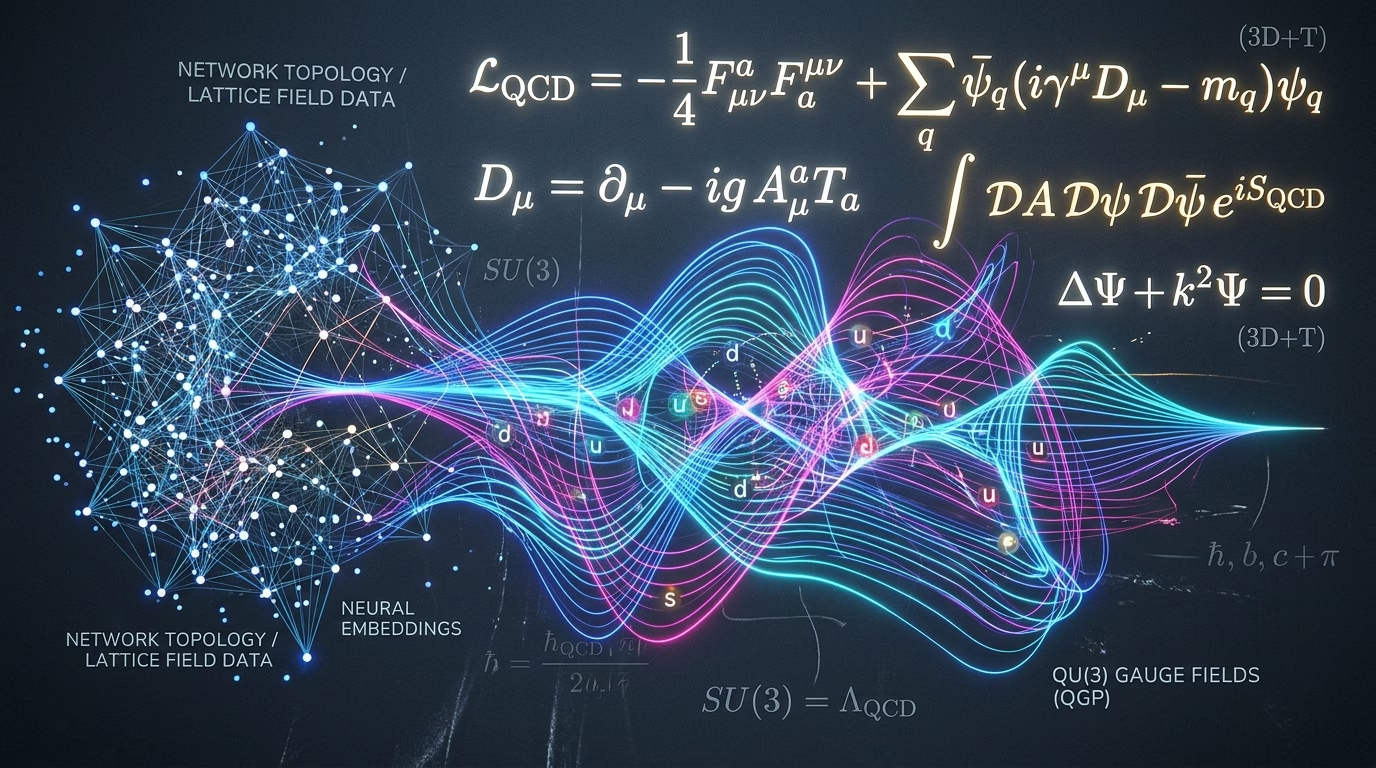
- Quantum Chromodynamics Rigor: The models provided a mathematically rigorous existence proof for quantum chromodynamics (QCD), which models how quarks and gluons bind.
- Academic Shepherd Review: Outside scientists evaluated the raw machine proofs. Math and computer science teams released data right away, while physicists deferred release to complete a companion paper.
- Scientific Reality vs. Hype: The announcement follows Anthropic’s claimed CRISPR enzyme discovery, fueling intense debate over genuine scientific gains versus tech marketing.
Factsheet: OpenAI AI-Generated Scientific Breakthroughs
| Field & Domain | Target Conjecture / Problem | AI Model Finding | Academic Status & Review Method |
|---|---|---|---|
| Pure Mathematics | Local Smoothing Conjecture | Proved across all spatial dimensions | Confirmed by harmonic analysts; data released publicly |
| Complexity Theory | Exponential Time Hypothesis (ETH) | Disproved minimum runtime limits | Under review by computer scientists; data released publicly |
| Theoretical Physics | Quantum Chromodynamics (QCD) | Mathematically rigorous existence proof | Physics shepherds deferred release to write companion paper |
| Review Framework | Academic Shepherd Program | External experts review raw data | Hybrid model balancing open data with academic vetting |
| Prior AI Benchmark | CRISPR-like Enzyme Discovery | Claude biological system claims | Debated among biologists between major advance and marketing |
A Historic Milestone for Pure Math
Alex Iosevich is a math professor at the University of Rochester. He focuses on wave math and called the news a historic step.
The theory was first set out by his doctoral teacher, Chris Sogge. Iosevich told reporters that the report came as a shock at first. Yet he feels joy and hope for what researchers can now do with AI tools. He believes the science world will take big steps forward as automated reasoning grows.
Iosevich thinks theoretical math will change fast due to AI. He felt a twinge of sadness at first for the shift in pure math. He noted that many colleagues feel the same way. Yet he stated that math problems do not start in a vacuum. Most questions grew out of real physics problems. Researchers can now test these links fast and with clarity.
Upending the Exponential Time Hypothesis
Beyond wave math, OpenAI said its models disproved the Exponential Time Hypothesis. In theoretical computer science, that hypothesis sets limits on the time needed to solve hard computing tasks like 3-SAT. Disproving it challenges long-held rules in algorithm design and complexity theory.
In theoretical physics, OpenAI claimed proof of the math behind quantum chromodynamics. That field studies how quarks and gluons interact through the strong force.
This machine research builds on prior technical breakthroughs. OpenAI models recently found critical 22-year software flaws in PHP core. Automated systems have also helped run experimental quantum laboratories.
The Shepherd Review Model and Academic Debate
OpenAI reached out to outside scientists to turn raw model data into scientific understanding.
The San Francisco company set up three groups of outside experts to act as shepherds. The math and computer science teams chose to share their data right away. The physics group chose to delay release so they could write their own paper first.
OpenAI noted that this review model brings clear trade-offs. Working with outside experts helps unpack the data for the wider science world. Yet picking select shepherds creates uneven access. It gives early access to small groups before the public can see the work. OpenAI welcomed feedback on how to broaden participation in future projects.
This news adds to a wave of AI science claims from top tech labs. Last month, Claude creator Anthropic claimed its AI found a new enzyme system like CRISPR, the gene-editing tool used in medicine. That announcement drew mixed views. Some scientists welcomed the work, while others argued that the company hyped the findings.
These claims arrive during heavy capital spending across the AI industry. Following Anthropic’s blockbuster November IPO filing, labs face close financial scrutiny. Economists have also questioned corporate returns on AI spending outside Big Tech. Proving that models can solve deep science problems has become a top goal for AI leadership.
🛠️ Free Developer Tool: JSON to YAML Converter
Managing complex neural network configs, scientific simulation manifests, or container schemas? Convert JSON structures into clean YAML directly in your browser with zero latency.
Open Free JSON to YAML Converter →Frequently Asked Questions
What three scientific discoveries did OpenAI announce?
OpenAI said its models solved three big questions. The models proved the local smoothing conjecture in math. They disproved the Exponential Time Hypothesis in computer science. They also proved the math behind quantum chromodynamics in physics.
What is the local smoothing conjecture in mathematics?
It is a central problem in harmonic analysis formulated by Chris Sogge. It describes how complex wave functions smooth out over time. It was previously proved only in three dimensions, but OpenAI models proved it in all spatial dimensions.
Why is disproving the Exponential Time Hypothesis significant?
The Exponential Time Hypothesis set theoretical limits on how fast algorithms can solve hard computational problems. Disproving it challenges standard assumptions in complexity theory and algorithm design.
What is OpenAI’s academic shepherd review process?
OpenAI selected outside scholars to inspect raw model data. These experts interpreted the results. They also decided when and how to share the research with other scientists.
Custom AI Systems & Scientific Computing Architecture
Building automated data pipelines, scientific computing clusters, or enterprise reasoning systems? TeckScaler architects secure custom software, Chrome extensions, and cloud infrastructure engineered for complex workloads.
Contact TeckScaler Engineering →Related Research Analysis
OpenAI Model Finds Critical 22-Year PHP Flaw
How advanced reasoning models audited legacy code to uncover long-standing memory corruption vulnerabilities.
How GPT-5.6 Sol is Automating the Quantum Lab
Robotic lab automation and algorithmic synthesis in advanced physics experiments at MIT.
Anthropic Files S-1 for Blockbuster November IPO
Claude creator files for Nasdaq debut under ticker ANT with $16.3B in revenue and heavy compute debts.
Apollo Economist: AI Delivered Zero Financial Payoff
Why corporate America outside Big Tech has seen negligible profit gains from AI investments.
In related higher education developments, explore how Cornell University is rolling out free multi-vendor AI tools from OpenAI, Anthropic, and Google across its campuses.





[…] Beyond cybersecurity analysis, read our latest reporting on how OpenAI models proved the local smoothing conjecture and claimed major physics breakthroughs. […]
[…] institutional focus on security mirrors wider research trends. OpenAI models recently proved scientific theorems while Anthropic filed its public IPO prospectus. Across these rollouts, enterprise buyers demand […]