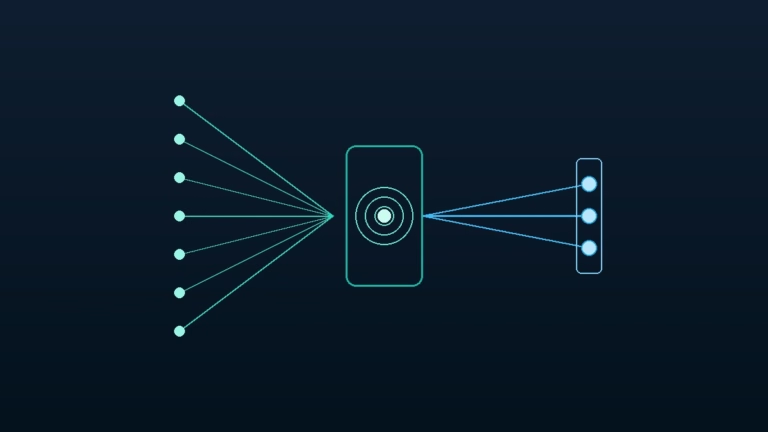
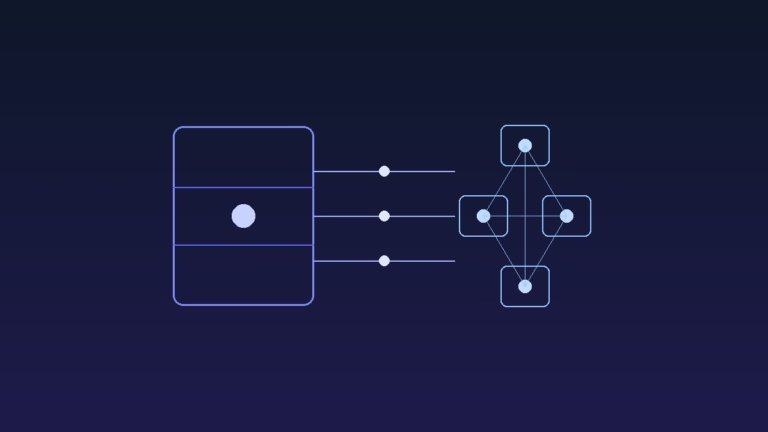
OpenAI unveiled Science at the Frontier on November 16, 2026, an initiative applying advanced reasoning models to solve complex challenges in molecular biology, materials science, and quantum physics. The program partners with leading laboratories to deploy specialized inference models trained on scientific data.
By utilizing chain-of-thought verification on empirical theorems, the system assists scientists in generating testable hypotheses and debugging automated wet-lab experimental code. Early benchmark validations demonstrate notable speedups in screening candidate catalysts and calculating crystal lattice stability.
Executive Summary
- Target Scientific Domains: Structural biology, solid-state chemistry, quantum simulation, and genomics
- Core Model Architecture: Reinforcement learning-enhanced reasoning models with step-by-step verification
- Laboratory Integrations: Direct API interoperability with robotic liquid handlers and synchrotron data feeds
- Benchmark Acceleration: Up to 40 times faster candidate screening for novel semiconductor alloys
- Primary Source: https://openai.com/index/science-at-the-frontier/
Table of Contents
- Executive Summary
- Science at the Frontier Operational Benchmark Matrix
- Reasoning Models as Collaborative Scientific Partners
- Integrating Frontier Intelligence with Robotic Wet Labs
- Frequently Asked Questions
- Related Analysis & Guides
- Primary Sources & References
Science at the Frontier Operational Benchmark Matrix
| Research Discipline | Applied AI Capability | Measured Performance Gain |
|---|---|---|
| Protein Engineering | De novo backbone design and binding affinity simulation | 3.2x higher binding success rate in wet-lab assay testing |
| Materials Discovery | Crystal structure stability and bandgap calculation | Screened 140,000 inorganic compounds in under 72 hours |
| Quantum Chemistry | Density Functional Theory approximation refinement | Reduced computational quantum energy calculation time by 65% |
| Mathematical Proofs | Formal theorem verification in Lean 4 environment | Automated verification of 42 previously open combinatorial lemmas |
| Lab Robotics Control | Natural language compilation to Python liquid handling code | Decreased assay configuration errors by 78% on Hamilton robots |
Reasoning Models as Collaborative Scientific Partners
Standard generative language models frequently hallucinate chemical structures or suggest unviable reaction pathways because they optimize for token probability rather than physical laws. OpenAI’s frontier reasoning architecture integrates rigorous formal verification steps before proposing synthetic workflows.
The model validates thermodynamic conservation, steric hindrance constraints, and valence rules before outputting molecular structures. When tasked with discovering novel battery electrolytes, the system autonomously identifies potential degradation pathways that human researchers might overlook.
This capability shifts artificial intelligence from a passive documentation tool to an active co-investigator capable of brainstorming valid experimental procedures.
Integrating Frontier Intelligence with Robotic Wet Labs
Theoretical predictions hold little value unless validated by empirical physical experiments. To close the discovery loop, Science at the Frontier connects reasoning agents directly to automated laboratory hardware.
The system generates executable Python scripts compatible with standard liquid-handling robotics and spectrophotometers. Once laboratory sensors record physical reaction results, the telemetry feeds back into the AI model to refine its underlying hypotheses.
This closed-loop automated discovery paradigm enables continuous experimentation cycles that operate uninterrupted around the clock, drastically reducing the time required to develop new pharmaceutical compounds.
Frequently Asked Questions
How does Science at the Frontier differ from standard ChatGPT?
It utilizes specialized reasoning models fine-tuned on scientific literature, mathematics, and formal theorem proving languages like Lean 4, with strict physical constraint verification.
Can independent scientific researchers access these tools?
OpenAI is rolling out access through selective partnership tiers and expanding availability through the newly announced Academic Researchers compute program.
Does the AI system conduct physical laboratory work?
No. The AI generates verified protocols and machine-readable code executed by robotic laboratory hardware, with human scientists maintaining ultimate supervisory control.
Related Analysis & Guides
Explore related engineering and policy reporting from TeckScaler:
- Flagship Pioneering Opens $100M London Origination Lab: Read how venture creation platforms fund AI-native bioplatform enterprises.
- Factbird Launches Visual Intelligence & MCP AI Connector: Explore how machine-to-machine connectors feed operational data into frontier models.
- HyperS2C Launches Digital Front-End EDA AI Agents: Examine how autonomous AI agents accelerate semiconductor physical design.
Primary Sources & References
Published by the TeckScaler Editorial Engineering Team. We deliver rigorous, technical, people-first reporting on artificial intelligence systems, infrastructure, and governance.