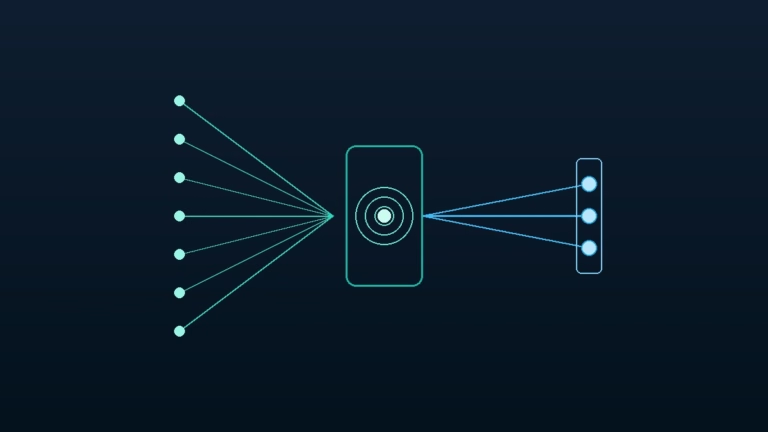
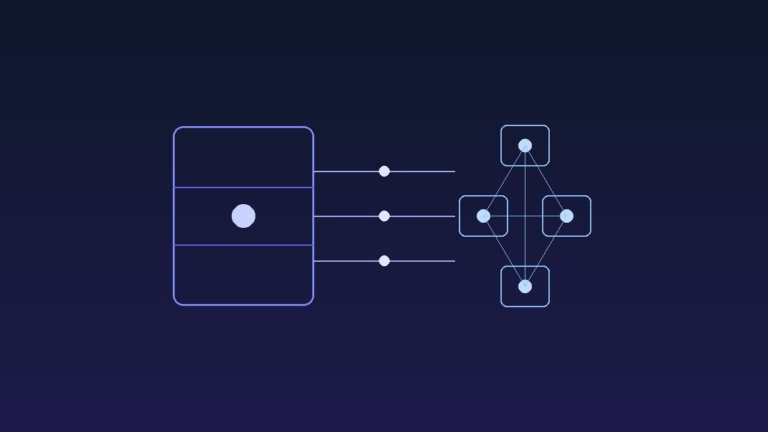
OpenAI released an updated safety architecture on November 16, 2026, implementing specialized multimodal classifiers and heuristic guardrails designed to prevent the exploitation of minors across generative platforms. The framework introduces automated referral integrations with the National Center for Missing and Exploited Children.
The upgraded protocols operate across text generation, synthetic image synthesis, and real-time voice streaming to detect predatory grooming patterns and child sexual abuse material. OpenAI also published detailed technical evaluations demonstrating reduced false-positive rates on general educational queries.
Executive Summary
- Classification Scope: Multi-modal scanning across text, DALL-E image generation, and live audio channels
- Regulatory Partner: Direct automated API referral integration with NCMEC and international law enforcement
- Detection Capabilities: Grooming language detection, age obfuscation analysis, and synthetic CSAM blocking
- Latency Impact: Zero perceptible user latency through asynchronous secondary verification stages
- Primary Source: https://openai.com/index/strengthening-online-child-safety/
Table of Contents
- Executive Summary
- OpenAI Child Safety Protection Mechanisms
- Multi-Modal Guardrails Across Voice and Image Generation
- Collaboration with Global Child Protection Organizations
- Frequently Asked Questions
- Related Analysis & Guides
- Primary Sources & References
OpenAI Child Safety Protection Mechanisms
| Protection Layer | Technical Mechanism | Operational Action |
|---|---|---|
| Pre-Inference Filter | Transformer-based toxic token classifier | Terminates input prompt before model processing |
| Vision Embedding Check | Perceptual hashing and semantic image classification | Blocks generation of synthetic imagery involving minors |
| Voice Stream Monitor | Phoneme and conversational intent analyzer | Interrupts live audio streams displaying predatory grooming |
| Post-Generation Audit | Secondary evaluation model cross-check | Quarantines anomalous outputs for human safety review |
| Law Enforcement Pipeline | Cryptographically signed NCMEC CyberTipline API | Transfers verified illegal media fingerprints automatically |
| False-Positive Reduction | Context-aware educational whitelisting | Prevents blocking of valid biology and history schoolwork |
Multi-Modal Guardrails Across Voice and Image Generation
As generative AI platforms transition from static text interfaces to interactive voice agents and image rendering, safety architectures must evaluate inputs across multiple simultaneous mediums. Textual filters alone cannot detect dangerous conversational dynamics unfolding in real-time audio dialogues.
OpenAI’s updated framework deploys asynchronous audio monitoring models that evaluate vocal prosody and dialogue structure for signs of manipulative grooming behavior. If an interaction attempts to establish secretive or inappropriate personal rapport with a minor, the session is terminated.
On the visual generation side, advanced perceptual embedding models cross-reference requested image compositions against known exploitation topologies, preventing the creation of photorealistic synthetic child abuse material.
Collaboration with Global Child Protection Organizations
Technological barriers cannot be solved in isolation from established law enforcement and child advocacy institutions. OpenAI coordinated with the National Center for Missing and Exploited Children (NCMEC) and European law enforcement agencies to refine reporting standards.
When classifiers detect verifiable attempts to generate or disseminate illegal imagery, the incident is securely packaged with relevant technical metadata and transferred through the NCMEC CyberTipline. This removes manual reporting delays and ensures investigators receive actionable forensic logs.
OpenAI confirmed that these safety classifiers are shared through industry consortiums to assist other AI developers in securing open-source and commercial foundation models.
Frequently Asked Questions
How does OpenAI prevent false positives on school biology assignments?
The classifiers use context-aware semantic evaluation to distinguish educational queries regarding human anatomy or historical events from exploitative content.
Does the safety system monitor private conversations of adult users?
The safety classifiers run automated heuristic evaluations solely to detect illegal content and high-risk violations, maintaining general user privacy without manual eavesdropping.
Are these safety features active on ChatGPT voice mode?
Yes. Real-time audio streams are monitored by lightweight edge and cloud safety filters to interrupt inappropriate conversational dynamics immediately.
Related Analysis & Guides
Explore related engineering and policy reporting from TeckScaler:
- Horizon3 Launches Adversarial AI Defense Lab: Examine adversarial evaluation frameworks designed to test model vulnerabilities.
- Aveni Unveils File Check for Financial Advice Compliance: Read how automated compliance classifiers operate in highly regulated environments.
- Yuvi AI Educational Platform Launches Critical Thinking Tools: Review how protective educational environments nurture student learning safely.
Primary Sources & References
Published by the TeckScaler Editorial Engineering Team. We deliver rigorous, technical, people-first reporting on artificial intelligence systems, infrastructure, and governance.