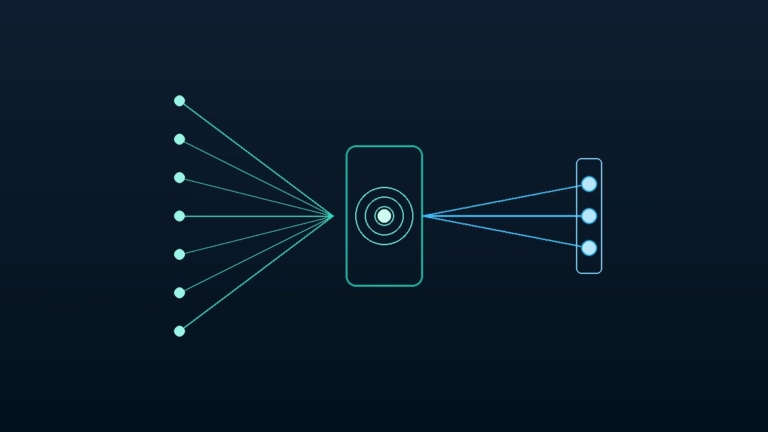
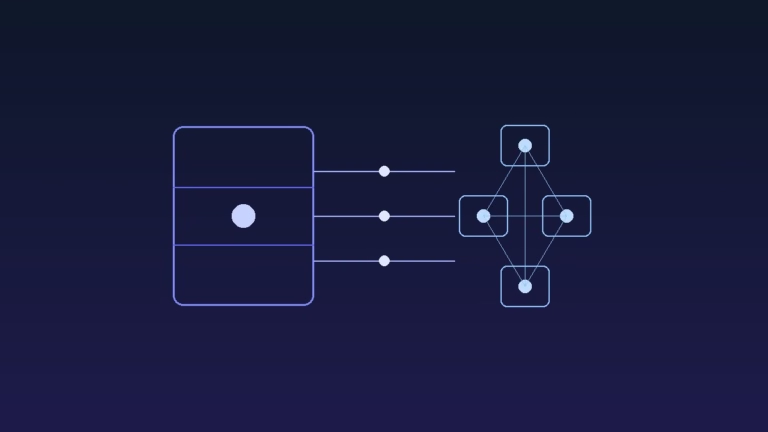
Elon Musk coordinated a comprehensive restructuring of compute resources across Tesla, SpaceX, and xAI on November 16, 2026, creating a unified corporate infrastructure mesh to power frontier artificial intelligence development. The strategy pools high-performance GPU clusters across the corporate portfolio.
Under the shared architecture, telemetry data from Tesla’s Full Self-Driving fleet and SpaceX’s Starlink constellation will feed directly into training models hosted at xAI’s Colossus supercomputer in Memphis. The consolidation aims to streamline capital expenditure while accelerating autonomous robotics deployment.
Executive Summary
- Consolidated Entities: Tesla Motors, Space Exploration Technologies (SpaceX), and xAI Corporation
- Flagship Supercomputer: xAI Colossus facility expanded to 200,000 Nvidia H100 and H200 accelerators
- Data Telemetry Ingestion: Over 6 million customer vehicles and 7,000 operational low-Earth orbit satellites
- Core Commercial Objectives: Optimus humanoid robotics control, FSD unsupervised autonomy, and Starlink orbital routing
- Primary Source: https://www.nytimes.com/2026/11/16/business/elon-musk-tesla-spacex.html
Table of Contents
- Executive Summary
- Unified Musk Enterprise AI Infrastructure Topology
- Cross-Company Compute Sharing and Synergy
- Governance Scrutiny and Shareholder Considerations
- Frequently Asked Questions
- Related Analysis & Guides
- Primary Sources & References
Unified Musk Enterprise AI Infrastructure Topology
| Corporate Entity | Compute Infrastructure | Primary AI Mission |
|---|---|---|
| xAI Corporation | Memphis Colossus supercluster (200k GPUs) | Frontier Grok foundation model training and reasoning |
| Tesla Motors | Cortex supercluster at Austin Gigafactory | Full Self-Driving vision networks and Optimus actuation |
| SpaceX | Starlink autonomous orbital collision AI | Dynamic laser cross-link routing and constellation management |
| Inter-Company Network | Dedicated multi-terabit optical interconnect | Synchronized checkpoint transfer and distributed inference |
| Energy Infrastructure | Tesla Megapack battery storage installations | Peak demand shaving and localized grid stability support |
Cross-Company Compute Sharing and Synergy
Operating separate corporate entities that each require tens of thousands of advanced graphical processing units has created mounting financial and operational overhead. By formalizing compute resource sharing agreements, Musk aims to maximize hardware utilization across cyclical demand peaks.
During periods when Tesla’s autonomous driving models are undergoing validation rather than active parameter updates, available GPU cycles are dynamically reallocated to train xAI’s next-generation multimodal models. Conversely, xAI’s reasoning discoveries are directly imported into Tesla’s Optimus robotics codebase.
This cross-pollination provides unprecedented economies of scale, allowing each venture to access supercomputing capacity that would be cost-prohibitive to finance independently.
Governance Scrutiny and Shareholder Considerations
The close intermingling of assets across publicly traded Tesla and privately held ventures like xAI and SpaceX has drawn scrutiny from institutional shareholders and legal watchdogs. Critics argue that transferring valuable corporate data and GPU hardware between entities raises complex fiduciary questions.
Tesla’s board has structured formal inter-company commercial contracts governing compute leasing rates and intellectual property licenses to withstand regulatory audits. These agreements stipulate fair market pricing for shared compute cycles and delineate clear ownership of trained model weights.
Industry analysts note that if successful, the unified infrastructure creates a formidable vertical tech stack spanning orbital communications, terrestrial autonomous vehicles, and frontier machine intelligence.
Frequently Asked Questions
Does Tesla own xAI or its supercomputing facilities?
No. xAI is an independent privately held corporation, but operates under reciprocal commercial agreements with Tesla for hardware sharing and data licensing.
What is the primary role of the Memphis Colossus facility?
The Colossus datacenter hosts over 200,000 Nvidia accelerators dedicated to training frontier foundation models, including multimodal iterations of Grok.
How does SpaceX benefit from unified AI infrastructure?
SpaceX utilizes advanced neural models to autonomously manage orbital trajectories, prevent satellite collisions, and optimize satellite laser routing across the Starlink network.
Related Analysis & Guides
Explore related engineering and policy reporting from TeckScaler:
- Automotive News Redesigns App with AI Personalization: Explore how enterprise automotive leaders deploy machine learning across consumer platforms.
- Korean Retail Investors Pour Billions into US AI Chips: Examine retail capital flows into semiconductor hardware powering massive AI supercomputers.
- Glide Launches AI Portfolio Analysis for US Wealth: Read how financial wealth managers evaluate tech capital expenditures and valuation multiples.
Primary Sources & References
Published by the TeckScaler Editorial Engineering Team. We deliver rigorous, technical, people-first reporting on artificial intelligence systems, infrastructure, and governance.