
Have you ever asked a general AI chatbot about a private company policy or yesterday’s news, only to watch it guess wrong or say it has no access?
Standard language models are smart writers, yet they only know what they memorized months ago during training. That knowledge freeze makes them unreliable for live business work unless you connect them to fresh files using the architecture covered in our production RAG systems guide.
The good news is that Retrieval-Augmented Generation (RAG) is easy to understand without a math degree. In this plain-English guide, we will explain how RAG works using an everyday open-book exam comparison, compare it against fine-tuning, and walk through real examples.
Executive Summary
- Plain-English Meaning: RAG stands for Retrieval-Augmented Generation, a system that fetches fresh facts from your files before asking an AI to write an answer.
- The Open-Book Metaphor: Standard LLMs take a closed-book test from memory, while RAG gives the model your exact handbook to quote during an open-book test.
- Zero Retraining Needed: You can add, edit, or delete private PDFs in seconds without paying thousands of dollars to retrain model weights.
- Core Steps: A RAG system splits files into chunks, searches for matching passages on every question, and tells the AI to answer strictly from those passages.
Table of Contents
- Executive Summary
- RAG vs Fine-Tuning vs Long Context Windows
- The Open-Book Exam Analogy Explained
- How RAG Works Step by Step
- Three Real-World Examples of RAG in Action
- Frequently Asked Questions
- Final Thoughts & Next Steps
- Primary Sources & References
RAG vs Fine-Tuning vs Long Context Windows
| Method | How the AI Learns Facts | Update Speed | Cost per Query | Best Real-World Use Case |
|---|---|---|---|---|
| RAG (Retrieval AI) | Searches external database on every question | Instant (add or delete files anytime) | Low (only sends top 5 matching snippets) | Customer support, legal search, live inventory docs. |
| Fine-Tuning | Modifies internal neural network weights | Slow (hours to days of GPU training) | Low after training | Teaching a specific tone, JSON style, or medical jargon. |
| Long Context Prompting | Pastes entire PDFs into every single prompt | Instant | Very high (re-reads massive files every turn) | Reviewing one standalone 50-page contract once. |
The Open-Book Exam Analogy Explained
Think of a standard AI chatbot like a student walking into a closed-book exam. The student studied general textbooks months ago, so if you ask about last week’s price update at your store, they either freeze up or invent a plausible guess.
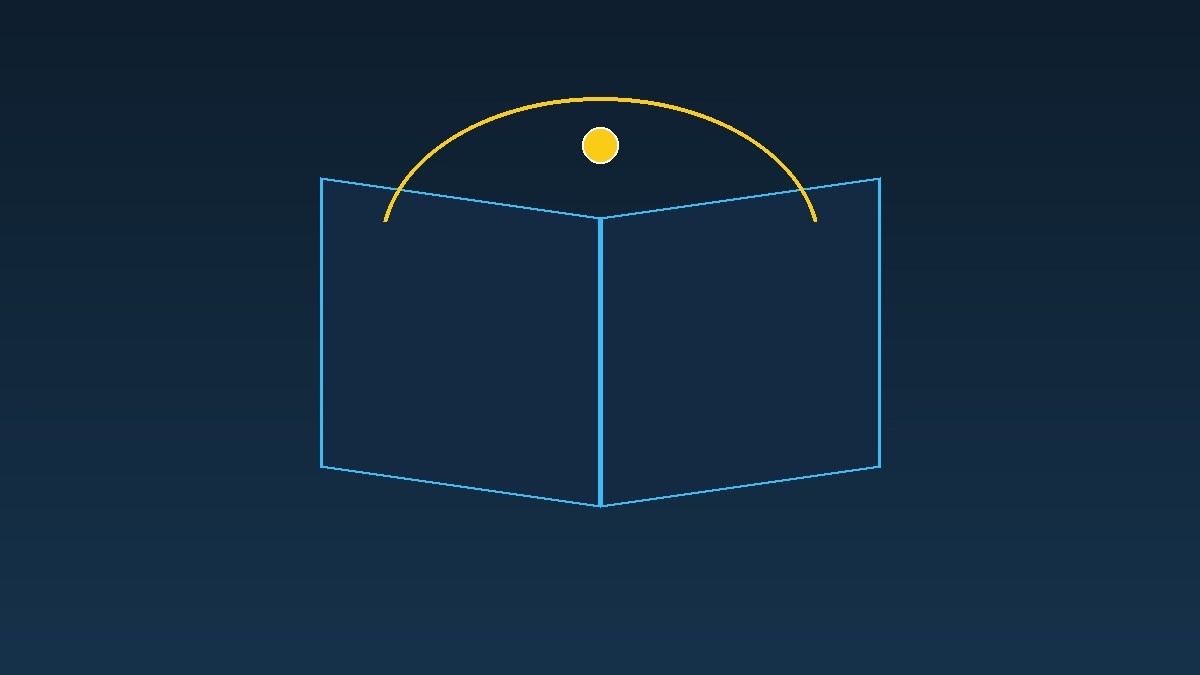
RAG turns that test into an open-book exam. Every time a user asks a question, a fast search engine flips straight to the exact three pages inside your company binder and hands them to the AI.
Because the model reads your fresh pages right before typing, it answers accurately and even links back to the source page. If a policy changes tomorrow, you just swap out the binder page instead of sending the student back to school.
How RAG Works Step by Step
Behind the scenes, every RAG pipeline runs in two simple phases: preparing your library upfront, and answering live user questions.
Step 1: Slice and Store Your Library (Indexing)
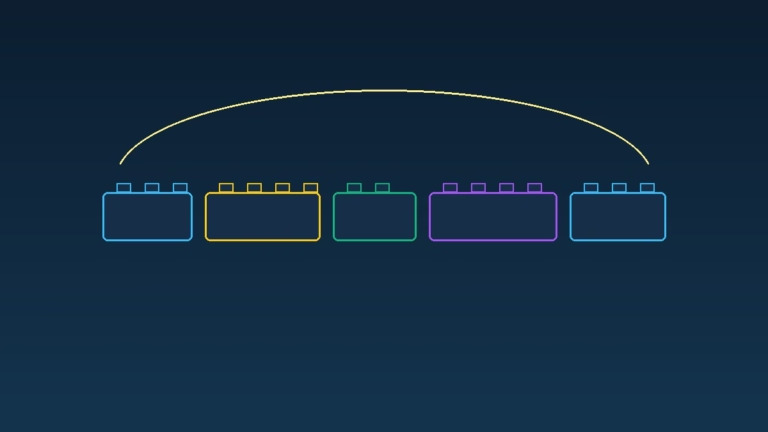
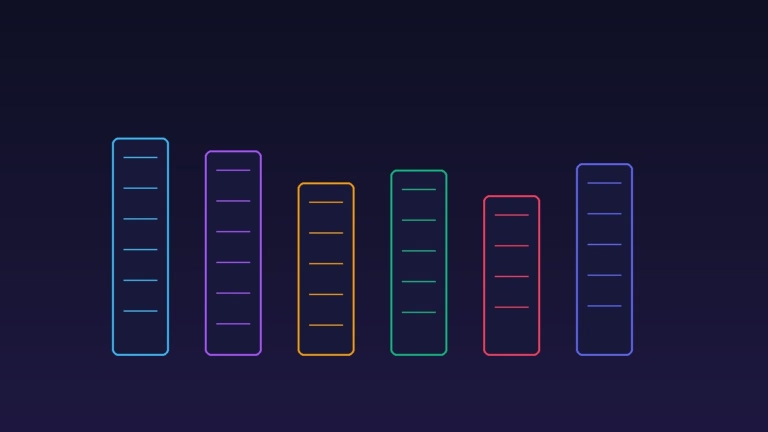
First, your software breaks long manuals, web pages, and spreadsheets into bite-sized paragraphs called chunks. It saves those chunks in a searchable database using both numeric meaning codes (embeddings) and exact words.
Step 2: Find Matching Paragraphs (Retrieval)
Next, when a customer types a question, the system searches that database in milliseconds to grab the three to five most relevant snippets. To see how engineers combine word search with meaning search, check out how to build a hybrid RAG pipeline with Python.
Step 3: Write a Grounded Reply (Generation)
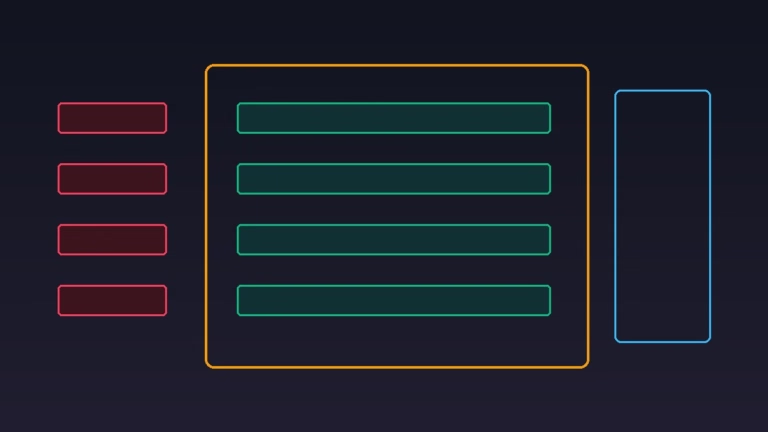
Finally, your app bundles the user’s question alongside those fetched snippets inside one prompt and sends it to an AI model. You can craft strict citation instructions using our free TeckScaler Prompt Optimizer, and read more about prompting concepts in our few-shot prompting and chain-of-thought guide.
Pro Tip: Even the best RAG setup needs clean input text. If your company PDFs are scanned pictures without selectable text, run optical character recognition (OCR) first so the search engine can read them.
Three Real-World Examples of RAG in Action
Companies across every industry rely on RAG to make artificial intelligence safe for everyday work:
- Customer Support Helpdesks: Instead of making shoppers dig through 400 help articles, a RAG widget reads your exact troubleshooting guides and gives a 3-step answer with source links.
- Internal Employee HR Bots: New hires ask questions like “How many parental leave days do I get in Texas?” and get verified quotes directly from the latest employee handbook.
- Medical and Legal Research: Analysts query millions of court rulings or clinical trial logs while verifying every sentence against clickable citations.
Frequently Asked Questions
Does RAG train the public AI model on my private company files?
No. With RAG, your files stay inside your own database. The AI model only reads the small matching snippets inside a single API request, and enterprise APIs do not train public models on that request data.
Can RAG completely stop AI hallucinations?
RAG reduces hallucinations dramatically by grounding answers in real text, though poor search matches can still confuse a model. Pairing hybrid search with strict prompt rules keeps errors near zero, as explained in our RAG hallucination fix guide.
Is RAG expensive to run for a small business?
No. Storing embeddings for 5,000 business documents costs pennies per month on modern databases like PostgreSQL pgvector or Qdrant, and sending short snippets keeps AI token fees tiny.
Final Thoughts & Next Steps
We hope this plain-English guide helped you understand what RAG is and why teams rely on it to build trustworthy AI tools.
Ready to take the next step? Dive deeper into our RAG learning cluster:
- Pick your storage engine: 7 Best Vector Databases for RAG in 2026.
- Write your first retriever: How to Build a Hybrid RAG Pipeline With Python and BM25.
- Explore the full architecture: The Ultimate Guide to Building Production RAG Systems.
Want help launching a private RAG assistant for your business? Speak with our engineering team at teckscaler.com/contact/.
Published by the TeckScaler Editorial Team. Last updated November 25, 2026.