
Why does an AI that writes legal briefs stumble when you ask how many times the letter “r” appears in the word “strawberry”?
The answer has nothing to do with bad math, and everything to do with how chatbots break sentences apart before reading them. As covered in our complete LLM tokenization guide, language models never see individual letters or whole paragraphs the way people do.
The good news is that AI tokenization makes total sense once you compare it to building with LEGO bricks. In this plain-English guide, we will explain what tokens are, why subword splitting beats letter-by-letter reading, and how tokens determine your AI bills.
Executive Summary
- Plain-English Meaning: Tokenization chops sentences into common chunks of characters called tokens, then swaps each chunk for a numeric ID.
- The LEGO Brick Analogy: Common words stay single big bricks (
"apple"), while rare or long words snap together from smaller syllable bricks ("un","break","able"). - Why Models Miss Spelling: Because the AI receives one numeric ID for
"strawberry"rather than ten separate letters, counting single characters inside a word feels blind. - How Billing Works: AI providers charge per million tokens sent in and generated out, making clean, concise prompts far cheaper to run.
Table of Contents
- Executive Summary
- Character vs. Word vs. Subword Tokenization
- The LEGO Brick Analogy Explained
- Why AI Fails Simple Spelling and Math Tricks
- What Is the Multilingual Token Tax?
- Frequently Asked Questions
- Final Thoughts & Next Steps
- Primary Sources & References
Character vs. Word vs. Subword Tokenization
| Splitting Style | How "unbelievable" Splits | Pros | Cons | Used in Modern LLMs? |
|---|---|---|---|---|
| By Character | u, n, b, e, l… (12 pieces) | Tiny dictionary, never fails on typos | Sentences become super long and slow | Rarely (too slow on long docs) |
| By Whole Word | unbelievable (1 piece) | Short sequences | Fails completely on new slang or typos | No (used in basic BM25 search) |
| By Subword (Tokens) | un, believ, able (3 pieces) | Handles rare words while keeping prompts compact | Slight weirdness on spelling and trailing spaces | Yes (standard across GPT, Claude, Gemini) |
The LEGO Brick Analogy Explained
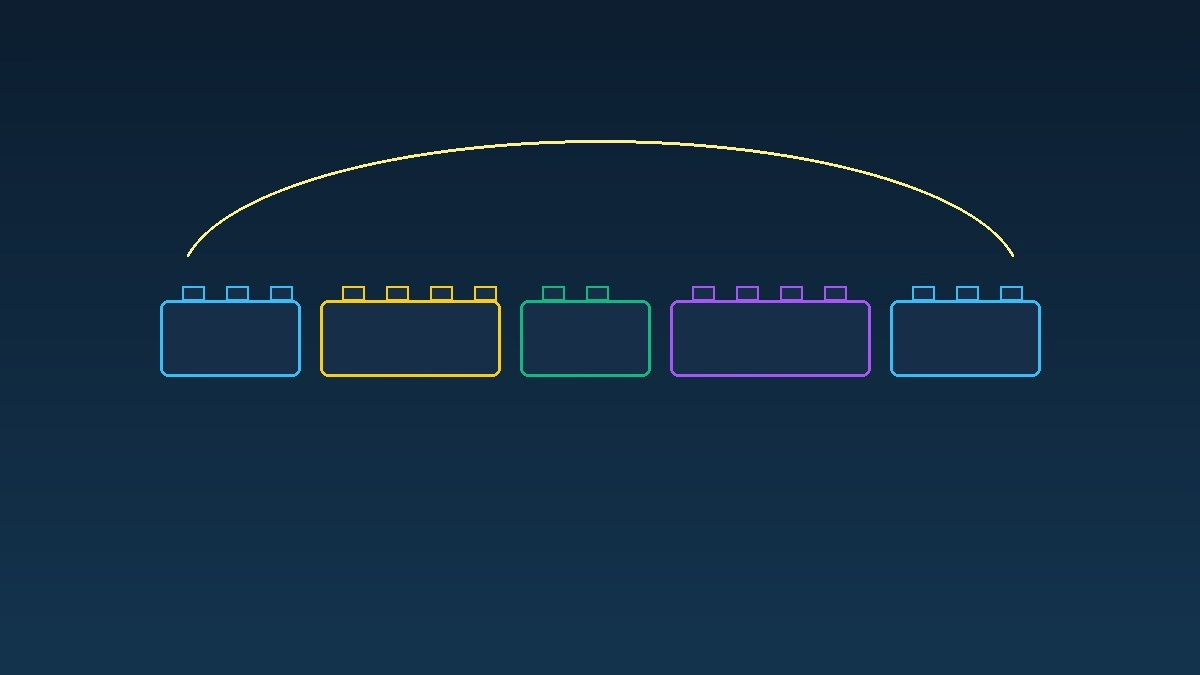
Computers only understand numbers, not English letters. Before an AI model can read your prompt, a helper program called a tokenizer breaks your text into reusable pieces, almost like sorting a sentence into standard LEGO bricks.
Everyday words like "house", "water", or " is" get their own single large brick. Uncommon words, brand names, or long technical terms snap together out of smaller root bricks like "micro", "service", and "s".
Once your message turns into bricks, the tokenizer hands the AI a numbered list like [1402, 882, 419] instead of readable letters. The AI predicts the next brick numbers in reply, and the tokenizer snaps those numbers back into English words on your screen.
Why AI Fails Simple Spelling and Math Tricks
Because the AI receives a single numeric ID like #94122 for "strawberry" instead of seeing s-t-r-a-w-b-e-r-r-y, it does not naturally examine each hidden character inside the brick. It has to guess from memorized patterns rather than counting letters directly.
The exact same quirk explains why large numbers like 948271 get sliced unpredictably into [948, 271] or [94, 827, 1]. Without seeing aligned decimal digits, a model relies on reasoning steps or external calculators to avoid arithmetic slips.
If you want to count exact tokens on your own laptop, try our simple Python walkthrough on how to count tokens in Python with tiktoken.
What Is the Multilingual Token Tax?
Most early AI tokenizers were trained heavily on English web text, giving common English words dedicated single-token IDs. When someone types the exact same sentence in Hindi, Arabic, or Japanese, older dictionaries split those characters into tiny UTF-8 byte fragments.
As a result, non-English prompts can require two to five times more tokens than identical English requests. Newer models from OpenAI, Google, and Qwen expand vocabulary tables above 150,000 entries to shrink that token tax significantly.
Pro Tip: Want to see how compact, structured instructions save tokens? Test trimming wordy prompts inside our free TeckScaler Prompt Optimizer right inside your browser.
Frequently Asked Questions
Does punctuation or a trailing space change token counts?
Yes. In most tokenizers, leading spaces attach directly to the word (" apple" is a different token ID from "apple"), and trailing spaces left at the end of a prompt can hurt prediction quality.
Are capital letters and lowercase letters the same token?
No. "Apple", "apple", and "APPLE" usually map to completely different token IDs inside the model’s dictionary.
How can I save tokens when chatting with AI APIs?
Keep system instructions direct, avoid repeating massive JSON brackets inside context prompts, and trim old chat history using a token budget as shown in our token limit troubleshooting guide.
Final Thoughts & Next Steps
We hope this plain-English guide made AI tokenization easy to picture without complex math.
Keep exploring our Tokenization learning cluster to put this knowledge into practice:
- Write Python token counters: How to Count Tokens in Python With Tiktoken.
- Compare top tokenizer tools: 6 Best LLM Tokenizers and Token Calculators Compared.
- Master the full blueprint: The Ultimate Guide to LLM Tokenization and Cost Control.
Planning a custom AI application or optimizing LLM operating costs? Connect with our software engineering team at teckscaler.com/contact/.
Published by the TeckScaler Editorial Team. Last updated November 25, 2026.