

Executive Summary
- The Strategic Paradox: An economic commentary by strategist Joachim Klement published by Reuters highlights a critical contradiction in Donald Trump’s economic agenda: aggressive foreign policy toward Iran directly jeopardizes the AI infrastructure boom.
- Energy Vulnerability: Hyperscale AI data centers require unprecedented electrical power. An escalation with Iran would trigger crude oil and liquefied natural gas price shocks, making wholesale electricity unaffordable for computing clusters.
- Interest Rate Pressure: Energy-driven inflation would force the Federal Reserve to pause interest rate cuts or raise rates, increasing borrowing costs for debt-financed gigawatt data center projects.
- Grid Supply Contention: AI data centers already compete with manufacturing plants and domestic households for constrained regional utility capacity in Texas, Virginia, and the Midwest.
- Geopolitical Realignment: Destabilizing Middle Eastern shipping corridors like the Strait of Hormuz could induce industrial stagflation, curbing capital expenditure across major tech players.
Table of Contents
- The AI Infrastructure Engine of the Trump Economic Vision
- The Unforgiving Energy Appetite of Next-Gen Computing
- How an Iran Strike Spikes US Electricity and Financing Costs
- Regional Grid Bottlenecks: ERCOT, PJM, and Utility Constraints
- Policy Miscalculation: When Foreign Posturing Collides With Tech Growth
- Factsheet: Peacetime Tech Expansion vs Geopolitical Energy Shock
- Frequently Asked Questions
The AI Infrastructure Engine of the Trump Economic Vision
The economic narrative championed by President Donald Trump centers heavily on American technological supremacy and industrial re-shoring. At the heart of this vision is a multi-trillion-dollar capital expenditure cycle: building massive artificial intelligence data centers, domestic semiconductor wafer fabrication plants, and advanced silicon packaging facilities across American soil.
Wall Street equity markets have rallied behind this build-out. Capital goods manufacturers, utility providers, and semiconductor companies have seen market capitalizations surge as tech conglomerates commit hundreds of billions of dollars to multi-gigawatt computing projects.
However, as financial strategist Joachim Klement observed in an incisive Reuters Open Interest analysis, this domestic economic centerpiece possesses a severe structural blind spot: its absolute dependence on affordable, abundant base-load electricity. Should the administration pursue military escalation or direct confrontation with Iran, the resulting geopolitical fallout could cripple the very tech expansion it seeks to champion.
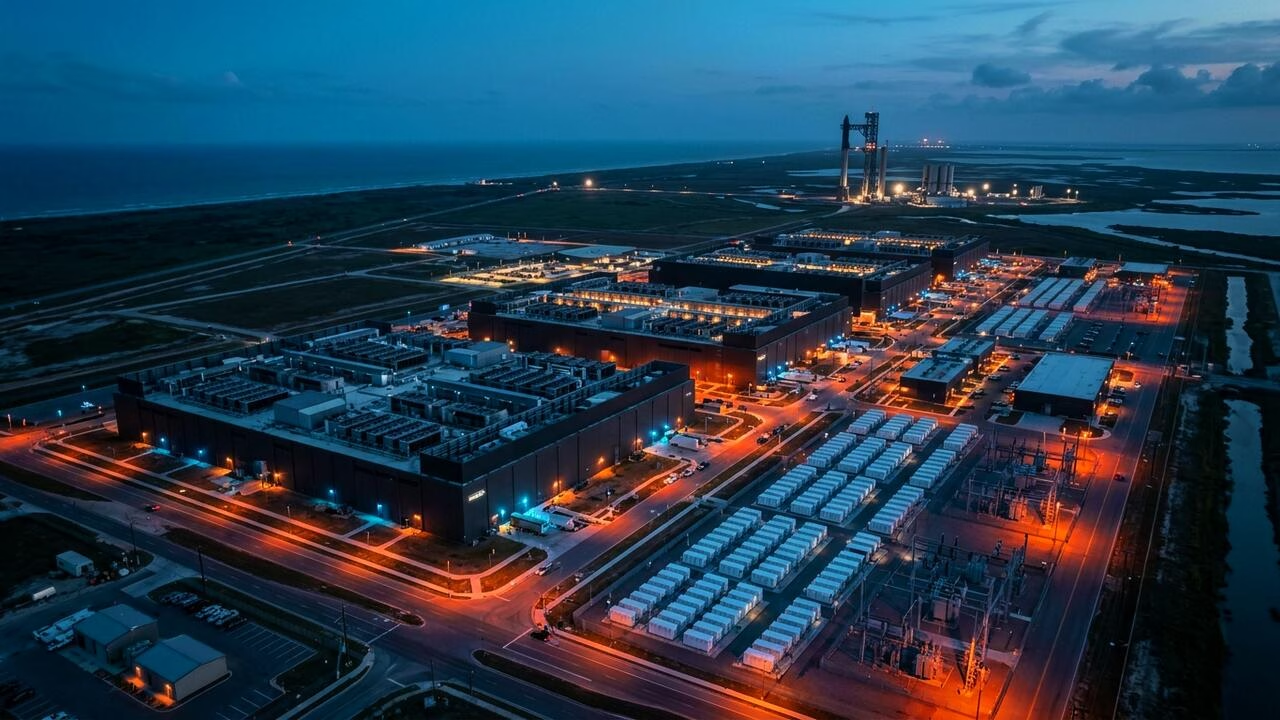
This risk connects directly to the unprecedented power demands documented in our investigation of SpaceX and xAI planned 13-gigawatt computing cluster, where access to continuous megawatt power has superseded silicon availability as the primary constraint on artificial intelligence development.
The Unforgiving Energy Appetite of Next-Gen Computing
Unlike previous software cycles that required minimal physical resources, modern deep learning clusters consume vast amounts of electrical power. Training frontier models and running continuous inference across millions of Nvidia Blackwell GPUs requires continuous, unyielding electricity.
According to projections from the Electric Power Research Institute and the International Energy Agency:
- Surging Grid Share: Data centers are projected to consume between 8% and 9% of total US electricity generation by 2030, more than doubling current consumption levels.
- Natural Gas Reliance: Because renewable energy from wind and solar remains intermittent, utility providers rely on natural gas combined-cycle turbines to supply round-the-clock base-load electricity to data centers.
- Gigawatt Campuses: Single computing campuses currently in development require up to one gigawatt of dedicated power capacity, equivalent to the electrical consumption of a city of 750,000 homes.
Because computing facilities operate 24 hours a day, any sudden surge in fuel input costs directly impacts operational economics.
How an Iran Strike Spikes US Electricity and Financing Costs
Klement points out that an armed conflict involving Iran would disrupt oil and gas supplies across the Persian Gulf, particularly through the Strait of Hormuz, a maritime chokepoint handling roughly 20% of global petroleum liquids.
The economic transmission mechanism into the AI sector follows three distinct stages:
1. The Fuel Price Surge
A spike in crude oil above $100 or $120 per barrel immediately drives up global demand for liquefied natural gas as European and Asian buyers seek alternative fuels. Higher export demand pulls US domestic natural gas prices upward, driving up wholesale generation costs across regional electricity grids.
2. Persistent Inflation and Interest Rates
Surging energy bills feed directly into headline consumer and producer inflation metrics. Confronted with a resurgence of cost-push inflation, the Federal Reserve would be forced to pause planned interest rate reductions or consider tightening monetary policy. Higher interest rates make borrowing prohibitive for infrastructure developers funding multi-billion-dollar data centers through syndicated loans and private credit.
3. Margin Compression for Tech Giants
As wholesale electricity prices rise, the cost of running inference clusters increases substantially. Hyperscalers would face margin erosion, forcing them to curtail speculative data center construction and cut equipment orders from chipmakers.
Regional Grid Bottlenecks: ERCOT, PJM, and Utility Constraints
Even in a benign macroeconomic climate, American electrical grids are struggling under interconnection queues. In Northern Virginia (PJM territory) and Texas (ERCOT), local utilities are already delaying new data center connections by three to seven years.
An international energy disruption would exacerbate this domestic tension:
- Consumer Backlash: As residential electricity bills climb, public utility commissions and state governors face pressure to prioritize household consumers over energy-intensive computing warehouses.
- Industrial Competition: Domestic manufacturing plants, steel mills, and electric vehicle battery factories would compete against data centers for limited electricity allocations.
- Permitting Freezes: Local municipalities increasingly push for moratoriums on high-draw data centers to prevent local grid instability, a reality demonstrated in the Texas gubernatorial election upset that shook AI infrastructure stocks.
Policy Miscalculation: When Foreign Posturing Collides With Tech Growth
Klement analysis underlines the critical connection between national security posturing and industrial technology execution. An administration cannot simultaneously claim credit for an artificial intelligence infrastructure boom while pursuing foreign policies that spark energy volatility.
In his Reuters commentary, Klement concludes that striking Iran or precipitating a regional conflict would represent an economic self-inflicted wound. By choking the affordable electricity that fuels computing clusters and triggering inflation that drives up interest rates, aggressive military action would stall the very technological expansion that defines the administration economic ambitions.
Scientific and computational progress relies on physical stability. Whether simulating Nature Genetics pediatric oncology breakthroughs or training next-generation foundational models, high-performance computing requires reliable, affordable energy infrastructure.
Factsheet: Peacetime Tech Expansion vs Geopolitical Energy Shock
The factsheet below contrasts stable economic conditions with the potential consequences of an armed conflict with Iran on the US AI ecosystem:
| Economic Factor | Baseline Peacetime Expansion | Iran Conflict Escalation Scenario |
|---|---|---|
| Crude Oil Prices | Stable range ($65 to $80 per barrel) | Spike to $100 to $130+ per barrel on Hormuz disruption |
| Natural Gas & Electricity | Moderate fuel costs; predictable utility rates | Surging LNG demand drives wholesale electricity rates up 30% to 50% |
| Monetary Policy & Rates | Gradual Federal Reserve interest rate easing cycle | Rates frozen or raised to combat second-wave energy inflation |
| Data Center Debt Financing | Strong access to corporate bonds and private credit | Higher debt service costs lead to project delays and cancellations |
| Tech Sector Capex | Aggressive expansion across gigawatt campuses | Capex retrenchment as operating margins face severe compression |
Frequently Asked Questions
1. What is the core argument of the Reuters commentary by Joachim Klement?
Klement argues that the Trump administration’s signature economic bet on artificial intelligence infrastructure depends on abundant, cheap electricity. Launching military strikes or escalating a conflict with Iran would spike oil and natural gas prices, triggering inflation and higher interest rates that could choke data center development.
2. Why are AI data centers vulnerable to energy price spikes?
AI data centers operate 24 hours a day and consume vast amounts of base-load electricity, largely powered by natural gas turbines. When global oil supplies are disrupted, natural gas and electricity prices jump, increasing operational costs for computing facilities.
3. How would higher energy prices impact interest rates?
Energy price spikes fuel headline inflation across transportation, heating, and manufacturing. Persistent inflation would force central banks like the Federal Reserve to pause planned rate cuts or raise rates, increasing borrowing costs for debt-financed data center projects.
4. What role does the Strait of Hormuz play in global tech infrastructure?
The Strait of Hormuz is a critical maritime transit point for roughly one-fifth of the world’s petroleum supply. Any closure or military disruption would trigger international energy shocks that ripple directly into power utility rates in the United States and Europe.
5. How much electricity are US data centers expected to consume by 2030?
Industry research estimates that data centers will consume between 8% and 9% of total US electrical generation by 2030, putting immense pressure on regional transmission grids and local utility generation capacity.








[…] regulatory friction aligns with the broader energy grid vulnerability outlined in our analysis of how energy prices and geopolitical risks threaten AI data centers, proving that power grid stability has become the decisive variable for technology […]
[…] Hyperscalers like Microsoft, Amazon, Google parent Alphabet, and hardware supplier Nvidia have committed hundreds of billions of dollars to computational infrastructure. The rapid expansion has served as the core foundation for a 40% surge in the Nasdaq 100 since late 2024. If physical facility construction stalls at the municipal or state level, hardware deliveries could experience deferrals, impacting supplier revenue recognition models. These domestic structural headwinds intersect with broader international supply chain constraints, as highlighted in our assessment of how regional energy conflicts threaten AI compute growth. […]