

Executive Summary
- 13-Gigawatt Scale. Semiconductor research firm SemiAnalysis published satellite evidence and utility filings showing SpaceX is assembling 13 gigawatts of datacenter compute capacity within 18 months.
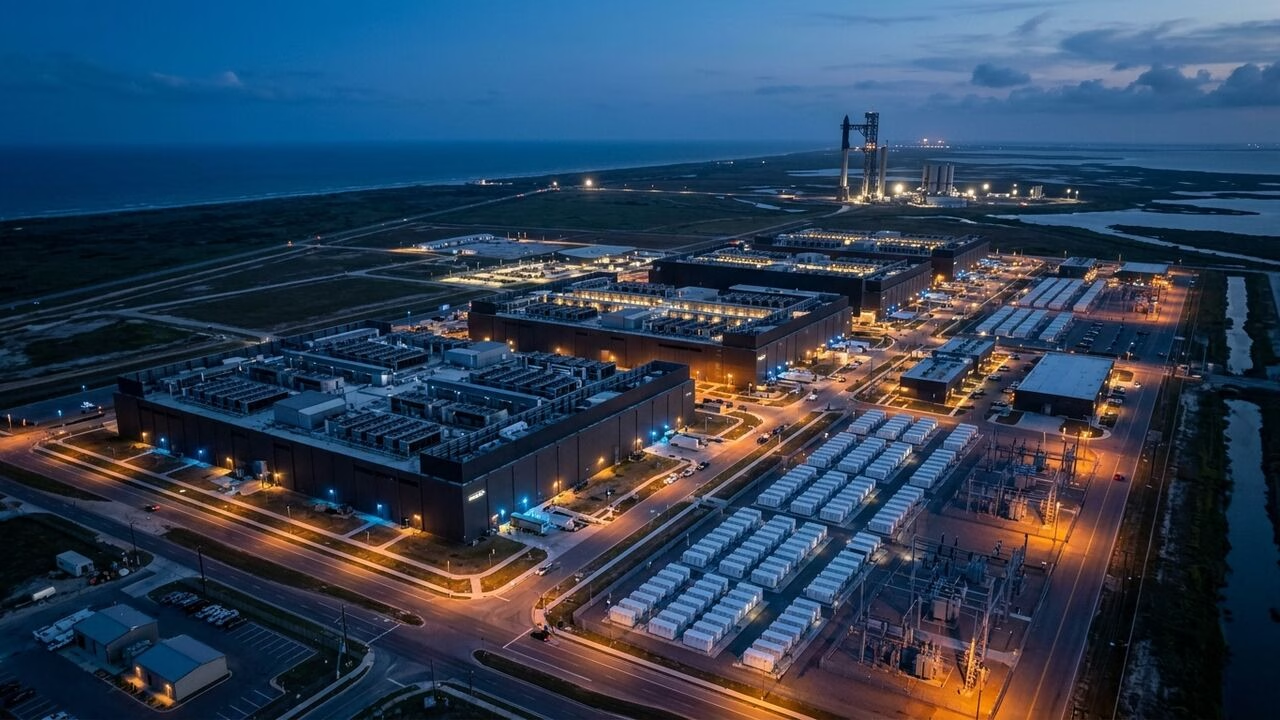
- Rocket Campus Repurposing. Aerospace launch and manufacturing sites, including Starbase in Boca Chica, Texas, and the 100-million-square-foot TeraFab campus, are being converted to house high-density AI clusters.
- Behind-the-Meter Energy. Over 8 gigawatts of captive generation are tracked, deploying aeroderivative mobile gas turbines, dedicated dual gas pipelines, and a massive 5.9-gigawatt-hour Tesla Megapack battery field.
- Breakneck Construction Speed. By manufacturing electrical switchgear and modular cooling units internally through Tesla, SpaceX retrofits 200-megawatt facilities in under 91 days, cutting industry timelines in half.
- Neocloud Economics. Supported by Starlink cash flow and rocket revenue, SpaceX is leasing high-density compute to external AI firms, establishing itself as the world’s most lucrative specialized computing provider.
While traditional technology giants battle regulatory backlogs, utility grid delays, and equipment shortages to build artificial intelligence clusters, Elon Musk is executing an infrastructure shift that dwarfs standard hyperscale development. SpaceX is moving rapidly to become the largest AI cloud computing operator in the world.
An extensive investigative analysis published by semiconductor research boutique SemiAnalysis reveals that SpaceX is putting together 13 gigawatts of datacenter compute across North America in just 18 months. By repurposing aerospace facilities, manufacturing electrical hardware in-house through Tesla, and deploying off-grid gas generation, SpaceX is outpacing the capital deployment timelines of Amazon, Microsoft, and Google.
The scale of this buildout fundamentally alters the economics of artificial intelligence training and inference. What began as private computing infrastructure for xAI is evolving into a commercial compute utility that rivals sovereign power grids in scope.
Table of Contents
- The 13GW Roadmap: Tracking Massive Datacenter Expansion
- Repurposing Starbase and TeraFab for Heavy Compute
- Behind-the-Meter Power: Gas Turbines and Megapacks
- Tesla Synergies and 90-Day Construction Sprints
- The Neocloud Playbook: Commercial Leasing and Margins
- Factsheet: SpaceX AI Cloud vs Hyperscale Datacenters
- Frequently Asked Questions
The 13GW Roadmap: Tracking Massive Datacenter Expansion
To grasp the magnitude of 13 gigawatts, consider that the entire operational datacenter footprint of Northern Virginia, the largest digital hub in the world, totals approximately 3.4 gigawatts. SpaceX intends to deploy nearly four times that capacity in less than two years.
SemiAnalysis tracked this expansion through satellite imagery, environmental filings, and local zoning disclosures. The analysts verified over 9 gigawatts of physical datacenter capacity already active or in active development across Texas, Tennessee, and Mississippi.
The speed of this rollout relies on aggressive land acquisition and heavy industrial retrofits. At the Colossus campus in Memphis and Southaven, SpaceX is purchasing hundreds of residential properties surrounding the industrial park. This land buffer reduces community noise concerns from cooling towers while providing on-site housing for construction crews working round-the-clock shifts.
Repurposing Starbase and TeraFab for Heavy Compute
Perhaps the most unexpected revelation in the report is how SpaceX is repurposing sites originally dedicated to aerospace manufacturing and orbital launches.
At Starbase in Boca Chica, Texas, where Starship rockets undergo orbital flight testing, ground crews cleared land in late August. By late September, structural steel was standing for two large-scale datacenters. The facility is being fitted with aeroderivative gas turbines capable of producing over 1 gigawatt of dedicated electricity. A fiber optic connection through the Port of Brownsville provides high-bandwidth data transit directly to global telecom trunks.
In Grimes County, Texas, the 100-million-square-foot TeraFab development was initially announced as a massive semiconductor fabrication campus. Filings show that SpaceX has incorporated dedicated data halls within the TeraFab blueprint. Representatives have indicated that these facilities will not be restricted to internal rocket telemetry, opening substantial compute capacity for third-party commercial tenancy.
Behind-the-Meter Power: Gas Turbines and Megapacks
The single greatest obstacle facing artificial intelligence expansion today is electrical grid congestion. Regional utilities routinely tell developers that connecting a 200-megawatt cluster requires four to seven years of transmission line upgrades.
SpaceX bypasses public utilities through behind-the-meter generation. The company has secured rights to more than 8 gigawatts of captive power, deploying truck-mounted aeroderivative gas turbines and contracting dedicated natural gas pipeline feeds.
“SpaceX may be the fastest datacenter builder in the world, even more so than Chinese peers. These sites now build so fast that the power supply is often identified mid-flight.”
SemiAnalysis Research Team
To balance intermittent turbine loads and ensure continuous uptime, SpaceX is installing the largest battery energy storage system in the United States. At the Colossus 2 complex, an energy storage array nearing 5.9 gigawatt-hours of Tesla Megapack units is under construction. The batteries absorb surplus generation during low-load intervals and smooth voltage spikes during heavy training cycles.
Tesla Synergies and 90-Day Construction Sprints
Traditional datacenter construction requires 8 to 14 months for building shell completion, followed by months of electrical fit-outs. Lead times for high-voltage transformers and switchgear currently stretch beyond two years across the commercial market.
SpaceX circumvents these delays by integrating supply chains across Elon Musk’s corporate network. Tesla has begun manufacturing modular mechanical, electrical, and plumbing equipment directly. Instead of waiting for third-party suppliers, prefabricated power skids, liquid cooling manifolds, and switchgear arrive pre-tested on flatbed trucks.
The Neocloud Playbook: Commercial Leasing and Margins
While the colossal clusters were initially conceived to support xAI’s Grok training runs, the capital requirements of 13 gigawatts demand commercial monetization. SpaceX is capitalizing on severe market GPU shortages by offering wholesale compute to outside frontier laboratories and enterprise clients.
Because SpaceX funds construction using high-margin Starlink revenue and satellite launch contracts, it avoids the crippling debt burdens weighing down pure-play datacenter developers. The company can offer turn-key, multi-megawatt clusters with guaranteed on-site power at premium hourly rates.
By blending aerospace engineering disciplines, off-grid energy independence, and captive hardware manufacturing, SpaceX is redefining the baseline for compute infrastructure. As model builders demand gigawatt-scale clusters, the aerospace manufacturer is positioning itself as the indispensable foundation of global artificial intelligence.
Factsheet: SpaceX AI Cloud vs Hyperscale Datacenters
The table below highlights the operational and structural differences between SpaceX’s compute deployment model and traditional hyperscale cloud providers.
| Infrastructure Dimension | Traditional Hyperscaler (AWS, Azure, GCP) | SpaceX AI Cloud Deployment |
|---|---|---|
| Target Compute Scale | 100MW to 500MW per campus | 13GW total portfolio target across multi-GW sites |
| Primary Power Source | Public utility grid interconnection | Captive on-site aeroderivative gas turbines and pipelines |
| Energy Storage Capacity | Diesel generator backup (minutes to hours) | 5.9GWh Tesla Megapack battery array for baseload buffering |
| Construction Velocity | 8 to 14 months per data hall | 91 days or less using modular prefabricated skids |
| Electrical Equipment Sourcing | Third-party vendor queues (24-month lead times) | In-house Tesla modular manufacturing of MEP hardware |
| Campus Geography | Suburban datacenter corridors (Northern Virginia, Phoenix) | Repurposed aerospace campuses (Starbase, TeraFab, Memphis) |
As enterprise AI workloads expand across vast computing clusters, runtime security becomes paramount. Read our report on how CrowdStrike launched an AI Kill Switch to stop rogue autonomous agents before anomalous behavior damages corporate networks.
Frequently Asked Questions
Why is SpaceX building artificial intelligence datacenters?
SpaceX is building compute clusters to support xAI’s rapid model training requirements while commercializing surplus capacity to outside enterprise clients, turning aerospace infrastructure and Starlink revenue into a high-margin computing cloud.
How big is 13 gigawatts of datacenter power?
A 13-gigawatt capacity represents almost four times the entire datacenter power footprint of Northern Virginia, enough electricity to power roughly 10 million average American homes continuously.
How does SpaceX bypass electric utility grid delays?
SpaceX uses behind-the-meter power architecture, contracting directly with natural gas pipeline operators and deploying on-site mobile gas turbines and Tesla Megapack batteries without waiting years for utility transmission upgrades.
What is the role of Tesla Megapacks at Colossus 2?
Tesla Megapacks provide 5.9 gigawatt-hours of utility-scale storage at Colossus 2, balancing fluctuating electricity demand from GPU clusters while smoothing on-site turbine generation cycles.
Which sites are being converted into SpaceX datacenters?
Identified sites include the Colossus 2 campus in Memphis and Southaven, the Starbase rocket complex in Boca Chica, Texas, and the 100-million-square-foot TeraFab semiconductor property in Grimes County, Texas.





[…] industrial AI infrastructure is scaling at unprecedented velocity. Read our investigation on how SpaceX is assembling 13 gigawatts of compute to build the world’s biggest AI cloud across 13 gigawatts of behind-the-meter […]
[…] risk connects directly to the unprecedented power demands documented in our investigation of SpaceX and xAI planned 13-gigawatt computing cluster, where access to continuous megawatt power has superseded silicon availability as the primary […]
[…] dynamic mirrors the gigawatt-scale ambitions described in our coverage of SpaceX and xAI 13-gigawatt computing campus, where securing massive energy contracts is now the chief bottleneck determining which companies […]