
Executive Summary
- Live Video Calling Deployment: Meta rolled out Muse Voice, enabling all United States users to conduct real-time video calls with its flagship consumer artificial intelligence agent, Muse.
- Dual Real-Time Models: The feature is driven by proprietary Muse Realtime Avatar and Muse Realtime Voice models, generating synchronised facial expressions, reactive gestures, and low-latency vocal synthesis.
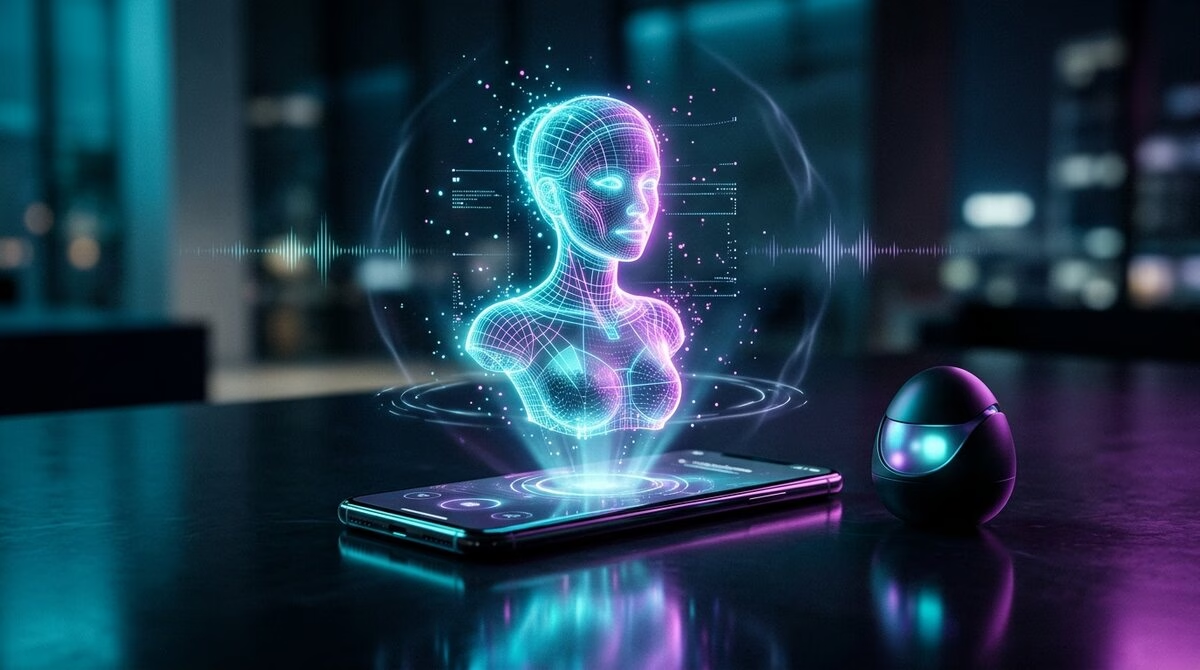
- Customizable 3D Avatars: Users interact with an animated digital companion (default named Jolly), which can be customised into human likenesses, animal figures, or stylized digital characters.
- Alexandr Wang Demonstration: Meta Chief AI Officer Alexandr Wang publicly showcased the system, using a virtual dog avatar to handle conversational banter and task guidance.
- Hardware Roadmap to Muse Charm: Real-time avatar streaming launches across iOS, Android, web, and Mac, serving as the core operating interface for Meta upcoming Tamagotchi-like companion wearable, Muse Charm.
Table of Contents
The Evolution of Muse: From Text Prompts to Video Calls
Meta has officially expanded consumer access to Muse Voice, introducing two-way video calling with its flagship conversational assistant across the United States. First previewed at the Meta Connect developer conference in September, the update transitions Muse from a conventional text-and-audio assistant into an animated conversational companion that mirrors human conversational cadence.
The feature rollout was announced by Meta Chief AI Officer Alexandr Wang, who demonstrated the interactive avatar capabilities on social media. In the demonstration, Wang engaged with a customized white dog avatar, exchanging banter and receiving real-time suggestions regarding content disclaimers. The interaction underscored Meta intention to make artificial intelligence interactions feel playful, approachable, and socially integrated.
This consumer engagement push mirrors enterprise facial analysis rollouts, such as Mary Kay deploying 150-point facial AI mapping across global markets, showing that interactive computer vision interfaces are capturing mainstream attention.
Real-Time Latency and Expression Synthesis
Conducting real-time video conversations with a generative model presents extreme latency hurdles. Unlike asynchronous text chatbots where a two-second latency pause feels acceptable, a face-to-face video interaction breaks down if audio and visual cues lag behind human speech.
Meta engineering team resolved this bottleneck by deploying two coordinated neural models:
- Muse Realtime Voice: A sub-150-millisecond audio streaming model capable of dynamic pitch modulation, conversational interjections, and natural pause detection.
- Muse Realtime Avatar: A lightweight neural rendering engine that calculates micro-expressions, eye contact shifts, and subtle head tilts driven directly by acoustic phonemes.
Crucially, Meta clarified that the Muse avatar does not process incoming video footage of the user room. The assistant hears user vocal audio and processes text prompts, rendering its own facial expressions to match the emotional tone of the ongoing exchange while preserving consumer visual privacy.
The Anthropomorphic Bet: Why Meta Prioritizes Digital Avatars
While OpenAI and Google have primarily focused on minimalist audio wave animations for voice assistants, Meta is betting aggressively on full anthropomorphic visual avatars. The company believes that giving digital agents an expressive visual face creates stronger emotional engagement, transforming an impersonal utility into an endearing daily companion.
Users can interact with the default animated mascot, an expressive character named Jolly, or customize their avatar appearance to resemble stylized human figures, fantasy characters, or household pets. By allowing complete aesthetic customization, Meta aims to overcome the uncanny valley effect that often alienates users from hyper-realistic human avatars.
Meta internal consumer research indicates that users engage in longer conversational sessions and ask more complex exploratory questions when interacting with a visually reactive character than when staring at a static microphone button.
The Hardware Bridge: From Smartphone Screens to Muse Charm
The nationwide software release on mobile, desktop web, and Mac represents the primary testing ground for Meta broader consumer hardware ambitions. Before the end of 2026, Meta plans to release a dedicated physical hardware companion dubbed Muse Charm.
Described internally as a modern, AI-native reimagining of the classic Tamagotchi digital pet, Muse Charm is designed as a compact wearable equipped with a miniature display screen, microphone array, and local speaker. The device will host the user personalized Muse avatar, allowing owners to carry their digital companion on keychains or lanyards.
Additionally, Meta confirmed that real-time Muse video avatar streaming will eventually expand to its Ray-Ban Meta AI smart glasses ecosystem, projecting interactive assistant overlays into ambient heads-up visual fields.
Technical Specifications: Muse Video Architecture
The table below details the deployment platforms, latency targets, and rendering specifications powering Meta Muse Voice rollout:
| Architecture Dimension | Production Specification | User Experience Impact |
|---|---|---|
| Audio Latency Budget | Sub-180ms voice round-trip | Enables natural conversational turn-taking without awkward pauses. |
| Avatar Rendering Engine | Muse Realtime Avatar | Renders synchronized lip movements and emotional micro-gestures. |
| Privacy Architecture | Audio-only ingest (no camera feed required) | Users see the avatar, but the agent does not record user physical surroundings. |
| Active Supported Platforms | iOS, Android, Web, macOS | Available immediately to all United States consumer accounts. |
| Upcoming Hardware Integration | Muse Charm wearable, Smart Glasses | Extends avatar interactions into standalone physical devices. |
Frequently Asked Questions
Can the Muse AI avatar see through my phone camera?
No, Meta confirmed that Muse video calls do not capture or process video of the user room. The interaction is a one-way visual render: the user sees the animated avatar on their screen, while the avatar listens to the user voice and generates emotional facial expressions corresponding to the dialogue context.
What is the upcoming Muse Charm device?
Muse Charm is Meta planned standalone hardware device, conceived as a modern AI-powered companion akin to a Tamagotchi. It features a compact screen and audio components that display the user custom Muse avatar, allowing real-time voice and visual interaction without requiring an active smartphone application.
Who demonstrated the new Muse video feature?
Meta Chief AI Officer Alexandr Wang publicly introduced and demonstrated the feature on social media, chatting with a personalized white dog avatar to illustrate conversational humor and real-time task assistance.
Related Tech Intelligence: For further analysis of Meta platform strategy, read our report on Meta acquiring multi-agent coding startup Conductor.