
Retrieval-augmented generation pipelines often struggle in production because mathematical distance in high-dimensional space does not equal human semantic intent, according to an architectural study published by Towards AI on November 24, 2026.
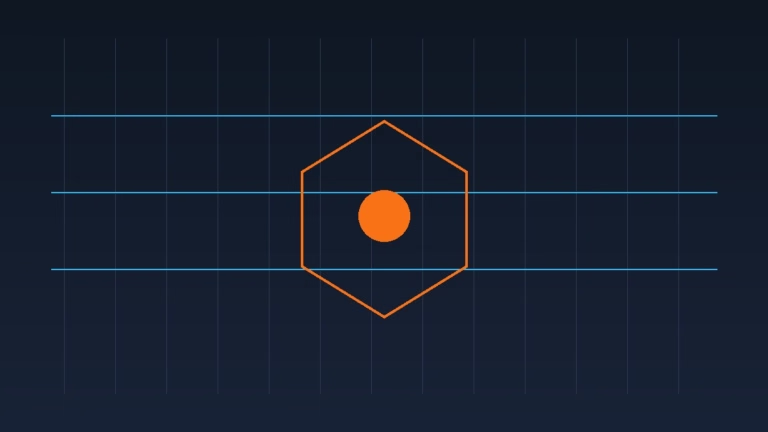
While vector databases execute cosine similarity and Euclidean calculations with flawless geometric accuracy, the underlying embeddings flatten critical logical modifiers and exact identifiers.
Executive Summary
- Mathematical Precision Paradox: Vector databases calculate geometric distances with exact precision, yet retrieval systems often return counterintuitive or incorrect answers.
- Antonym Proximity Defect: High-dimensional embedding models cluster opposing statements closely together because antonyms share nearly identical vocabularies and syntactic contexts.
- Loss of Logical Modifiers: Dimensionality compression strips away critical operational modifiers like ‘never’, ‘except’, and ‘not’, causing semantic confusion in RAG pipelines.
- Adoption of Hybrid Search: Production enterprise architectures are shifting to hybrid retrieval pairing dense vector models with BM25 lexical search and cross-encoder re-rankers.
Table of Contents
- Executive Summary
- Information Retrieval Paradigms in Enterprise AI Systems
- The Architectural Paradox of Mathematical Precision in Vector Search
- Why Contradictory Statements Live Close Together in Embedding Space
- Dimensional Compression and the Exact Identifier Blindspot
- Enterprise Shift to Hybrid Retrieval and Two-Stage Re-Ranking
- Frequently Asked Questions
- Related Analysis & Guides
- Primary Sources & References
Information Retrieval Paradigms in Enterprise AI Systems
| Search Technique | Primary Strength | Common Failure Mode | Recommended Deployment |
|---|---|---|---|
| Dense Vector Search | Captures conceptual context and synonyms | Blind to exact serials and negative logic | Broad exploratory semantic querying |
| BM25 Lexical Search | Finds exact keywords, codes, and IDs | Misses queries using alternate phrasing | Error logs, legal statutes, and part codes |
| Hybrid + Cross-Encoder | Combines conceptual depth with strict precision | Adds minor computational latency per request | Production enterprise RAG pipelines |
The Architectural Paradox of Mathematical Precision in Vector Search
Retrieval-augmented generation pipelines often struggle in production because mathematical distance in high-dimensional space does not equal human semantic intent, according to an architectural study published by Towards AI on November 24, 2026.
While vector databases execute cosine similarity and Euclidean calculations with flawless geometric accuracy, the underlying embeddings flatten critical logical modifiers and exact identifiers.
Why Contradictory Statements Live Close Together in Embedding Space
In modern machine learning frameworks, embedding models translate sentences into vectors spanning hundreds of dimensions, such as 768 or 1536 float values.
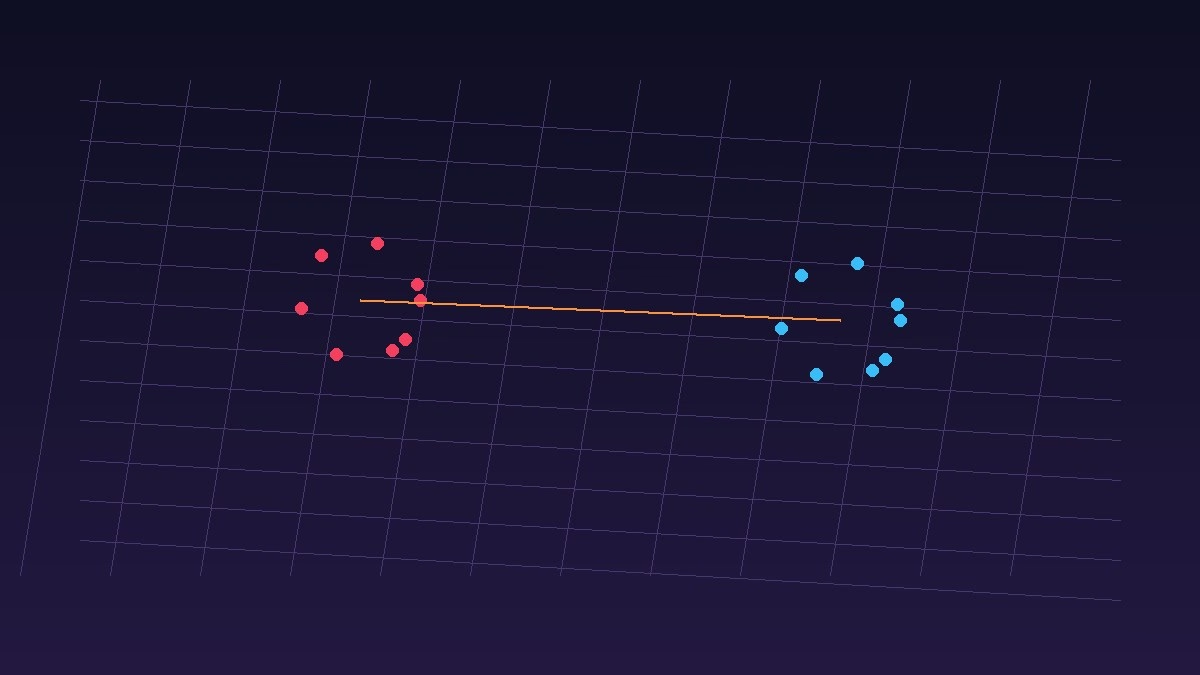
When users submit a query, the engine identifies records with the shortest distance. However, contradictory statements like ‘the server is secure’ and ‘the server is not secure’ share nearly identical syntactic patterns and vocabulary.
Because embedding models focus on general topical distributions, opposing sentences sit adjacent in vector space. As a result, the database retrieves opposite answers with high mathematical confidence.
Dimensional Compression and the Exact Identifier Blindspot
Compressing multi-sentence documents into a single numerical vector removes delicate grammatical boundaries.
Words such as ‘never’, ‘except’, and ‘unless’ carry minimal mathematical weight compared to heavy domain nouns. Consequently, systems retrieve documents matching the general theme while ignoring strict operational constraints.
Dense vector models also struggle with exact identifiers such as serial codes, error logs, and statute numbers. Rather than locating the exact alphanumeric string, vector search retrieves items that merely share a similar format.
Enterprise Shift to Hybrid Retrieval and Two-Stage Re-Ranking
To overcome single-vector limitations, enterprise developers have shifted toward hybrid retrieval architectures.
Hybrid systems query dense vector indexes alongside traditional lexical search algorithms like BM25 to capture both conceptual themes and exact alphanumeric matches.
Engineers then pass candidate chunks through a secondary cross-encoder re-ranker. This deep model evaluates query and document pairs jointly, re-ordering results by true logical utility.
Frequently Asked Questions
Why does vector search return contradictory answers?
Opposite statements share nearly identical vocabulary and syntax. Embedding models place them close together in geometric space despite opposite logical meanings.
What is keyword blindness in vector search?
Vector search maps concepts rather than exact characters. When searching for unique strings like error codes or part numbers, vector engines often fetch unrelated numbers that look structurally similar.
How do developers resolve vector search accuracy issues?
Engineers deploy hybrid search architectures that combine dense vectors with BM25 keyword matching, followed by a secondary cross-encoder re-ranking stage to judge logical relevance.
Related Analysis & Guides
Explore related engineering and industry analysis from TeckScaler:
- Google AlloyDB Omni Adds Native Local AI Model Execution
- Best Personal AI Agents in 2026: Memory and Security Review
Primary Sources & References
Published by the TeckScaler Editorial Team. We deliver rigorous, technical, people-first reporting on artificial intelligence systems, infrastructure, and developer tooling.
Hands-On Implementation: Ready to replace dense-only lookup in your own codebase? Follow our step-by-step tutorial on how to build a hybrid RAG pipeline with Python and BM25, or browse our production RAG systems guide.