
Elon Musk publicly endorsed a provocative long-term infrastructure prediction attributed to Google co-founder Larry Page on November 16, 2026, agreeing that ‘five nines’, or 99.999 percent, of all global computing will eventually operate in space. The consensus between the two tech visionaries highlights insurmountable physical constraints threatening ground-based data centers.
With terrestrial electrical grids straining under multi-gigawatt AI training campuses and municipal water supplies facing depletion, space-based computing offers continuous solar irradiance and infinite radiative cooling. Musk stated on social platform X that Page’s orbital forecast represents one of the most accurate technological predictions of the modern era.
Executive Summary
- The Prediction: 99.999 percent (‘five nines’) of human computing capacity will eventually operate in orbit
- Visionary Alignment: Elon Musk publicly affirmed the long-term forecast originated by Google co-founder Larry Page
- Terrestrial Drivers: Power grid interconnection delays exceeding 5 years, land scarcity, and cooling water depletion
- Orbital Advantages: Zero atmospheric attenuation for solar panels and vacuum radiative heat dissipation
- Primary Source: https://www.thestreet.com/investing/elon-musk-larry-page-five-nines-ai-data-center-compute-prediction
Table of Contents
- Executive Summary
- Terrestrial Versus Orbital AI Data Center Infrastructure
- The Terrestrial Energy Wall and Utility Grid Deadlocks
- Starship Economics and Orbital Radiative Cooling Architectures
- Frequently Asked Questions
- Related Analysis & Guides
- Primary Sources & References
Terrestrial Versus Orbital AI Data Center Infrastructure
| Infrastructure Parameter | Terrestrial Hyperscale Campus | Orbital Solar AI Platform |
|---|---|---|
| Primary Energy Source | Coal, natural gas, nuclear, and regional electrical grids | Continuous unfiltered space solar irradiance (1,361 W/m2) |
| Cooling Mechanism | Evaporative water towers and liquid-to-air chillers | Passive radiative heat dissipation into deep space (3 Kelvin) |
| Interconnection Timeline | Average 5.4-year transmission queue wait time | Direct satellite launch and autonomous orbital docking |
| Water Consumption | Hundreds of millions of gallons per campus annually | Zero water consumption required in orbital vacuum |
| Primary Bottleneck | Local utility politics and transmission line availability | Heavy-lift rocket launch costs and orbital debris mitigation |
The Terrestrial Energy Wall and Utility Grid Deadlocks
The shift toward orbital computing is accelerating due to the harsh realities of terrestrial power distribution. Ground-based AI facilities currently face backlog queues exceeding five years across major regional transmission organizations like PJM Interconnection and ERCOT.
Local communities across North America and Europe have mounted fierce political resistance against new hyperscale campuses, citing surging residential utility rates, industrial noise pollution, and water diversion. Utilities can no longer guarantee the uninterrupted gigawatts required by frontier clusters.
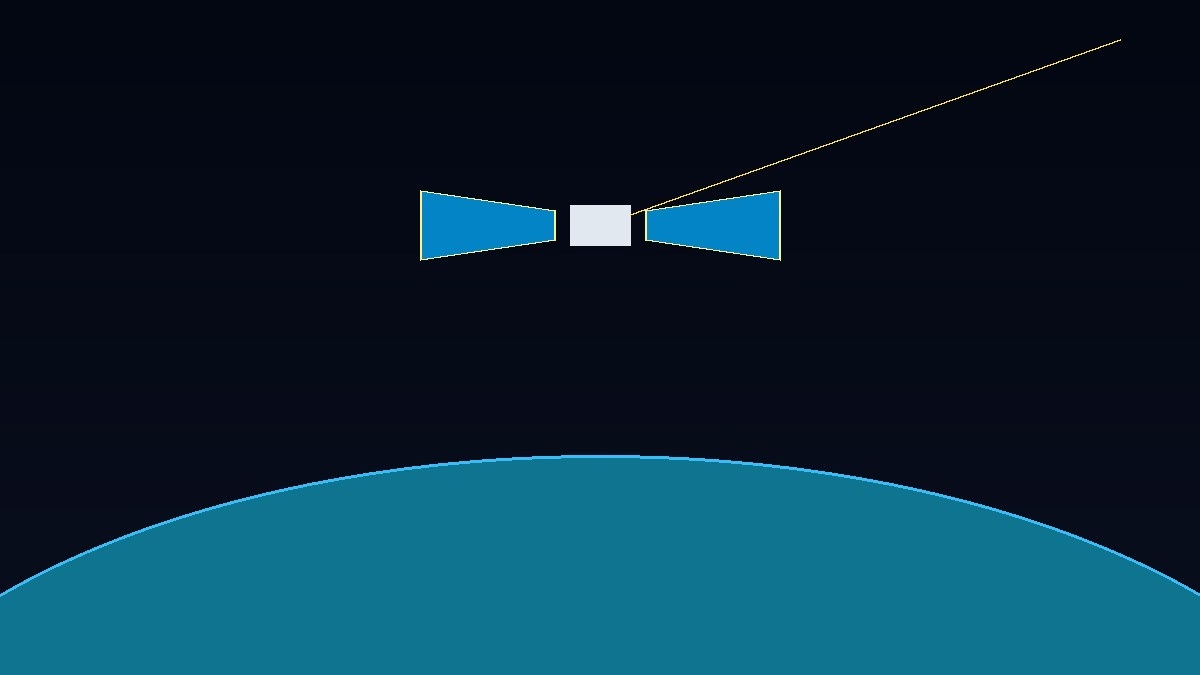
In space, solar panels operate without weather interruptions, night cycles, or atmospheric absorption, capturing up to five times more energy per square meter than ground arrays. By lifting computation above the biosphere, technology operators bypass terrestrial environmental conflicts.
Starship Economics and Orbital Radiative Cooling Architectures
While launching electronics into orbit has historically been cost-prohibitive, next-generation fully reusable heavy-lift launch vehicles are altering space economics. Systems like SpaceX’s Starship aim to compress orbital payload delivery costs below $100 per kilogram.
Data center engineers are actively designing modular satellite server pods equipped with deployable graphene radiators. These pods leverage the ambient cold of deep space (3 Kelvin) to radiate away thousands of kilowatts of heat without consuming a single drop of cooling water.
Inter-satellite optical laser networks already transmit multi-terabit data streams across orbit at the speed of light in vacuum, which is 40 percent faster than terrestrial fiber-optic cables. While interactive latency-sensitive consumer workloads will remain local, massive model training and batch reasoning are poised for migration to space.
Frequently Asked Questions
What does ‘five nines’ mean in Larry Page’s prediction?
It refers to 99.999 percent of all global computing capacity eventually moving into space, leaving only 0.001 percent on Earth for local interaction.
Why does space offer an advantage for AI computing?
Space provides unlimited 24/7 solar power without atmospheric interference, zero water consumption for cooling, and passive heat radiation into the deep space vacuum.
How will orbital data centers transmit results back to Earth?
Orbital data centers will use high-bandwidth optical laser satellite links and direct-to-ground radio frequency downlinks to transfer weights and inference tokens.
Related Analysis & Guides
Explore related engineering and policy reporting from TeckScaler:
- Harvard Study: AI Data Center Grid Strain: Read the landmark Harvard energy audit documenting terrestrial grid exhaustion.
- Elon Musk Integrates AI Across Tesla & SpaceX: Examine unified computing infrastructure strategies across modern space hardware.
Primary Sources & References
Published by the TeckScaler Editorial Engineering Team. We deliver rigorous, technical, people-first reporting on artificial intelligence systems, infrastructure, and governance.