


Executive Summary
- New AI Ingredient Tool. The New York Times launched an automated food swap tool in its Cooking app. The tool tweaks steps when cooks swap items like spinach for Swiss chard.
- 77% Negative Reader Sentiment. Sentiment analysis across 159 reader comments shows that 77% opposed the feature. Only 14% backed the tool, while 9% were mixed.
- Core Reader Grievances. Subscribers cited subscription costs of $390 per year, fears of ruined meals, server power use, and the loss of human craft.
- No Opt-Out Toggle. The Times confirmed that users cannot turn off the AI tool in app settings, though using it remains voluntary.
The New York Times added a new AI tool to its Cooking app. The feature helps home cooks make food swaps on the fly. But the change sparked swift pushback from loyal subscribers.
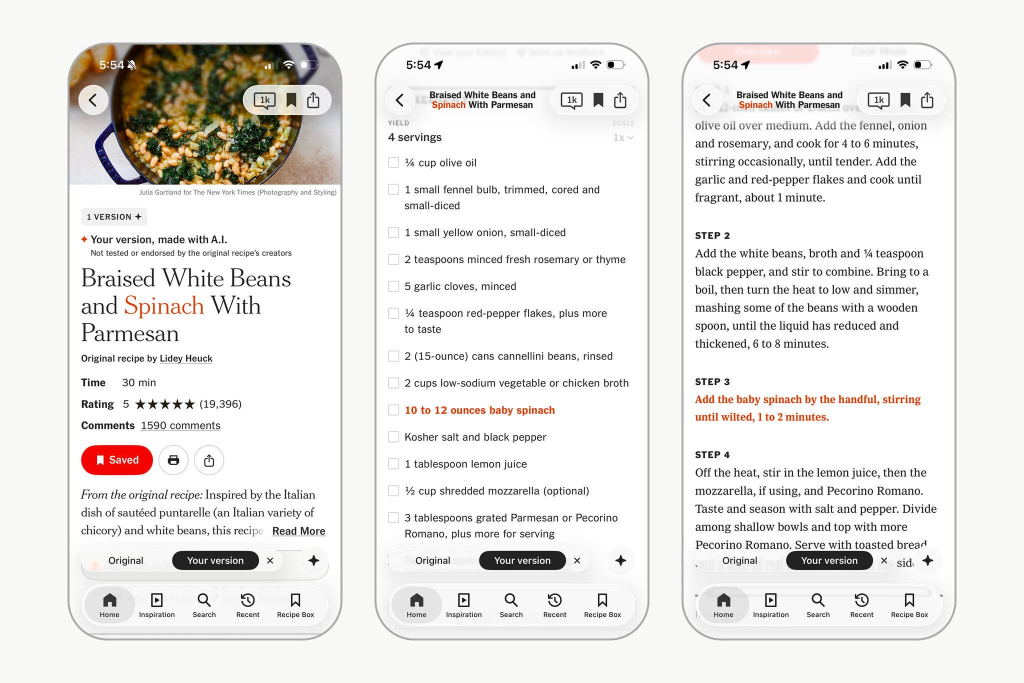
The app previously added tools to convert weights and scale recipes up or down. The latest update focuses on ingredient swaps. If a cook lacks Swiss chard for braised beans, the AI adjusts the recipe for baby spinach. Because spinach wilts fast, the app tells the cook to add it late in the cooking step.
Table of Contents
How the AI Ingredient Tool Works
Cooking staff spent months testing the tool to match kitchen standards. Editor Genevieve Ko noted that team members applied the same rigor as classic editing. Ko also tried to address user fears about server energy use and big tech power. She stressed that the tool supports real, hands-on cooking.
When a cook turns on the feature, the app creates a custom view labeled with an AI tag. The screen shows changes in bold text. It also adds a note stating that original writers did not test the new steps.
Reader Revolt: 77% Negative Sentiment
Readers were not convinced. Reader sentiment across 159 comments shows that 77% opposed the AI tool. Only 14% supported it, while 9% were mixed.
Subscribers voiced several key complaints. Many argued that cooking is a tactile craft that should not rely on software. Others cited green worries over server power, echoing public debates on AI carbon emissions and server water use. Longtime fans also noted that they pay up to $390 a year for human recipes, not machine outputs.
Comparison Factsheet: Reader Complaints vs. Editorial Goals
The factsheet below compares subscriber complaints with the goals stated by Times editors.
| Topic Area | Subscriber Feedback (77% Opposed) | Times Editorial Defense |
|---|---|---|
| Product Value | Users pay $390 each year for tested human recipes, not AI. | AI makes existing recipes more flexible for home pantries. |
| Recipe Quality | Fears of flawed cook times and ruined dinners. | Staff spent months testing prompts against kitchen rules. |
| User Control | Readers asked for a setting to turn off all AI tools. | No off switch exists, but using the tool is voluntary. |
| Server Footprint | Anger over server power use for minor kitchen swaps. | Editors noted concerns but framed the tool as a helpful aid. |
| Human Craft | Cooking is viewed as a personal journey of trial and error. | Tool is presented as a bridge to real tactile meal prep. |
No Opt-Out and the Debate Over Craft
Dozens of readers asked for an option to turn the AI off. The Times confirmed that users cannot shut off the feature, though using it remains optional.
A small group of readers welcomed the tool. Supporters noted that AI helps make fast gluten-free and allergy swaps. Working parents also praised the tool for speeding up busy weeknight dinners.
The Broader Backlash Against Lifestyle AI
The dispute highlights a growing rift in digital publishing. As media firms add automated tools, loyal readers often push back. Similar resistance is surfacing across creative fields, from digital art to AI models replacing human fashion professionals. Fans value personal human craft over automated convenience.
The fight also reflects wider public unease over automated tools, as seen in ongoing debates over autonomous software systems and singularity claims. Whether publishers can add AI tools without losing loyal readers remains an open question.
Explore Engineering Utilities and AI Solutions
Test formatting, token efficiency, and text processing workflows using our suite of Free Online Developer Tools.
Building secure, compliant consumer AI applications or auditing user-facing workflows for your company? Consult with TeckScaler’s enterprise IT specialists →
Frequently Asked Questions
What new AI feature did NYT Cooking introduce?
The app added an AI food swap tool. It adjusts ingredient amounts and cook steps when cooks swap items in recipes.
Why are NYT Cooking subscribers upset about the update?
Roughly 77% of reader comments were negative. Subscribers noted they pay $390 per year for tested human recipes, not machine guesses.
Can subscribers turn off the AI substitution feature?
No. The Times confirmed there is no setting to turn off the tool, though using it remains voluntary.
How did the Times test and calibrate the tool?
Times editors spent months testing sample outputs. They tuned model prompts to ensure suggestions match test kitchen standards.







[…] Consumer resistance to expanding server footprints is also fueling consumer product disputes. When mainstream apps add automated assistants, subscribers cite carbon emissions and energy use, as seen in the reader revolt over NYT Cooking AI ingredient substitutions. […]