
Executive Summary
- 89% Review Time Cut. Enveda Biosciences deployed Anthropic’s Claude to slash drug manufacturing documentation review time from 25.9 hours to 2.8 hours.
- Higher Audit Accuracy. Across 1,061 pages, the system caught all 11 errors flagged by human reviewers, plus seven additional quality discrepancies that human checkers missed.
- FDA Filings in Hours. Claude produced first drafts of FDA Investigational New Drug application sections in four hours, down from three months of manual writing.
- Broad Life Sciences Expansion. Anthropic’s life sciences team is collaborating with Bristol Myers Squibb, Generate Biomedicines, and Divergence Labs on drug discovery pipelines.
- Mandatory Human Oversight. Both firms confirmed that AI serves as an administrative assistant, leaving final batch release decisions strictly to human quality teams.
Reviewing drug records takes days of manual work. A new test shows AI can cut that time to hours.
Biotechnology firm Enveda paired with AI lab Anthropic to speed up its quality checks. The team built an internal system on Claude. They cut document review times by eighty-nine percent.
Human reviewers at Enveda previously needed 25.9 hours to examine batch records. With Claude and human checks working together, the time dropped to just 2.8 hours.
The trial offers clear proof that AI models can ease paperwork hurdles in drug development.
Table of Contents
How Claude Speeds Up Manufacturing Checks
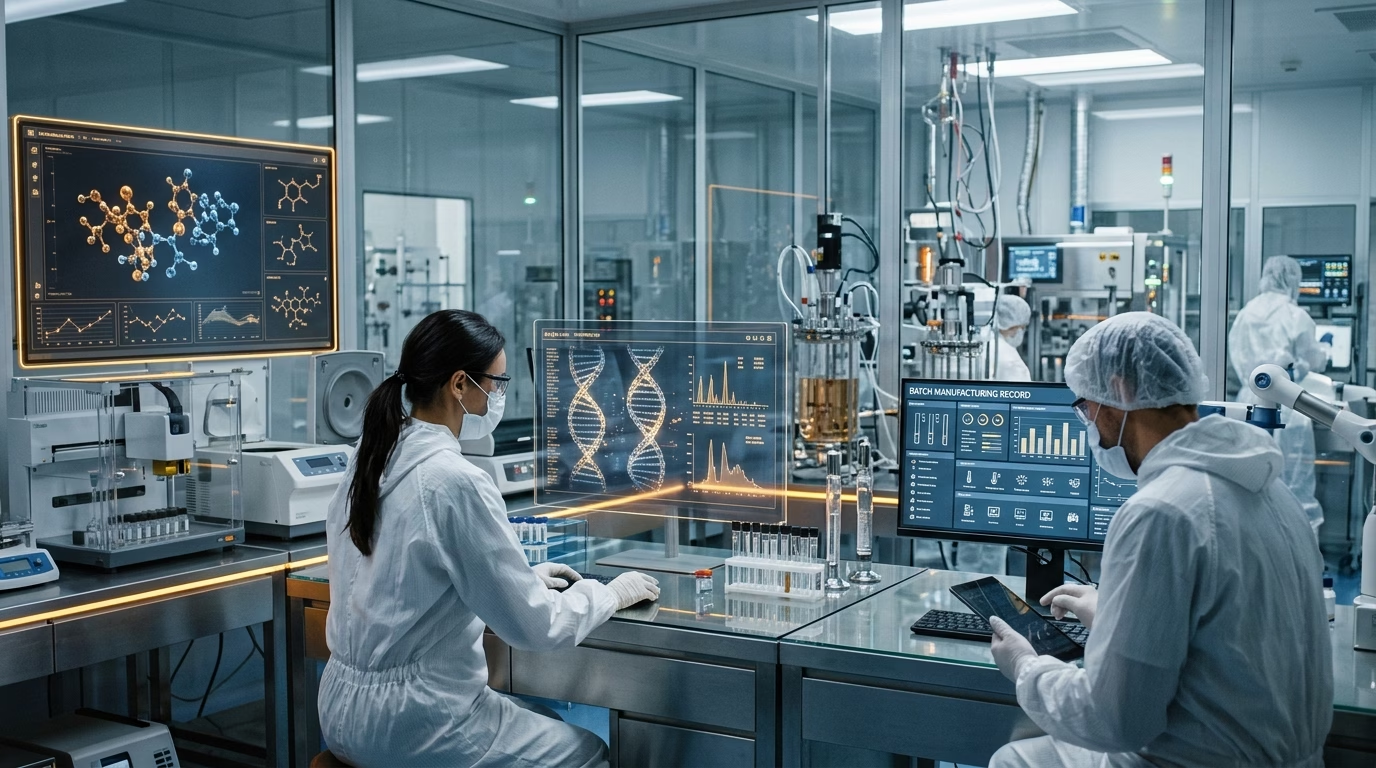
Making medicines requires strict record keeping. In fact, manufacturing chemists at Enveda often spend three-quarters of their time reviewing papers. One senior reviewer once spent ten hours checking a single 500-page record from a partner factory.
To fix this delay, Enveda built the CMC Document Processor, known as CDP. The tool feeds factory logs into Claude. It then checks the text against standard rules and instructions.
In a formal test across 1,061 pages, the AI found all eleven errors that human staff had spotted. It also caught seven extra issues that reviewers had missed. These extra flags included a processing step that ran past its time limit and a test marked as failed without any test data.
Human experts still hold the final say. Enveda’s quality team reviews every flag before approving a batch for patients.
Comparison Factsheet: Manual vs. Claude Workflows
The factsheet below compares standard pharmaceutical documentation and discovery timelines against Claude-assisted pipelines across partner laboratories.
| Workflow Area | Manual Baseline | Claude Workflow | Measured Impact | Human Oversight |
|---|---|---|---|---|
| Batch Record Review | 25.9 hours per batch | 2.8 hours (CDP + QA) | 89% time cut; +7 errors caught | Full QA sign-off required |
| FDA IND Text Drafting | ~3 months manual writing | 4 hours first draft | Drafting reduced from months to hours | 3-week review unchanged |
| CAR T-Cell Gene Design | Manual sequence design | Claude Code proposals | 70% shorter; 10x receptor yield | In vitro laboratory validation |
| Antibody Generation | Bespoke candidate pools | 35,000 antibody designs | Explores wide IgE binding paths | Biochemical binding assays |
Drafting FDA Filings in Hours Instead of Months
The team also tested Claude on regulatory paperwork. Before testing a new drug in clinical trials, biotech firms must submit detailed filings to the US Food and Drug Administration.
Claude wrote the first draft of an application section in four hours. Preparing that same text by hand usually takes about three months. Both methods still require three weeks of human review, but the early draft gave scientists weeks of time back.
Following three internal coding events, most of Enveda’s technical staff now draft regulatory text with Claude. This shift lets them spend more time testing new medicine programs.
Anthropic Expands Deep Into Life Sciences
Anthropic is moving Claude far past basic chatbots and coding tools. As highlighted in our analysis of Anthropic hitting 900 percent retention with Claude Code, enterprise clients are deploying the assistant across specialized technical workflows. The firm has set up a dedicated life sciences team working with six major biotech groups.
Partners include Bristol Myers Squibb for clinical trial planning, as well as BigHat Biosciences, Generate Biomedicines, Divergence Labs, Enveda, and The Column Group.
At Generate Biomedicines, six researchers used Claude Code to design genetic code for cancer therapy. One proposed design was seventy percent shorter than standard versions and produced ten times more cell receptors in lab tests.
At Divergence Labs, Claude helped create thirty-five thousand antibody designs in one month to treat food allergies. Anthropic also bought Mithril Medicine to study rare muscular dystrophy, aiming for human trials by 2028. This rapid commercial momentum also explains why frontier lab valuations have shaped earnings across big tech, as seen in Alphabet’s Q3 results and equity stakes.
Preclinical Gains Face Real World Medicine Tests
While these time savings are large, important limits remain. Most of these projects are still in the lab stage. Faster filing drafts and automated error checks do not guarantee that a medicine will cure disease in humans.
AI can clear the administrative logjam that slows research down. But the hard work of proving drug safety still depends on careful clinical trials.
Explore Engineering Utilities and AI Solutions
Test data formatting, payload conversions, and document parsing scripts using our suite of Free Online Developer Tools.
Building automated document review pipelines, connecting enterprise LLMs, or streamlining biotech compliance? Consult with TeckScaler’s enterprise IT specialists →
Frequently Asked Questions
How much did Claude reduce Enveda’s document review times?
Claude reduced review times by 89 percent. Manual reviews previously took 25.9 hours per batch, which dropped to 2.8 hours when using Claude alongside human verification.
Did Claude catch errors that human reviewers missed?
Yes. In a timed run across 1,061 pages, the system identified all 11 errors flagged by human experts and spotted seven additional discrepancies, such as a process exceeding its allowed time limit.
Can Claude independently release drug batches or file FDA forms?
No. Claude generates early drafts and flags discrepancies, but Enveda’s quality and regulatory teams maintain full responsibility for reviewing findings and approving releases.
What other life sciences organizations work with Anthropic?
Anthropic’s life sciences team collaborates with Bristol Myers Squibb, BigHat Biosciences, Generate Biomedicines, Divergence Labs, Enveda, and The Column Group.