
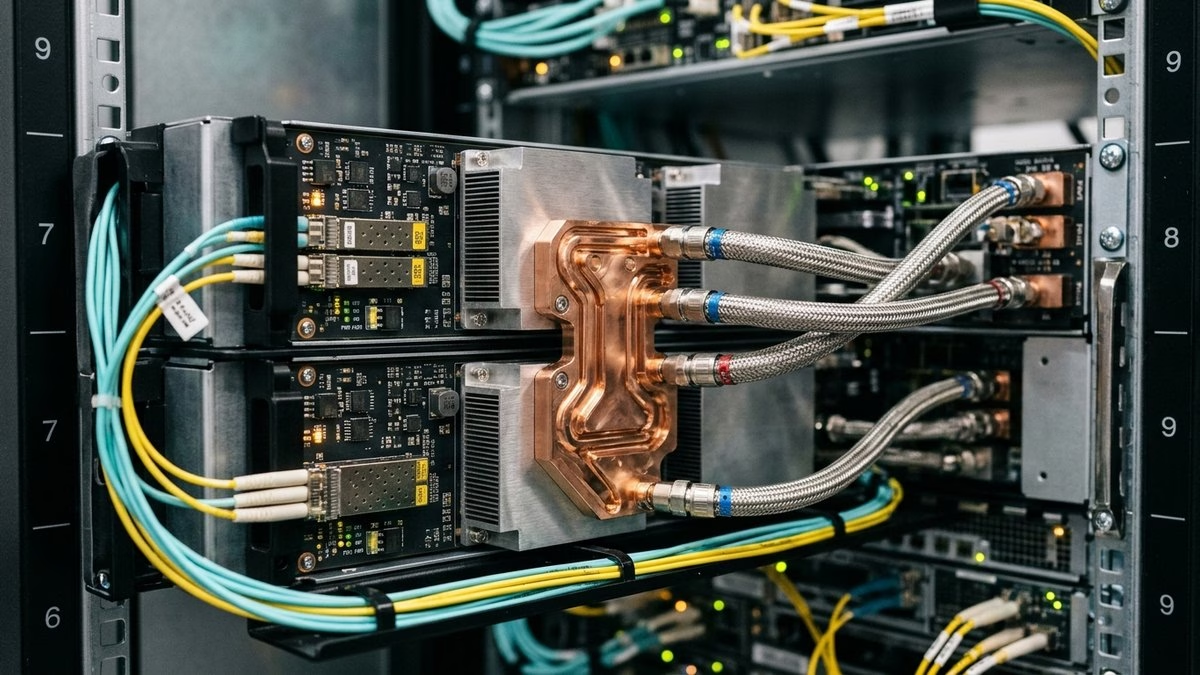

Google added two specialized chips to its eighth-gen Tensor Processing Unit lineup, the TPU 8tx and TPU 8i Max, per Bloomberg via Yahoo Finance on Nov. 9. Alphabet stock gained 2.4% Monday while Nvidia fell 5.7% amid CEO scrutiny.
Google didn’t tape out fresh silicon from scratch. Instead, it rewired 8th-gen TPU packaging, memory, and host chips. TPU 8tx pairs with AMD CPUs for encrypted private workloads, while TPU 8i Max links two chips for long-context coding, math, and drug work.
Executive Summary
- TPU 8tx Security: Protects model weights and private records in memory alongside AMD host CPUs for strict fields.
- TPU 8i Max Power: Packs two TPU dies into one unit, doubling compute, SRAM, and HBM memory bandwidth.
- Faster Chip Drops: Google moved past two-year wait cycles by reconfiguring 8th-gen silicon instead of full redesigns.
- Custom Fit Thesis: Chip chief Amin Vahdat told Bloomberg specialized chips beat one-size-fits-all hardware.
- Market Split: Alphabet rose 2.4% Monday as cloud buyers eye tailored TPUs alongside Nvidia GPUs.
Inside TPU 8tx and TPU 8i Max: Fixing Two Key Limits
Cloud AI users don’t just run out of raw speed. Strict buyers hit memory privacy walls, while coding agents stall waiting on slow RAM reads. Google split those fixes across two tuned machines.
TPU 8tx focuses on locked memory encryption alongside AMD EPYC host chips. Hospitals, defense offices, and banks get hardware proof that sensitive weights and data stay shielded even inside shared cloud racks.
TPU 8i Max targets giant context windows. Placing two TPU chips in one package doubles fast SRAM and HBM bandwidth. That keeps huge codebases, drug searches, and long math chains running smoothly.
Why Google Sped Past Two-Year Chip Cycles
Google once launched one new TPU line roughly every two years. Earlier in 2026 it dropped twin 8th-gen designs at once, then added 8tx and 8i Max right after.
“This really follows the thesis that we have here at Google, which is that the future is going to be about specialization.”
Reusing base silicon while swapping packaging and AMD host links saves months at chip foundries. That pace fuels cloud competition covered in Alphabet’s cloud growth results and November’s AI chip race.
Limits Against Nvidia’s Software Lead
Custom TPUs still won’t topple Nvidia’s CUDA software lead overnight. Many labs stick with portable GPUs so they aren’t trapped inside one cloud provider.
Even so, tailored TPUs give Google Cloud clear pricing and privacy edges on agent tasks. Working directly with AMD on 8tx also echoes pragmatic alliances like Nvidia and Rebellions’ sovereign chip tie-ups.
Chip Comparison: Google TPU 8tx vs. TPU 8i Max
How Google’s newest 8th-gen TPU options target distinct cloud needs:
| Spec | Google TPU 8tx | Google TPU 8i Max |
|---|---|---|
| Main Role | Encrypted private computing | Long-context reasoning & agents |
| Hardware Setup | 8th-gen silicon + memory locks | Two TPU chips in one package |
| Memory Boost | Encrypted in-use RAM/weights | 2x compute, SRAM, and HBM bandwidth |
| Partner Tech | AMD host processors | Google high-speed chip link |
| Best Workloads | Banks, clinics, public agencies | Large codebases, math, drug design |
Frequently Asked Questions
What are Google’s new TPU 8tx and TPU 8i Max chips?
They are specialized 8th-gen TPUs: 8tx handles encrypted private computing with AMD CPUs, while 8i Max links two dies for long context windows.
Did Google build brand-new silicon for 8tx and 8i Max?
No. Chip chief Amin Vahdat told Bloomberg Google reconfigured existing 8th-gen TPU designs into new packages and memory setups.
Why does TPU 8tx pair with AMD chips?
AMD host processors help lock down memory so strict firms and public agencies keep weights and data encrypted while running.
Who gains most from TPU 8i Max?
Teams running huge codebases, video streams, math proofs, and drug discovery benefit from doubled compute, SRAM, and HBM speed.



[…] Tech Intelligence: Read our latest reporting on Google adding confidential TPU 8tx and dual-chip TPU 8i Max to its 8th-gen lineup for additional […]