

Can chatting with an AI bot help grow a real forest? That is the viral pledge from EcoGPT, an app drawing attention online with a simple promise: every 100 chats on its free plan funds a planted tree.
For consumers uneasy about the massive power and water consumed by artificial intelligence, the app offers an appealing reason to switch. Yet energy experts say the company’s true green edge lies behind the screen in Nordic server geography and model sizing, rather than in the soil.
Executive Key Takeaways
- Tree-Funding Promise: EcoGPT funds one tree for every 100 free chats. Its public dashboard displays over 435,000 trees funded to date.
- Offset Limits: Energy economists warn that planting trees cannot offset modern data center power demand. EcoGPT admits tree donations do not make queries carbon neutral.
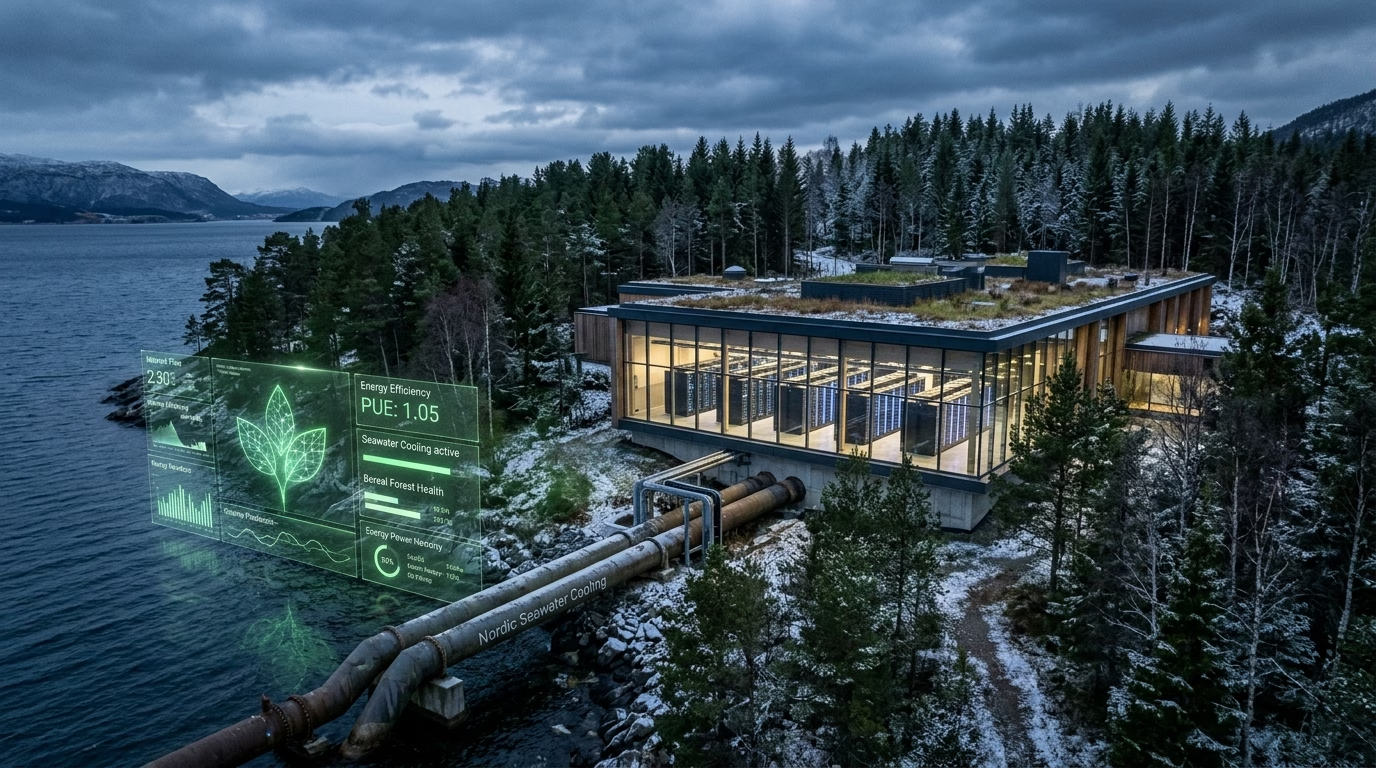
- The Real Green Edge: EcoGPT runs primary servers on Google Cloud in Hamina, Finland, where seawater cooling is used and Finland generates 96 percent clean power.
- Model Size Counts: EcoGPT deploys smaller, lightweight models. These require far less electricity per prompt than massive frontier engines.
- Big Tech Carbon Surge: The International Energy Agency projects data center power use will double by 2030, while Microsoft emissions rose 25 percent in 2025.
- The Privacy Trade-off: EcoGPT shares prompt topics with ad partners on its free tier to serve sponsored links. Its paid Pro plan removes ads.
Can Chatting with an AI Bot Help Grow a Forest?
EcoGPT has drawn quick traction online with its tree-planting pledge. On Monday, its website displayed 435,978 trees planted. A partner nonprofit confirms the tree donations, but that alone does not prove the app is better for the climate.
Harrison Fell is an energy expert at North Carolina State University. He spoke with WRAL about the app. Fell notes that the company’s real green gains lie behind the screen.
EcoGPT hosts primary servers in Hamina, Finland. In that Nordic region, power generation is 96 percent clean. The facility also uses seawater cooling. In addition, EcoGPT runs smaller models that draw far less power than giant frontier engines. Those choices cut real emissions, yet EcoGPT has not published verified data showing actual user savings.
Factsheet: EcoGPT Green Claims vs. Data Center Energy Reality
| Environmental Factor | EcoGPT Public Pledge | Backend Data Center Reality |
|---|---|---|
| Consumer Hook | 1 Tree Funded per 100 Chats | Tree Funding Does Not Equal Carbon Neutrality |
| Tree Survival | 435,000+ Trees Planted Metric | Survival and Long-Term Carbon Storage Unmeasured |
| Primary Server Site | Google Cloud (Hamina, Finland) | Low-Carbon Nordic Grid with Seawater Cooling |
| Grid Carbon Mix | 96% Clean Domestic Power (Finland) | Applies to National Grid, Not App Specific Share |
| Model Architecture | Lightweight Specialized AI Models | Lower Energy Draw per Prompt than Giant Models |
| Failover Routing | Secondary Providers when Busy | Prompts May Route to Carbon-Heavy Regions |
| Emissions Data | Removed Old Visual Estimates | No Published Independent User Savings Data |
| Privacy Model | Ad-Supported Free Plan | Prompt Topics Shared with Ad Partners for Revenue |
Looking Beyond the Trees: Why Server Location Matters
EcoGPT openly admits the limits of its tree program. Funding trees does not prove they will survive or store carbon long term. The company confirms that donations do not make chatbot use carbon neutral.
Fell points out that trees cannot offset data centers at scale.
“For modern data center scale, trees cannot make a real dent. A better way is to place servers where the grid is clean.”
Harrison Fell, Energy Economist, North Carolina State University
EcoGPT runs on Google Cloud in Hamina, Finland. Finnish Energy reports that 96 percent of Finland’s power was carbon-free in 2025. That figure reflects national generation, not EcoGPT’s isolated load. Still, clean grids bring real value.
There are caveats. EcoGPT routes queries to secondary providers when primary servers are full. Those backup sites may run on dirtier grids. EcoGPT also dropped older app graphics that gave rough estimates. The firm is removing them.
Fast JSON to YAML Converter
Configuring green cloud deployments, carbon telemetry manifests, or data center workload schemas? Convert complex JSON and YAML configurations instantly in your browser with zero server tracking.
Model Sizing: Small Inference Beats Giant Foundation Models
Model size is the second key factor. Simple tasks do not need giant foundation models. Large models burn heavy power on dense GPU clusters.
EcoGPT uses small, focused models. These small engines draw less power per prompt. They also generate less heat. Small models cut power waste at the root.
Similar technical trade-offs shape broader AI risk discussions. As noted in our review of AI extinction debates, today’s tools are narrow software pipelines. Designing efficient narrow tools delivers immediate environmental gains.
Big Tech’s Carbon Surge and the Measurement Void
EcoGPT’s green pitch arrives as Big Tech faces rising emissions. The International Energy Agency projects global data center power demand will double between 2025 and 2030. AI expansion drives that surge.
Tech giants are pouring billions into green power, yet carbon totals continue to climb:
- Microsoft: Microsoft reported clean energy gains, but its total emissions rose 25 percent in fiscal 2025. AI data center growth drove that spike.
- Google: Google bought 12 gigawatts of clean energy in 2025. Its direct emissions fell 2 percent, excluding supply chains.
- OpenAI and Anthropic: OpenAI prioritizes closed-loop cooling for Stargate clusters. Anthropic invests in low-water cooling and peak power cuts.
Corporate totals do not provide clear app-by-app comparisons. Most providers bundle AI compute with broad enterprise services.
EcoGPT also has a privacy trade-off. Its free tier uses ads. The privacy policy says prompt topics are shared with ad partners. Users who want privacy must buy the paid Pro plan.
The tree donations are real. The clean grid in Finland helps. But true green savings remain unmeasured.
Frequently Asked Questions
Does EcoGPT really plant trees for every 100 chats?
Yes. EcoGPT partners with verified nonprofit groups to fund one tree for every 100 chats on its free plan. Its dashboard tracks over 435,000 trees funded so far.
Does funding trees make AI queries carbon neutral?
No. EcoGPT admits that planting trees does not make chatbot use carbon neutral. Tree survival rates vary, and planting cannot match data center power scale.
Why do Finnish servers make EcoGPT greener?
EcoGPT runs primary servers on Google Cloud in Hamina, Finland. The site uses seawater cooling, and Finland generates 96 percent carbon-free power from nuclear, hydro, and wind.
Is EcoGPT private on its free plan?
EcoGPT shares prompt topics and recent queries with ad partners on its free plan to show sponsored links. Users must buy the paid Pro plan for a private experience.
For more on how threat actors target enterprise cloud and model infrastructure, read our investigation into TrendAI exposing three tiers of AI cyber attacks and cloud inference theft in Japan.






[…] August and September 2026. For organizations evaluating AI compute usage, our investigation into how cloud inference footprints impact enterprise infrastructure explores how modern AI consumption models are […]
[…] to broader computing efficiency challenges. From high electricity tariffs explored in our report on data center green energy and Finnish server grids to automated intrusion pipelines detailed in TrendAI exposing three tiers of cyber attacks in […]
[…] For more on the environmental costs and infrastructure trade-offs of generative software, read our analysis on whether EcoGPT and tree-planting AI chatbots actually reduce carbon emissions. […]