

Table of Contents
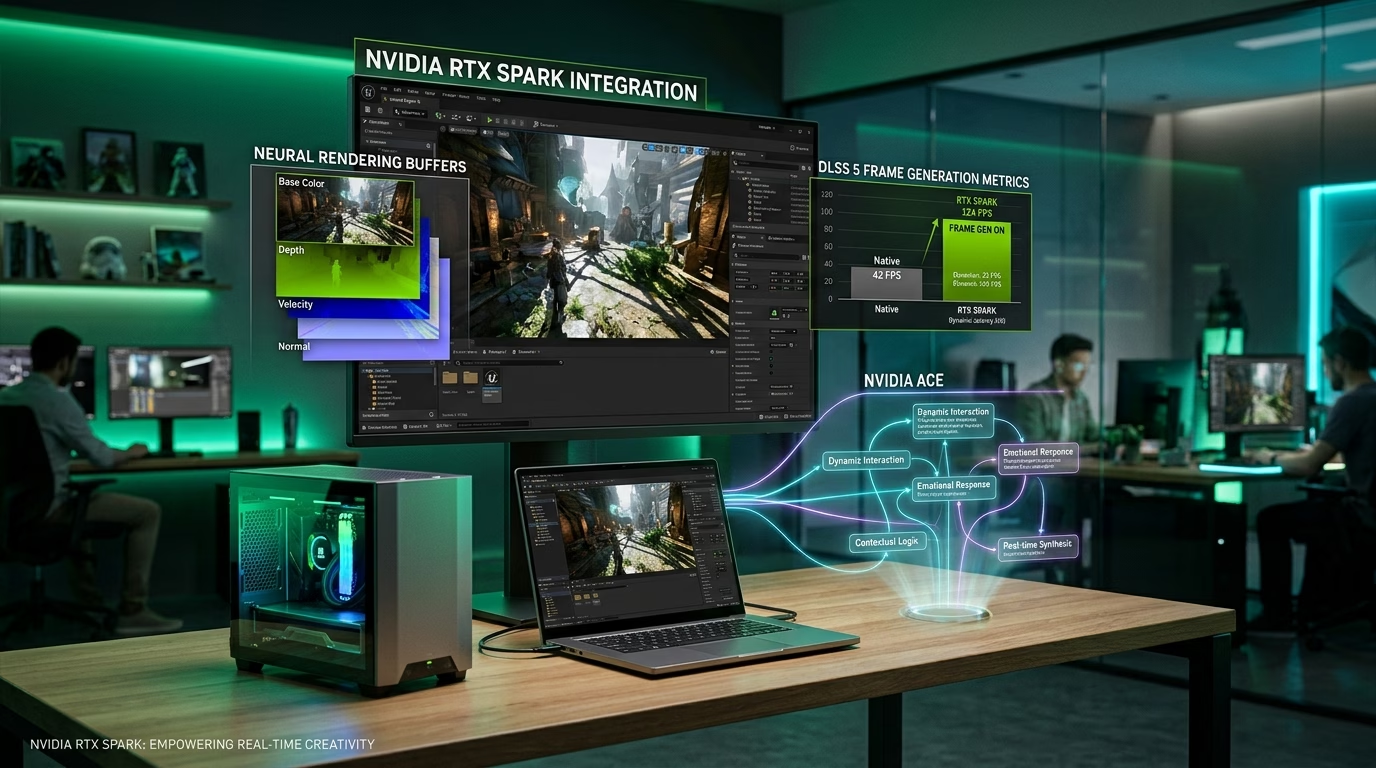
NVIDIA has introduced RTX Spark, a new Windows PC platform for game creators, AI engineers, and digital artists. Built for slim laptops and compact desktops, the system pairs an NVIDIA Blackwell RTX graphics chip with an NVIDIA Grace processor.
The platform provides up to 128 GB of unified memory. It brings the full CUDA stack, ray tracing hardware, and DLSS 5 to compact systems.
For game developers, RTX Spark creates an easy path to build and run native Windows on Arm games. This guide covers key developer tools, neural graphics plugins, in-game AI models, and debugging suites.
- Blackwell and Grace: RTX Spark pairs a Blackwell GPU with a Grace CPU. It provides up to 128 GB of unified memory for large models and scenes.
- DLSS 5 Rendering: Adds 3D-guided neural rendering for lighting and materials. It cuts GPU overhead in half and lowers 4K VRAM use by 20%.
- Unreal Engine on Arm: The DLSS 4.5 plugin adds native ARM64 binaries. Developers can now package and build UE 5.8 games on Windows on Arm.
- Local AI Characters: NVIDIA ACE launches Nemotron 3.5 Bolt E4B 4GB. The model brings 40% higher quality and uses 80% fewer output tokens.
- RTX Kit SDK Suite: Eight graphics libraries support RTX Spark, covering texture compression, neural shaders, mega geometry, and path-traced hair.
- Native Arm64 Profiling: NVIDIA Nsight Graphics, Systems, and Aftermath provide dedicated Windows on Arm installers for frame analysis, crash dumps, and thread tuning.
Factsheet: NVIDIA RTX Spark Developer Stack
| Component or SDK | Technical Architecture | Developer Capabilities |
|---|---|---|
| System Hardware | Blackwell RTX GPU and Grace CPU | Delivers up to 128 GB unified memory with native 64-bit Arm execution |
| DLSS 5 Pipeline | 3D-guided neural rendering stage | Enhances lighting and textures while halving runtime GPU overhead |
| DLSS 4.5 UE Plugin | Version 8.9.0 with Arm64 binaries | Supports native packaging and dynamic multi-frame generation in UE 5.8 |
| NVIDIA ACE & SLM | Nemotron 3.5 Bolt E4B 4GB | Runs local NPC agents with 64k context and multi-turn API calls |
| RTX Kit Libraries | Eight modular graphics SDKs | Accelerates neural shaders, texture compression, and mega geometry BVH |
| Nsight Profiling Suite | Dedicated Windows on Arm installers | Offers GPU frame debugging, system timeline traces, and crash dumps |
| MotionBricks | Pose-guided real-time motion research | Replaces manual animation graphs with generative character movements |
Hardware Architecture: Blackwell and Grace in Slim Form Factors
Traditional PC gaming separates system memory from GPU memory. Assets must travel across PCIe buses. This creates latency bottlenecks when loading high-res textures or large language models.
RTX Spark removes this divide. By pairing a Blackwell GPU with a Grace CPU, the system provides up to 128 GB of unified memory. Both the CPU and GPU access the same memory pool at high bandwidth.
This design fits modern game production well. Developers can load massive geometry datasets, ray-tracing structures, and local AI agent weights at the same time.
The platform runs Windows on Arm natively. It supports native Arm64 binaries and emulated x64 apps. This allows creators to build on portable laptop designs without losing CUDA acceleration.
DLSS 5 and Neural Rendering: Enhancing Geometry and Lighting Buffers
RTX Spark features the complete DLSS suite. This includes Super Resolution, Ray Reconstruction, Dynamic Multi Frame Generation, and 3D-Guided Neural Rendering.
In supported titles, Dynamic Multi Frame Generation creates up to five additional frames per rendered frame. The engine automatically tunes the multiplier to maintain fluid responsiveness. For faster response times, the latest NVIDIA app beta also brings a Performance Mode (Preset C) for Frame Generation.
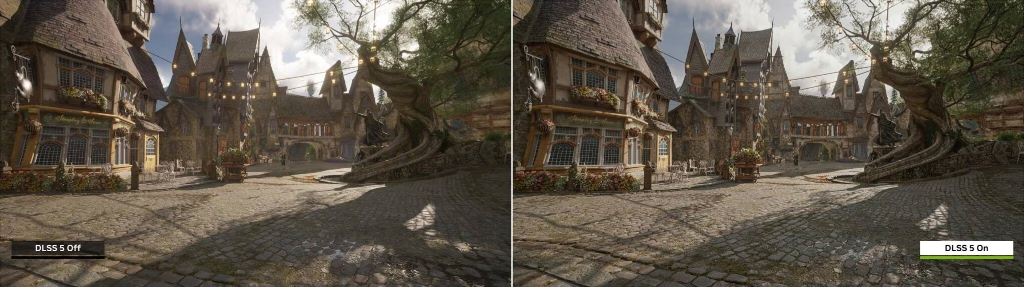
The platform also introduces DLSS 5. First demonstrated in NBA 2K27, DLSS 5 adds a post-rasterization neural rendering stage to the graphics pipeline.
An updated October model executes twice as fast as earlier revisions. It cuts GPU processing overhead in half while matching visual fidelity. It also lowers VRAM consumption at 4K resolution by 20%.
For studios, DLSS 5 operates on engine-rendered geometry, depth buffers, and lighting passes. Developers maintain direct control over how much the neural model alters artistic assets. Avalanche Software adopted these SDK controls in Hogwarts Legacy to enhance material fidelity while preserving the game’s original art style.
Unreal Engine 5.8 Integration and Windows on Arm Native Support
To help studios ship on compact hardware, NVIDIA published the DLSS 4.5 plugin version 8.9.0 for Unreal Engine.
The update introduces official Windows on Arm support for Unreal Engine 5.8. The plugin includes native ARM64 binaries for packaging and distribution, giving teams a direct path to deploy projects on RTX Spark devices.
Key plugin capabilities include:
- Transformer Super Resolution: Second-generation transformer models improve anti-aliasing, visual clarity, and temporal stability across fast-moving scenes.
- Ray Reconstruction: Enhances path-traced lighting quality by replacing hand-tuned denoisers with AI models trained on ground-truth renders.
- Multi-Frame Scaling: Supports up to 6x multi-frame generation on Blackwell graphics hardware, generating up to five frames for every rasterized frame.
- Custom NvRTX Branch: Developers seeking deeper source-level engine customization can access the NVIDIA RTX Branch of Unreal Engine 5.8 on GitHub.
NVIDIA ACE and Nemotron 3.5 Bolt: Running On-Device AI NPCs
Game worlds feel artificial when non-player characters (NPCs) repeat canned voice lines. NVIDIA ACE provides tools to build interactive, autonomous in-game agents.
Recent industry demonstrations highlight how fast on-device gaming AI is advancing. PUBG introduced automated teammates powered by first-generation Nemotron small language models, helping new players secure victory. Similarly, upcoming title Aniimo will debut second-generation Nemotron models to turn companion pets into responsive in-game allies.
Now, NVIDIA has introduced Nemotron 3.5 Bolt E4B 4GB, an on-device language model engineered for GeForce RTX and RTX Spark hardware. The model achieves 40% higher average quality scores across benchmark tests compared to previous releases. It also generates responses using up to 80% fewer output tokens, cutting inference latency significantly.
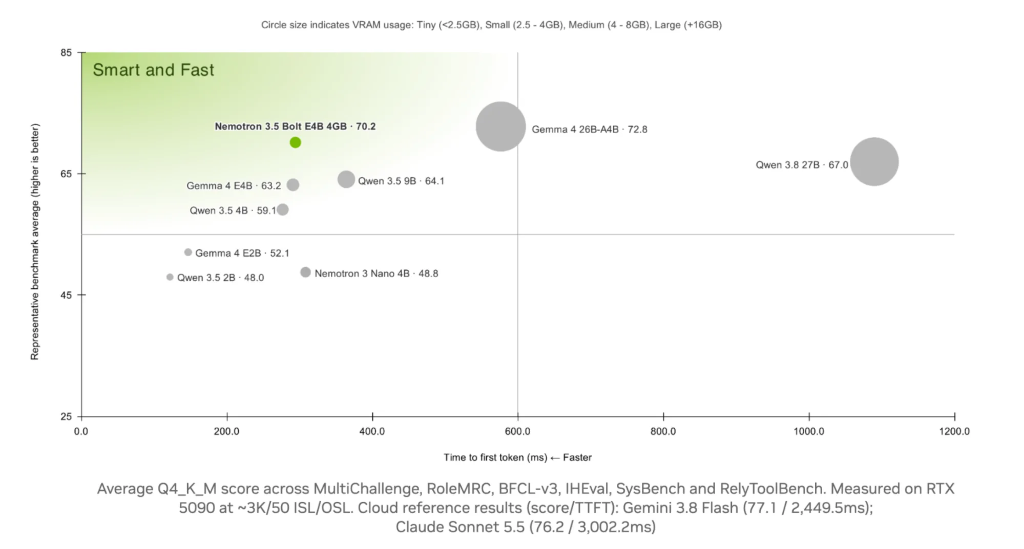
Nemotron 3.5 Bolt provides essential gameplay systems:
- Multi-Turn Tool Use: The model calls game engine APIs asynchronously to trigger animations, transfer inventory items, or alter quest states.
- Conversational Mode: Generates concise, spoken-length dialogue tailored for real-time voice synthesis.
- Configurable Reasoning: Developers can toggle deep reasoning steps on for complex tasks or disable them to prioritize instant responses.
- 64k Context Window: Holds extensive conversation histories, player choices, world lore, and game state metrics.
- Multilingual Coverage: Supports 35 languages out of the box, building on foundations trained across more than 140 tongues.
Developers can test the model through the In-Game Inferencing (IGI) SDK. Community platforms like SkyrimNET demonstrate this capability, transforming The Elder Scrolls V: Skyrim NPCs into unscripted, interactive characters with long-term memory and autonomous dialogue.
The RTX Kit SDK Suite: From Neural Shaders to Mega Geometry
RTX Spark supports eight graphics libraries published under NVIDIA RTX Kit.
- RTX Neural Texture Compression (NTC): Compresses high-resolution texture maps using AI, preserving visual details while reducing disk footprint and VRAM allocation.
- RTX Texture Filtering: Uses stochastic sampling after shading passes to remove moire artifacts and visual noise in complex volumes.
- RTX Neural Shaders: Allows technical artists to train compact neural networks and execute them directly inside shader pipelines for asset approximation.
- RTX Mega Geometry: Accelerates bounding volume hierarchy (BVH) generation for clustered meshes, allowing engines to ray-trace dense triangle scenes.
- NVIDIA Real-Time Denoisers (NRD): Produces clean specular, diffuse, and shadow buffers from low ray-per-pixel inputs.
- RTX Character Rendering: Path-traces realistic skin, subsurface scattering, and strand-based hair primitives accelerated by Blackwell hardware.
- RTX Global Illumination (RTXGI): Computes scalable indirect lighting and bounce illumination in dynamic game environments.
- Opacity Micro-Maps (OMM): Encodes micro-triangle opacity states to accelerate ray tracing across foliage, wire fences, and intricate geometry.
Native Arm64 Debugging with NVIDIA Nsight Tools
Optimizing software for unified Arm64 architectures requires dedicated profiling tools. NVIDIA Nsight tools support RTX Spark with dedicated Windows on Arm installers:
- Nsight Graphics (2026.3): Enables developers to capture, inspect, and profile individual frames. Engineers can review draw calls, shader bottlenecks, and GPU pipeline states across native Arm64, emulated x64, and Arm64EC applications.
- Nsight Systems (2026.5): Provides unified system timelines correlating CPU threads, GPU execution queues, API requests, and memory usage to locate platform bottlenecks.
- Nsight Aftermath (2026.3): Captures GPU crash dumps during testing and play. It helps teams trace driver hangs and memory faults.
Runtime Animation with MotionBricks
Traditional animation systems require artists to author hundreds of transitional animations, leading to sprawling state machines.
MotionBricks is an open-source research framework that replaces hand-crafted animation blends with pose-guided generative movement. Developers provide target poses, and the system synthesizes natural transitions at runtime.
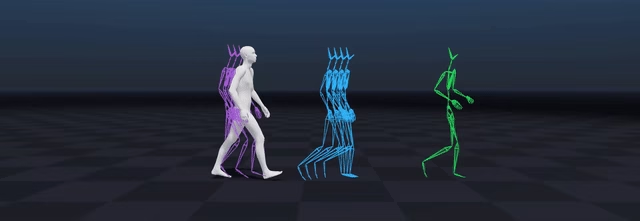
The latest update introduces:
- SOMA Human Models: New human motion models complement existing G1 humanoid robot profiles.
- ONNX Checkpoints: Ready-to-use ONNX model weights and export utilities support custom game engine integrations.
- Newton Reference Rig: An interactive demonstration showcases real-time pose guidance for walking, sitting, and object interaction.
Free Developer Tool: Sanitize Game Engine & Tool Payloads
Configuring JSON-RPC tool declarations for NVIDIA ACE or formatting asset manifests for Unreal Engine? Use TeckScaler’s free developer tools to validate, format, and convert JSON and YAML configurations cleanly.
Try Free JSON to YAML Converter →Custom Game Engine & Neural Graphics Optimization
Are ray-tracing performance bottlenecks, local SLM inferencing latency, or cross-platform Arm64 compilation holding back your game studio? TeckScaler engineers high-performance rendering pipelines and custom GPU architectures.
Consult with Graphics Engineers →Frequently Asked Questions
What is NVIDIA RTX Spark, and how is it built?
NVIDIA RTX Spark is a Windows PC platform for AI creation and gaming in slim laptops and compact desktops. It combines an NVIDIA Blackwell RTX GPU with a Grace CPU, providing up to 128 GB of unified memory.
What are the main visual improvements in DLSS 5?
DLSS 5 introduces 3D-guided neural rendering to enhance lighting and material passes. The latest update runs twice as fast, cuts GPU overhead in half, and reduces 4K VRAM usage by 20%.
Can Unreal Engine 5.8 projects run natively on RTX Spark?
Yes. The DLSS 4.5 plugin includes official Windows on Arm support. It provides native ARM64 binaries for building and packaging Unreal Engine 5.8 games.
What is Nemotron 3.5 Bolt in NVIDIA ACE?
Nemotron 3.5 Bolt E4B 4GB is a compact language model for local gaming AI. It runs on-device, offering 40% higher benchmark quality, 80% fewer output tokens, a 64k context window, and multi-turn tool calling.
Related Hardware & AI Infrastructure Analysis
For engineering teams designing enterprise data backbones, read our report on how Oracle and Snowflake launched Snowflake AI Data Cloud as a native service on OCI.




[…] NVIDIA RTX Spark: Developer Guide to DLSS 5, Nemotron, and On-Device AI […]