

Table of Contents
Key Takeaways
- AI agent usage costs are rapidly exceeding human payroll costs for some companies.
- The industry is seeing ‘tokenmaxxing,’ where power users rack up massive monthly bills (e.g., over $150,000).
- Tech leaders are attempting to manage costs by linking AI access to compensation (e.g., Nvidia suggesting tokens equal to half a salary).
- AI providers are capitalizing on the cost concern by raising their own pricing.
- The overall efficiency and reliability of AI agents remain major, unresolved questions.
The Token Trap: Why AI Compute Bills Are Outpacing Salaries
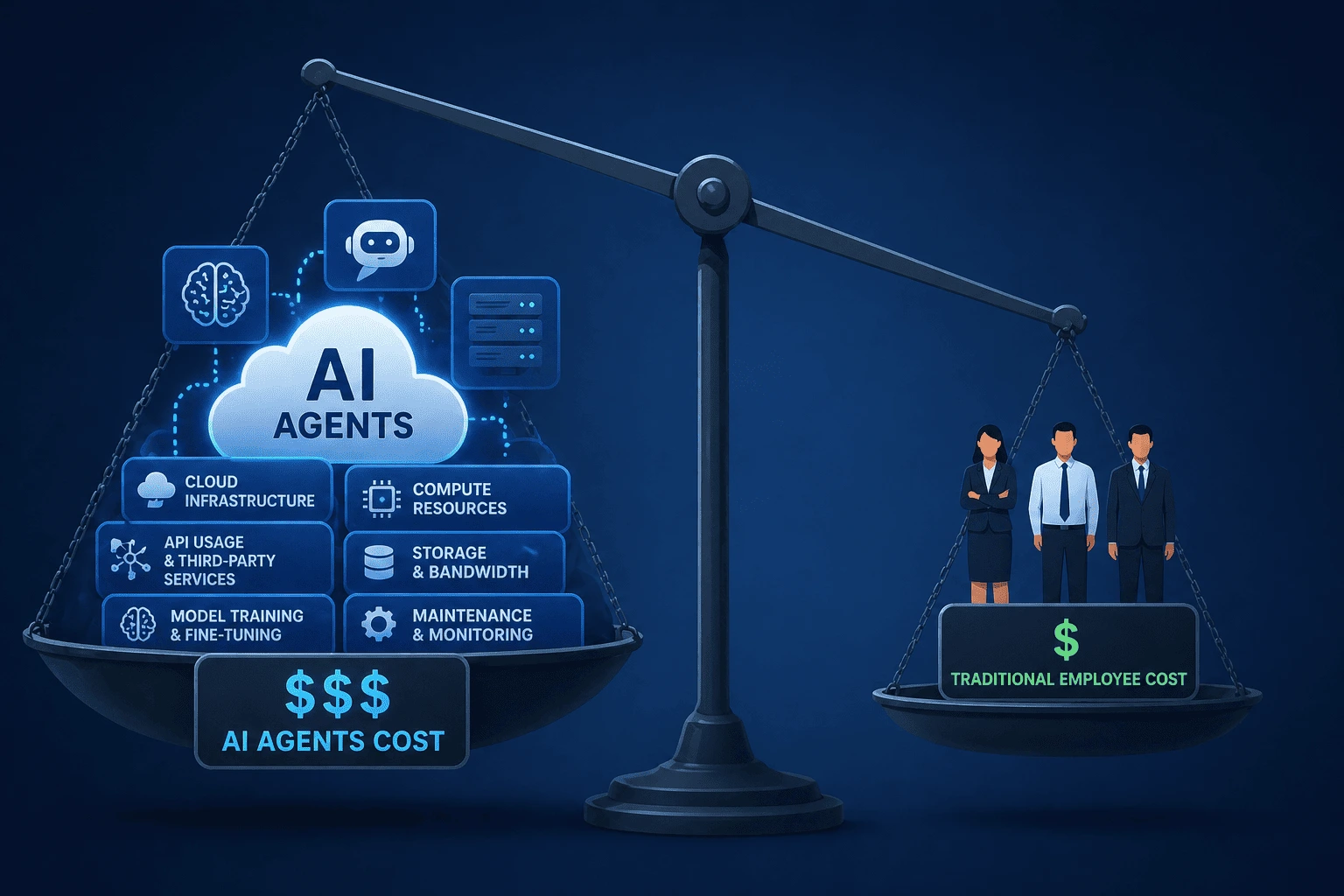
What if the cost of running your AI agents was higher than the cost of hiring a new employee? That’s the reality facing several major tech companies right now. AI agents, designed to automate everything from simple tasks to complex coding, are proving to be incredibly expensive, and some companies are learning the hard way that the token bill is eclipsing the payroll.
This isn’t just a minor budget hiccup. It’s a structural problem that challenges the core economic model of AI adoption. The industry is currently in a state of over-enthusiastic and over-budget experimentation.
The Scale of the Problem: Code and Compute
AI is fantastic at generating code. It can produce mountains of functional snippets at a pace no human engineer could match. But every single task, every line of generated code, costs tokens. And when engineers run multiple agents simultaneously, all working in the background without constant supervision, the bill adds up fast.
Bryan Catanzaro, vice president of applied deep learning at Nvidia, put it plainly: “For my team, the cost of compute is far beyond the costs of the employees.”
This statement isn’t an isolated anecdote. It reflects a broader industry trend of dependency. Organizations are becoming deeply reliant on AI tools, even the companies building them. Boris Cherny, head of Claude Code at Anthropic, noted that “Pretty much 100 percent” of Anthropic’s code is now AI-generated. Google and Microsoft are reportedly seeing a similar share, with a quarter of their company code attributed to AI.
The Rise of ‘Tokenmaxxing’ Culture
The problem is compounded by a strange, almost competitive culture among some tech workers. Instead of treating tokens as a resource to be managed, many are treating them like a personal achievement. The slang for this behavior is ‘tokenmaxxing.’
It’s a wild spectacle. We’re talking about power users racking up monthly token bills north of $150,000. One software engineer in Stockholm told The New York Times last month, “I probably spend more than my salary on Claude.” Even larger corporate incidents have been reported; The Information noted that Uber engineers using Claude Code had already blown through the company’s entire 2026 AI budget.
This isn’t just a quirky habit. It signals a lack of internal guardrails and a dangerous over-reliance on the technology.
Who Benefits? The Business Angle
While the cost dilemma is a headache for engineering teams, it’s a goldmine for the AI providers themselves. The market is reacting predictably. Anthropic, for instance, has responded by raising its pricing. Meanwhile, an OpenAI investor told Axios that the concern over token costs could benefit them, suggesting their Codex model uses tokens more efficiently than Anthropic’s Claude Code.
Tech leaders are even trying to monetize the problem. In March, Nvidia CEO Jensen Huang proposed giving software engineers AI tokens equal to roughly half their base salary, a move designed to make AI access a recruiting perk. Why be wooed by a signing bonus when you get to use more AI? It’s a brilliant, if slightly desperate, retention strategy.
The Bottom Line: Is AI Worth the Risk?
Token costs are just one major question mark hanging over the entire AI automation movement. The bigger question remains: Is using error-prone AI agents, which can wreak havoc internally, as seen at Meta and Amazon, actually more efficient than the human labor they are supposed to replace?
Numerous studies suggest the opposite. Forcing workers to use these tools might actually be making their jobs harder. The jury, it seems, is still out.