

Table of Contents
Valeriia Litvinova Cunningham was in graduate school in North Carolina when war broke out in Ukraine.
She helped her parents and her sister Anya flee the war. They arrived in the United States with only the clothes on their backs. To handle the stress of starting over, the family began lifting weights at a local gym. Working out quickly became a safe space for the whole family.
Anya has Down Syndrome. She began growing stronger each week. Cunningham posted clips of her sister on social media. Anya soon inspired a large group of fans online.
- Real Creator Journey: Valeriia Cunningham and her sister Anya built an online community and gym classes called Strength Without Labels.
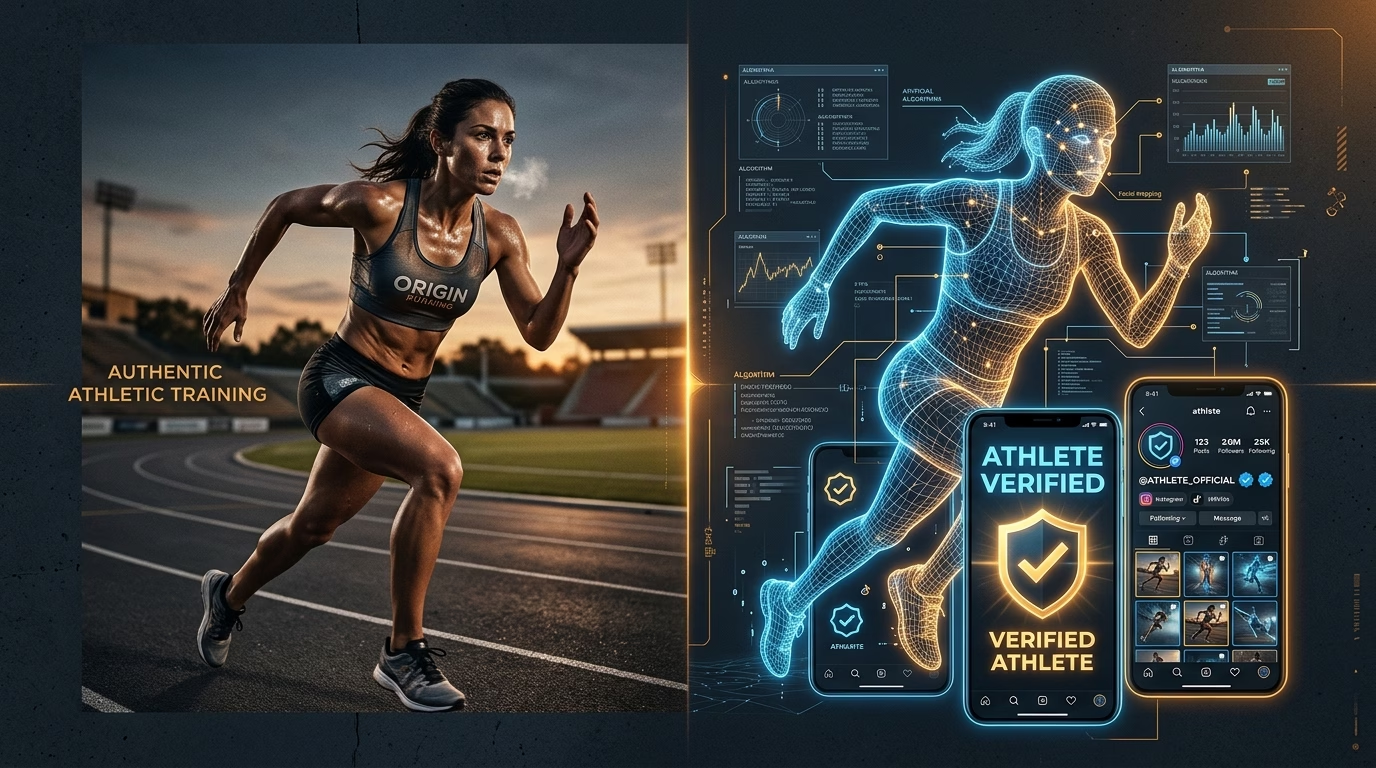
- The AI Face-Swap Scheme: An account called MiaTriso21 mapped Anya’s likeness onto other creators’ fitness videos to steal views and monetize trust.
- The Identity Paradox: While synthetic accounts spread, online skeptics began accusing the real athlete of being an artificial simulation.
- Flawed Platform Moderation: TikTok and Meta rely heavily on user reporting. Automated review systems often reject legitimate takedown requests.
- Missing Disclosures: Despite platform rules requiring labels on artificial media, hundreds of synthetic impersonation clips circulate without warnings.
Factsheet: AI Face-Swapping Impersonation vs. Moderation
| Issue / Category | Reality on Social Platforms | Platform Policy & Technical Safeguards |
|---|---|---|
| Impersonation Tactic | Face-swapping likeness onto bodies | Prohibits deceptive synthetic likeness theft |
| Monetization Goal | Driving follower growth and clicks | Exploits emotional trust for ad payouts |
| Victim Burden | Real creators must prove they exist | Platforms rely mostly on user reports |
| Moderation Accuracy | Review systems often deny AI fakes | Automated tools fail to spot face blends |
| Provenance Tracking | C2PA metadata rarely stays intact | TikTok tests C2PA Content Credentials |
| Enforcement Speed | Accounts clone again after bans | Slow reactive bans leave victims exposed |
Defying Medical Limits in the Gym
Doctors had once said Anya might never walk. In North Carolina, she lifted weights next to powerlifters and bodybuilders. Her growth led the sisters to start gym classes through GiGi’s Playhouse, a local nonprofit. They called the project Strength Without Labels.
The class showed that people with Down Syndrome belong in regular gyms. They can train next to other lifters without being kept apart.
The Rise of Fake AI Accounts and Identity Theft
As their fan base grew, critics questioned if Anya was real. Some accused the family of posting fake videos.
The confusion grew as fake accounts appeared online. An account called MiaTriso21 popped up on TikTok and Instagram. Viewers noticed that the account used AI face tools. It placed Anya’s face onto other workout videos.
Cunningham found herself fighting AI fakes. She had spent years showing what people with Down Syndrome can do. Now she had to defend her sister’s real work against machine clones.
Laeeq Khan leads a social media lab at Ohio University. He said these accounts take a real person’s body and voice. They paste an AI face on top to build trust and make money from views.
Weak Moderation on Big Social Platforms
Social media apps rely on users to flag fake profiles. If no one reports an account, systems often miss it.
Reporting fake accounts does not always fix the issue. Cunningham said app review teams often told her the clips were not fake. She spent hours fighting back to prove the videos were stolen.
Both TikTok and Meta have rules that require labels on AI videos. They also have rules to take down deceptive fake accounts. Yet checks found many face-swap clips online without clear labels.
These gaps mirror wider struggles across the tech sector. Lawmakers have pushed for stronger disclosure rules. State measures like Pennsylvania’s AI advertising disclosure law attempt to mandate labels, but loopholes remain wide.
At the same time, big tech firms face scrutiny over data practices. Google updated its AI privacy policies to connect private user data to ad engines. Elsewhere, political campaigns use AI chatbots to sway voters. In each case, synthetic media outpaces enforcement.
Meta did not answer requests for comment. TikTok said it uses C2PA tags to track video roots and runs tests to spot AI spam.
After questions were raised, the fake account was removed from TikTok and Instagram. Yet copy accounts still pop up online. Experts warn social media users to stay sharp when viewing viral clips.
🛠️ Free Developer Tool: JSON to YAML Converter
Configuring content moderation filters, automated webhook rules, or media verification schemas? Convert JSON payload specs to clean YAML directly in your browser with zero latency.
Open Free JSON to YAML Converter →Frequently Asked Questions
How do AI accounts steal creator likenesses on social media?
Scammers use AI face-swapping software. They map a real creator’s face onto videos filmed by other athletes, stealing visual likeness to gain views.
Why are real creators accused of being AI simulations?
As AI video fakes spread across TikTok and Instagram, viewers become skeptical of all content. When real creators perform impressive physical feats, users often mistake them for synthetic fakes.
What are TikTok and Meta policies on AI-generated media?
Both platforms require creators to label synthetic media. They also ban impersonation and deceptive clones, though enforcement often depends on manual user reports.
What technology is used to detect AI deepfakes?
Platforms use automated visual filters and C2PA Content Credentials. C2PA tracks the history and edits of digital media, though scammers often strip metadata before uploading.
Custom AI Verification & Trust Architecture
Building automated content verification pipelines, C2PA media provenance tools, or anti-impersonation defenses? TeckScaler engineers custom software, Chrome extensions, and secure cloud infrastructure tailored to your needs.
Contact TeckScaler Engineering →Related AI Ethics & Governance Analysis
Pennsylvania Enacts AI Ad Disclosure Law
State measure mandates labels for synthetic images and voice clones with notable enforcement loopholes.
Google AI Privacy Update Links Gmail to Ads
How policy updates connect private communications and uploaded photos to automated ad targeting engines.
Campaigns Deploy GEO to Sway AI Chatbots
Political strategists use generative engine optimization to shape answers provided by automated assistants.
Johns Hopkins AI Leak Exposes 3,182 Records
Unprotected vector embeddings expose sensitive patient files, revealing automated data risks.






[…] Beyond state advertising mandates, read our investigative report on how AI deepfakes and face-swapping accounts target disabled creators on TikTok and Instagram. […]
[…] legal ambiguities over digital likeness rights have emerged across social media. Read our report on AI deepfakes targeting online creators for […]