

Table of Contents
CoreWeave shares fell fast this week, pulling down much of the AI market. As tech stocks drop, funds face a tough test: how can they hedge AI hardware risk?
An ex-Citadel quant may have a fix.
Jasper Zhang worked as a quantitative researcher at Citadel Securities. He now runs Hyperbolic. The 50-person startup is building a spot market for tradable GPU compute. The tool lets traders hedge against drops in AI demand.
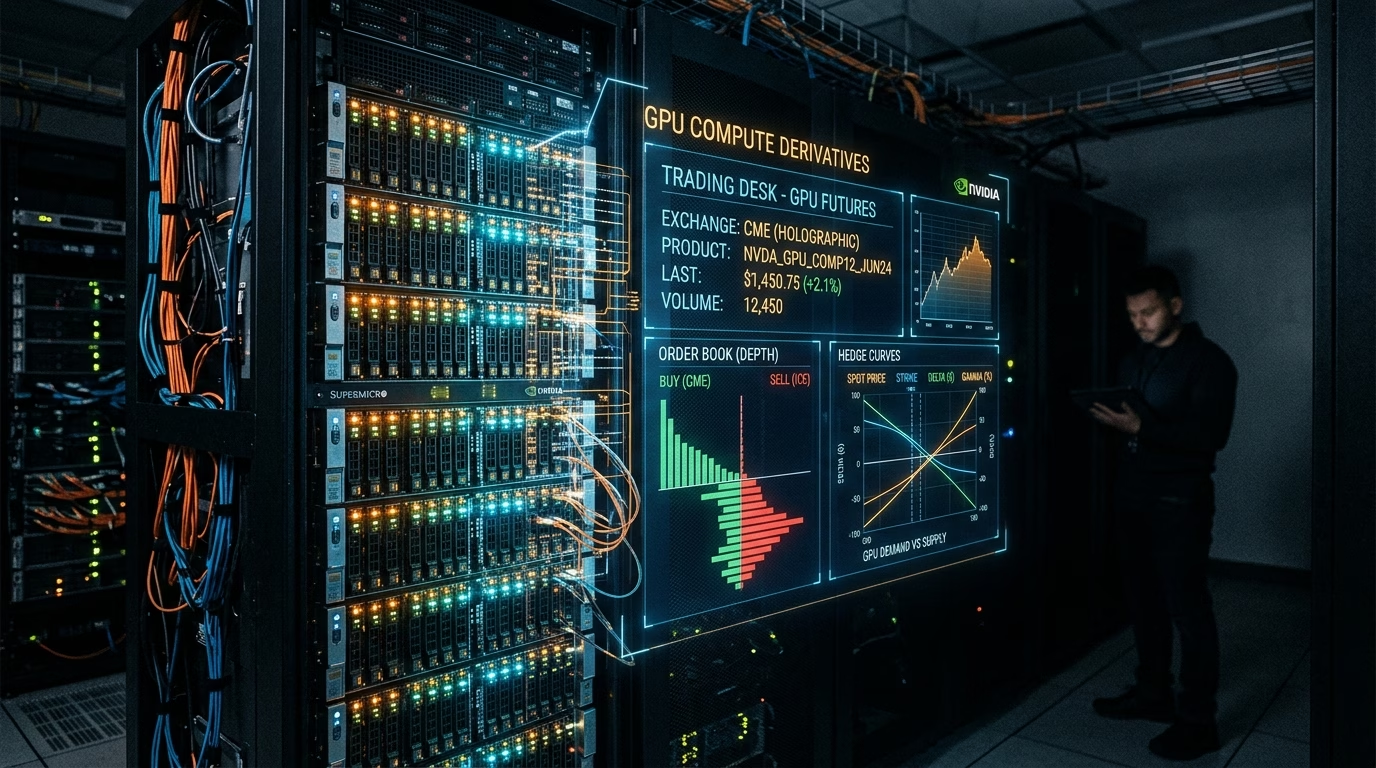
The platform lets investors buy and sell access to GPU clusters. These chip setups power modern AI systems. The trading runs on Hyperbolic’s Forge software. Forge logs into server clusters across the world. It tunes system settings so mismatched chips work well together.
This software lets traders buy standard units of compute. It also lets them run their own code on the physical chips.
- CoreWeave Slump: Plunging shares in CoreWeave exposed rising debt risks across GPU cloud providers, sparking fresh demand for hardware hedging instruments.
- Physically Settled Futures: Hyperbolic delivers actual cluster control upon settlement rather than cash payouts, letting traders reallocate or run workloads on real chips.
- Solving Basis Risk: Hyperbolic’s Forge software standardizes heterogeneous networking, memory, and cooling setups across global data centers.
- Rapid Growth: Founded by ex-Citadel quant Jasper Zhang, Hyperbolic raised $20 million, connects $200 million in yearly compute, and targets a $150 million run rate.
- Regulatory Stalls: The CFTC extended review of rival cash-settled futures from CME Group and ICE to November 9.
Comparison: GPU Futures Models and Trading Venues
| Feature / Metric | Hyperbolic Spot & Futures | CME Group & Silicon Data | ICE & Ornn (a16z) |
|---|---|---|---|
| Settlement Type | Physically settled (Hardware access) | Cash-settled (Index tracking) | Cash-settled (Index tracking) |
| Underlying Asset | Standardized GPU server clusters | Silicon Data pricing index | Ornn benchmark index |
| Hardware Control | Direct code execution via Forge | Financial cash payout only | Financial cash payout only |
| Key Backers | Venture capital ($20M raised) | DRW Trading, Citadel alumni | Intercontinental Exchange, a16z |
| Regulatory Status | Active spot market / Private futures | CFTC review extended to Nov 9 | CFTC review pending |
| Basis Risk Fix | Automated cluster tuning | Unaddressed (Index average) | Unaddressed (Index average) |
Tackling Basis Risk Across Data Centers
Zhang says the tool feels like working inside the data center. He sees it as the first step toward physically settled GPU futures. When a contract ends, the owner takes full control of a cluster with known specs.
Hedging GPU risk is hard today. Chip setups differ across vendors. Each data center has unique networking, memory, and cooling. In finance, this gap between an index price and real gear is called basis risk. Zhang hopes Hyperbolic can bridge that gap.
Zhang won top math medals in China. He earned a math doctorate at UC Berkeley in two years before joining Citadel Securities. Head of finance Hong Chan Kim brings hedge fund experience from Point72, Balyasny, and Citadel.
Hyperbolic raised $20 million since 2022 and is closing a new funding round. The firm aims for a $150 million run rate by year-end. It now counts 250,000 users and connects $200 million in yearly compute.
Wall Street Enters the AI Compute Trade
Big exchanges want in on the market too. CME Group plans a cash-settled futures contract tied to the Silicon Data pricing index, backed by Chicago trading firm DRW.
Cash futures work like oil or power contracts. But the Commodity Futures Trading Commission (CFTC) extended its review of the CME product to November 9. The delay also stalls a contract proposed by Intercontinental Exchange and data firm Ornn, which has backing from a16z crypto.
Hyperbolic argues that cash contracts fall short. If AI spending slows, cloud hosts like CoreWeave could get stuck with costly gear and few buyers. Cash hedges pay out money, but they do not fill idle servers with workloads.
This hardware overhang connects directly to broader market trends. When China’s AI sector lost $2.4 trillion in recent market drops, hardware vendors felt the first blow. Similarly, Apollo analysts warned that enterprise AI yields low immediate payoffs outside leading chip suppliers. Meanwhile, AI giants like Anthropic continue to lease billions in compute ahead of their planned public listing.
Frequently Asked Questions
What are physically settled GPU futures?
Physically settled GPU futures are contracts that deliver real computing time on verified chips. When the contract ends, the buyer gets direct control of a specific GPU cluster.
How do cash-settled and physical contracts differ?
Cash-settled contracts pay money based on an index price. Physical contracts give buyers direct access to real server hardware. Cash hedges buffer price drops, while physical contracts help firms rent real chips.
What is basis risk in GPU trading?
Basis risk is the price gap between an index and real machines. Data centers use different cables, memory speeds, and power limits. These differences mean two clusters with the same chip can perform differently.
Why are cloud GPU hosts exposed to market slowdowns?
Many cloud hosts took on heavy debt to buy server racks. If AI demand drops, these hosts must still make debt payments while their chips sit idle.
Configuring Slurm scripts, Kubernetes GPU manifests, or training cluster parameters? Format and validate your payloads with TeckScaler’s free client-side JSON to YAML Converter.
⚡ Optimizing Enterprise GPU Clusters or Inference Infrastructure?
TeckScaler designs high-performance cloud backends, distributed model inference pipelines, and scalable enterprise platforms. Consult with our infrastructure engineers →
🔗 Related AI Compute & Capital Market Analysis
- China AI Stocks Drop $2.4T: STAR 50 Plunges 40%: How weak consumer spending and US export curbs hit Asian hardware suppliers.
- AI Has Zero Financial Payoff Outside Tech Says Apollo: Wall Street analysis on corporate AI capital spending and cash returns.
- Anthropic Files for Historic IPO With $16.3B Revenue: Deep dive into the massive compute leases powering Claude’s training clusters.
Primary Sources: CNBC: CoreWeave Equity Analysis | CME Group AI Computing Futures | Commodity Futures Trading Commission (CFTC) Review Filings | Silicon Data & DRW
In related enterprise computing developments, see how Nvidia backed Indian AI startup Simplismart in a $14 million Series B round to optimize GPU inference workloads.




[…] hardware capex rises without immediate enterprise returns, traders turn to GPU futures to hedge exposure against potential cloud compute […]
[…] fatigue matches recent moves across compute markets. As cloud debt mounted, startups launched tradable GPU futures to hedge compute risks. Economists at Apollo also noted that AI has produced zero financial payoff outside a few hardware […]
[…] These creative experiments come as generative media labs test new architectures. Tools like Canva’s in-house Craft 2K image model show steady visual gains. Yet foundation model firms face heavy bills, as seen in Anthropic’s blockbuster November IPO filing. Markets also track new hedging tools, like tradable GPU futures to manage compute risk. […]
[…] market trends, investors are already exploring how to hedge computing risk through platforms like Hyperbolic tradable GPU compute futures as chip expenses […]
[…] Hyperbolic Builds Tradable GPU Futures to Hedge AI Risk […]