
Table of Contents
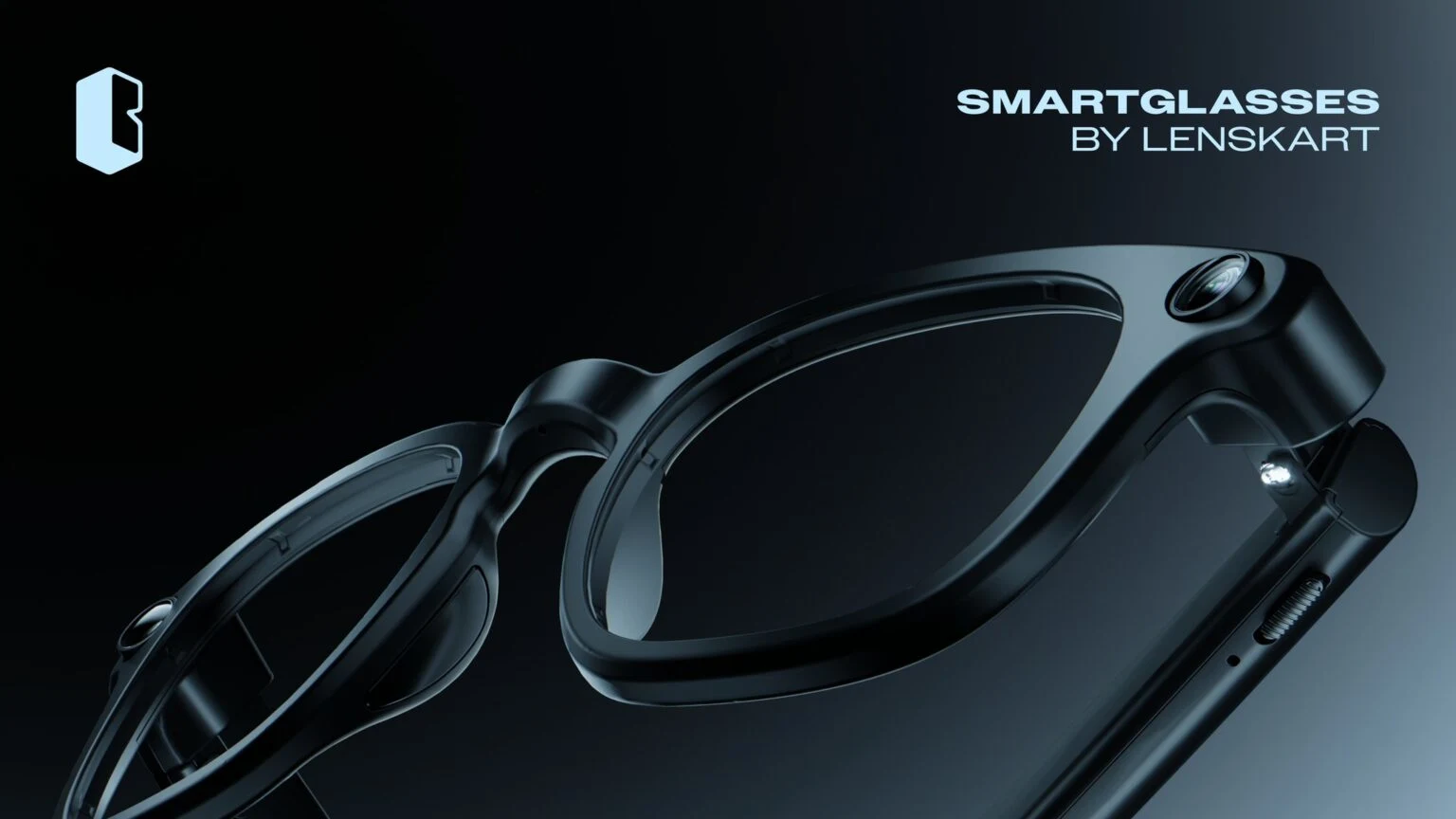
Lenskart has officially entered the high-stakes AI hardware market with the launch of “B by Lenskart,” India’s first full-stack AI glasses featuring Google Gemini 2.5 Live.
This homegrown wearable challenges global incumbents by integrating localized features like hands-free UPI payments directly into the frame architecture.
This launch marks a pivotal moment in positioning India as a primary contender in the global consumer AI hardware landscape.
A Domestic Challenger to Global Wearables
The arrival of B by Lenskart represents a strategic shift for the Indian eyewear giant, moving beyond retail to sophisticated hardware engineering.
By producing a full-stack domestic alternative, Lenskart aims to provide Indian consumers with a localized experience that global competitors currently lack.
CEO Peyush Bansal has described this launch as India’s opportunity to lead the “next wave of consumer AI hardware,” emphasizing that the development was a ground-up, full-stack effort.
The device adopts a classic Wayfarer-style aesthetic and is available in Black and Silver color variants.
At a weight of just 40 to 45 grams, the frames are designed for all-day comfort without the bulk typically associated with first-generation smart wearables.
This domestic focus ensures that the hardware, software, and AI assistant operate within a unified ecosystem specifically tuned for the Indian user.
Technical Specifications and Comparison
The hardware architecture of B by Lenskart reflects a “no-compromise” approach to wearable tech, utilizing the same top-tier silicon found in international premium glasses while optimizing for weight and regional utility.
| Feature | B by Lenskart | Ray-Ban Meta |
| Chipset | Snapdragon AR1 Gen 1 | Snapdragon AR1 Gen 1 |
| AI Assistant | Google Gemini 2.5 Live | Meta AI |
| Weight | 40–45 grams (20% lighter) | 48–50 grams |
| Primary Camera | 12MP Sony Sensor | 12MP Sensor |
| UPI Payments | Native Hands-Free | Limited/None |
| Lens Tech | Japanese Ultra-Thin Blue Light | Standard Options |
| Manufacturing | Made in India | Made in USA |
| Early Access Price | Rs 22,000 (MSRP Rs 27,000) | Rs 25,000–35,000 |
Performance and Connectivity Specs:
- Audio & Input: A dual-directional speaker unit paired with a sophisticated three-microphone setup for clear voice commands.
- Endurance: Provides four hours of active battery life per charge, with a wireless charging case extending total backup to 48 hours.
- Fast Charging: The device achieves a 50 percent charge in just 15 minutes.
- Onboard Storage: 32GB of built-in storage for local media capture and AI processing.
- Connectivity: Features Bluetooth 5.3 and is compatible with iOS 18 or later and Android 12 or newer.
Real-World Impact: The “India-First” Features
Lenskart has prioritized localization, recognizing that the success of AI wearables in India depends on solving specific regional pain points.
The “Hey Buddy” assistant, powered by Gemini 2.5 Live, allows the glasses to process multimodal inputs, allowing the AI to “see” and interpret the user’s surroundings in real-time.
The standout innovation is the native, hands-free UPI payment system. In our testing, we found that the nutritional breakdown feature accurately logged food data using the camera and Gemini AI, removing the friction of manual entry in health apps.
Furthermore, our experience with the 12MP Sony camera showed that while it captures crisp 1080p video in landscape, it excels at 1440p in portrait mode, making it ideal for vertical social content.
Logistically, Lenskart’s vast retail network of over 2,000 stores provides a significant edge, offering prescription lens support for power ranges from -6 to +6. These “Japanese ultra-thin” blue light lenses ensure optical clarity for those with high prescriptions.
Additionally, the AI supports live translation and voice commands in over 40 languages, including Hindi and Tamil, making the technology truly accessible across the subcontinent.
The Ecosystem: Developer Platform and Outlook
For wearable hardware to remain viable, it must transcend its native features. Lenskart has addressed this by opening the “B” platform to the Indian developer community.
This open-access model encourages the creation of third-party applications in categories like food delivery, fitness, and productivity, potentially turning the glasses into a standalone computing platform.
The long-term vision for B by Lenskart is to foster a complete wearables ecosystem where hardware and software work in tandem to reduce smartphone dependency.
This launch signals a definitive leap into the “next wave of wearable computing,” where the eyes become the primary interface for India’s digital-first population.
Final Takeaway
By merging Google’s most advanced multimodal AI with essential Indian features like hands-free UPI and aggressive domestic pricing, Lenskart has made a convincing case that the future of the smartphone may eventually rest on the bridge of our noses.