
Key Takeaways
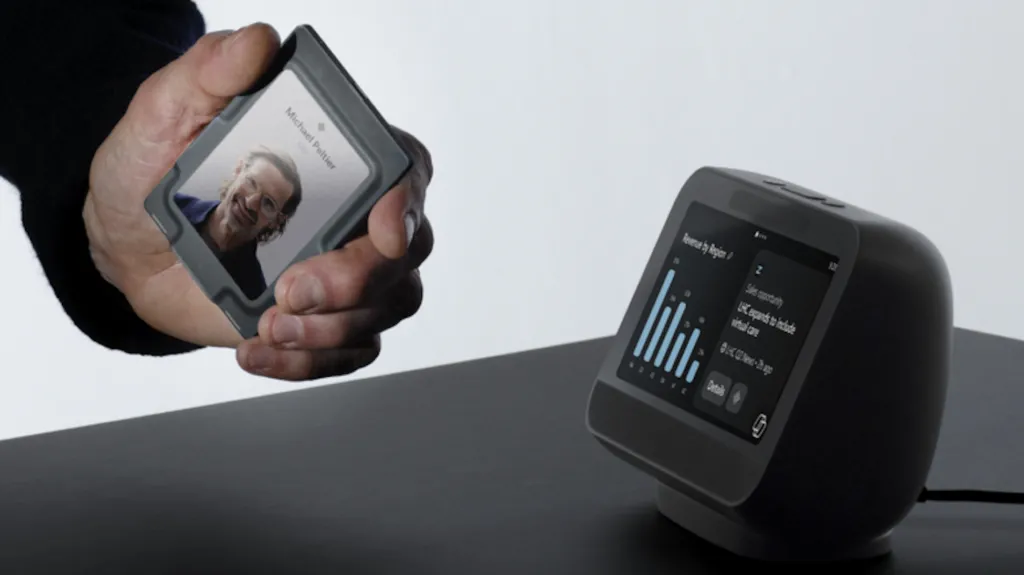
- Microsoft is developing two AI-enabled concepts: a portable desk cube and a wearable access badge.
- The badge is designed for ‘agent interactions on the go’ and includes a camera.
- These devices allow users to interact with AI agents (bots) outside of traditional PCs.
- The technology aims to let AI agents better understand and help take action on the environment around them.’
Microsoft’s Next Move: AI Wearables for the Modern Office
Microsoft is betting big on the next form factor for AI interaction. The core question isn’t just if AI will change the office, but how we’ll interact with it when it gets there. The company recently showcased two concepts: a small, touch-and-voice-activated desk cube and a wearable access badge. These aren’t just novelty gadgets; they are designed to let office workers interact with AI agents, essentially autonomous AI bots, in a way that doesn’t require them to be glued to a laptop.
I’ve covered three product cycles from this company, and this is the first time the demo matched the pitch deck. The focus is clearly on mobility and ambient interaction. The goal, as presented by executive Steven Bathiche, is to take the power of AI assistance, the kind of help already used by tech workers writing code, and make it available anywhere, not just at a desk.
How the Gadgets Work: Beyond the Screen
The system, dubbed Project Solara in the demonstration, shows people using the devices to connect with AI agents. The badge, which Nadella was shown wearing on a lanyard, is lightweight and equipped with a camera. Bathiche demonstrated its capability by activating it with a fingerprint and pointing it at the audience, instructing it to take pictures of the crowd for later review. It did it.
This camera feature is key. Bathiche explained that the camera allows agents to better understand and help take action on the environment around them.’ It’s a shift from simply processing text inputs to understanding the physical world.
What does this mean for the average worker?
- Interaction: Instead of typing a prompt into a browser, you might simply point the badge at a whiteboard and ask the AI agent to summarize the key points.
- Context: The camera feeds the AI real-time visual data, giving it context that a simple text prompt can never provide.
- Integration: The devices are built to connect with various Microsoft software and PCs, suggesting a deep integration into the existing Microsoft ecosystem.
The Wearable History: A Cautionary Tale
Microsoft isn’t new to the wearable bet. They’ve had their share of flops. Remember the HoloLens? After nearly a decade of development and ongoing issues during military testing, they pulled the plug on the headset in 2024. It’s a reminder that the path from concept to consumer product is littered with technical and logistical hurdles.
Google is also taking another swing at smart glasses, more than a decade after the infamous Google Glass debacle. The industry is clearly in a cycle of high ambition and painful reality checks.
The Big Picture: Why This Matters
The rise of AI assistance has been cited widely by major tech executives, especially in the wake of recent layoffs. The argument is simple: AI is becoming so good at tasks, like writing code or drafting reports, that it’s fundamentally changing the nature of work. These gadgets are Microsoft’s answer to that shift. They are trying to make the AI assistant feel less like a piece of software and more like an extension of your own senses.
A Note on Privacy:
It’s impossible to talk about AI cameras without talking about privacy. The badge’s camera, while powerful, has already drawn intense scrutiny. Other AI-centric devices, like Meta’s AI eyeglasses, face constant questions about when, why, and how they record and store video. The industry needs clear guardrails. The tech needs to keep pace with the ethics, or it risks becoming a privacy nightmare.