

Table of Contents
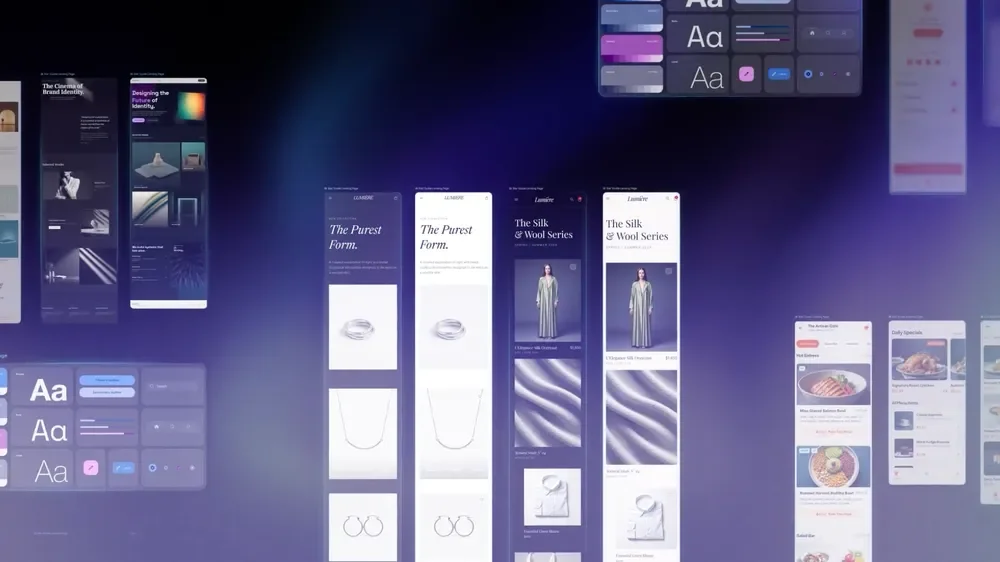
Alphabet Inc., opens new tab on Tuesday announced a significant overhaul of its Stitch platform, transitioning the AI-powered UI design tool into an “AI-native software design canvas” aimed at reducing the time required to build application prototypes from days to minutes.
The update, which introduces a suite of autonomous agents and an infinite canvas system, comes as Google seeks to maintain its lead in the competitive landscape of AI-assisted software development.
INFINITE CANVAS AND DESIGN AGENTS
The centerpiece of the upgrade is the new AI-native infinite canvas, a collaborative space that allows developers to “manifest” software ideas by providing text, images, and code as inputs. Unlike traditional design tools that require manual layout, the Stitch canvas uses generative models to transform basic descriptions into interactive prototypes—the name for a working model of an application used for early-stage testing.
“Whether you’re a professional designer looking to explore dozens of variations or a founder manifesting your first software idea, we’re building Stitch to help you close the gap from idea to reality,” Google stated in an official announcement.
Accompanying the canvas is a new Design Agent capable of reasoning through a project’s evolution. This agent is managed by a secondary “Agent Manager,” allowing users to explore multiple, simultaneous design trajectories while maintaining organizational hierarchy within a single project.
STANDARDIZED DESIGN DELIVERY
Google also introduced DESIGN.md, a new markdown-based file format designed for the extraction and transfer of design rules between disparate projects. The tool allows developers to import existing brand guidelines or export design systems to external development environments, theoretically eliminating the need to rebuild repetitive UI components.
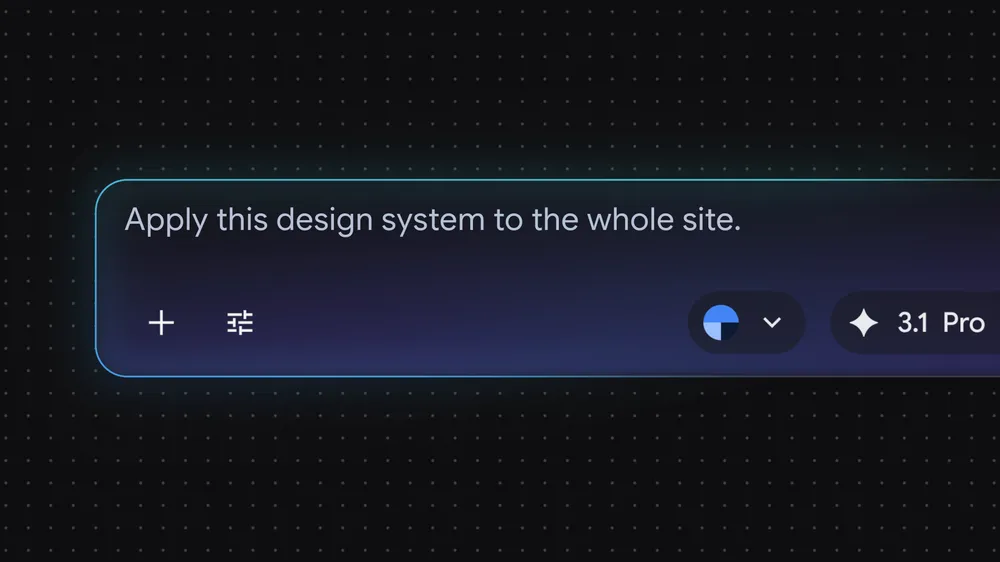
The move follows increasing industry pressure to integrate generative AI deeper into the developer workflow. Stitch now supports a “Play” mode that instantly converts static designs into clickable environments, alongside new voice capabilities that allow users to request visual changes through direct verbal commands to the canvas.
STRATEGIC INFLECTION POINT
Alphabet’s pivot with Stitch represents a strategic inflection, a turning point where AI moves from a simple assistant to the core architecture of the design process. Behind the disruption is a shift toward “AI Plus” initiatives globally, as technology giants race to embed agentic capabilities into every layer of the software stack.
Google did not disclose the specific architectural details of the large language models (LLMs) powering the new Design Agent, nor did it provide updated subscription pricing for enterprise tiers following the rollout.
“What we are seeing play out here is the transition from AI as a feature to AI as a foundational canvas,” said an industry analyst familiar with the matter. “Its development is still unstoppable, but the industry’s ability to keep up with these rapid deployment cycles remains a strategic question.”






[…] unbridled consumer adoption for Perplexity, as it seeks to position itself against incumbents like Alphabet Inc., opens new tab and OpenAI. The browser maintains “persistent context,” a feature that […]