
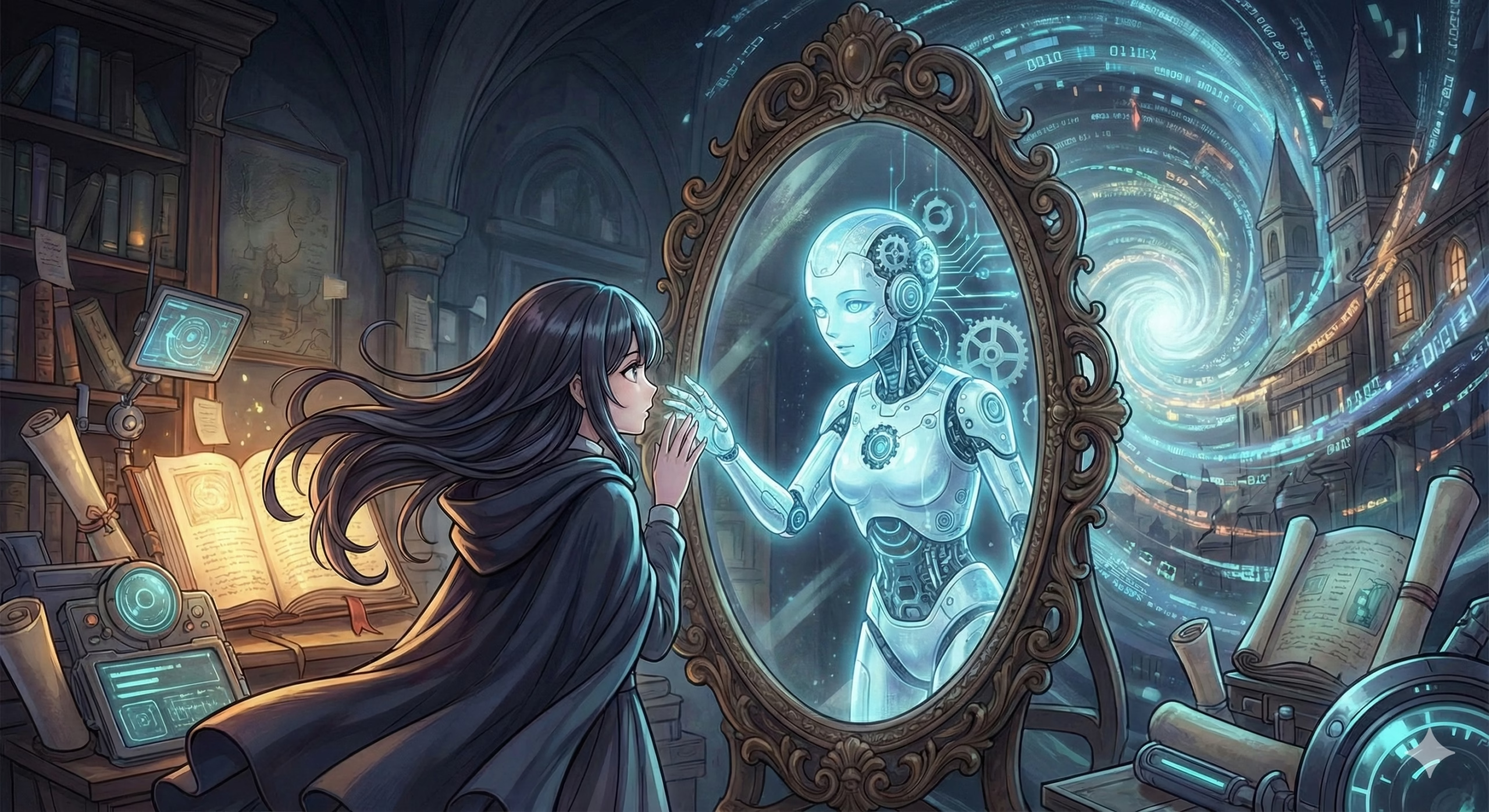

Hold a mirror to your mind and imagine this: every time your phone guesses your next text, or a car glides through traffic without a driver, something ancient stirs. Not circuits firing, but a ghost from 1950 whispering, “Can machines think?”
That voice belonged to Alan Turing, the brilliant mind who cracked Nazi codes and dreamed of intelligent machines.
Computers filled entire rooms and barely calculated faster than a human with a calculator. His question wasn’t about hardware; it was about imitation, language, and perception.
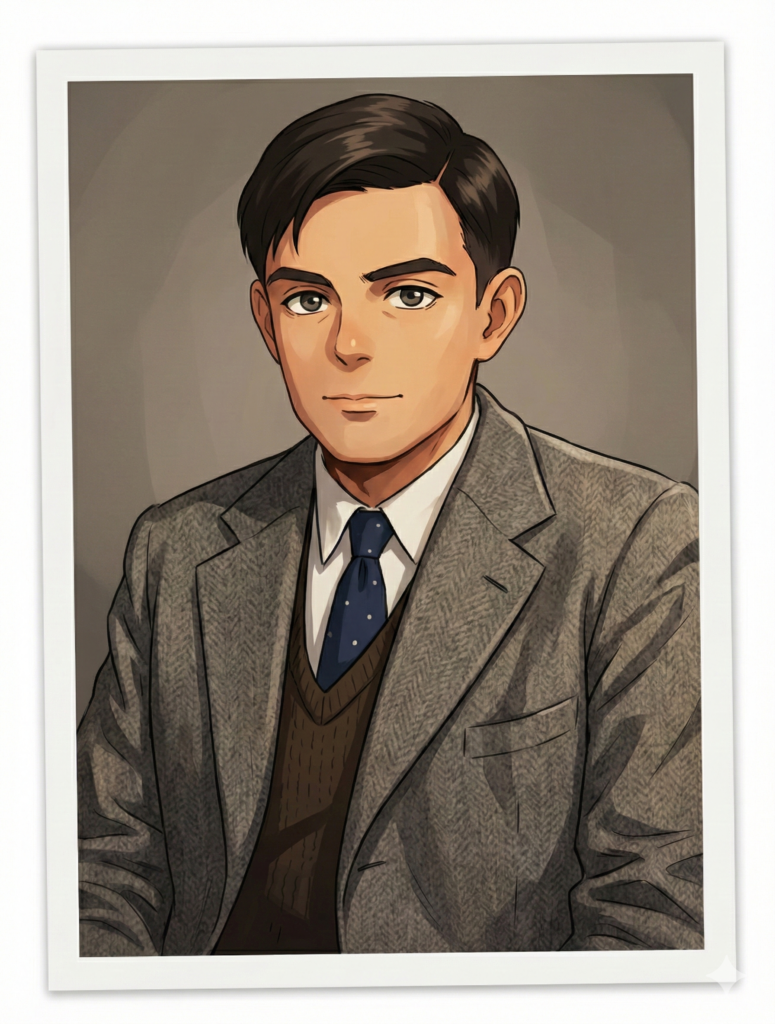
He posed a deceptively simple test: if a computer could chat so convincingly that you couldn’t tell it apart from a human, wasn’t it thinking?
What’s remarkable is that modern AI didn’t arrive by “thinking harder,” but by listening more. Instead of reasoning like philosophers, machines learned to absorb massive human-generated datasets, text, images, speech, movement, and statistically model how we behave.
In other words, AI didn’t wake up intelligent. It became intelligent by watching us at scale.
Advanced AI or You Just Looking in a Mirror?
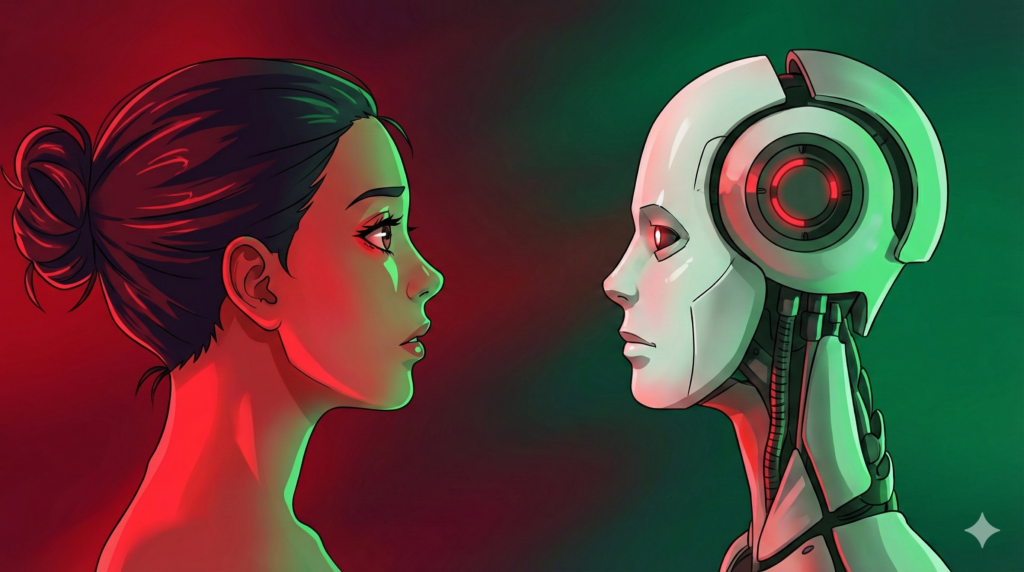
Fast-forward to today. Modern “smart” systems devour oceans of data, spotting patterns faster than we ever could. They paint art, diagnose diseases, even flirt in conversations. But here’s the twist that keeps me up at night: AI isn’t inventing intelligence from scratch. It’s holding up a mirror to us.
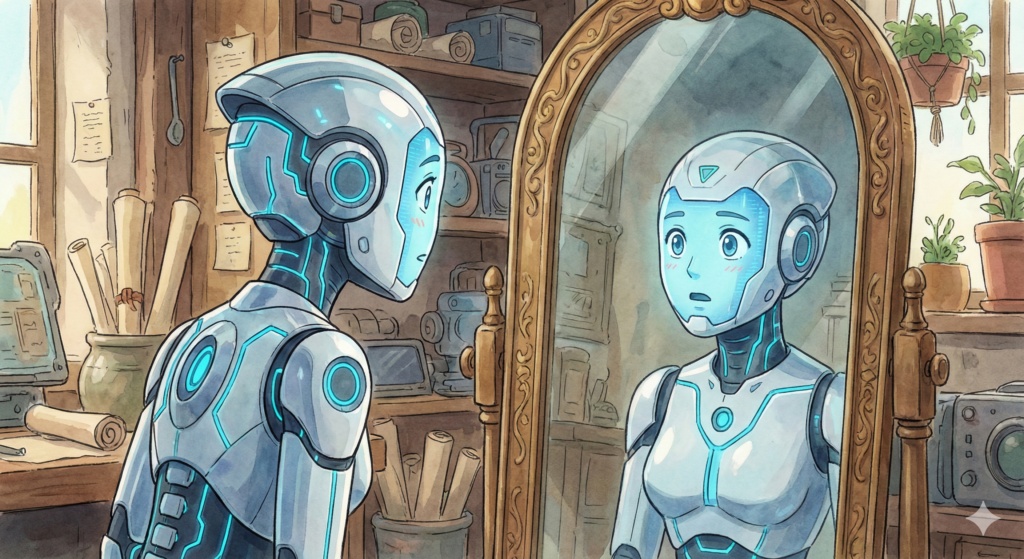
We feed it our books, our photos, our biases, billions of human moments. It learns by mimicking, predicting what we’d say or do next. Your streaming picks? Echoes of millions like you. Self-driving routes? Crowdsourced from human drivers.
Intelligence by Compression, Not Consciousness
Today’s AI systems don’t understand the world the way humans do. They compress reality into probabilities.
- Language models predict the next word based on patterns in human communication
- Vision systems identify objects by correlating pixels with labels we provided
- Recommendation engines reduce human taste into vectors and scores
This makes AI extraordinarily powerful, but also fundamentally derivative.
It reflects not just our brilliance, but our blind spots, stereotypes, and assumptions. That’s why AI bias isn’t a bug. It’s a historical record of humanity, encoded in math.
Why Narrow AI Feels Intelligent (and Why It Isn’t Us Yet)
A chess engine defeating a grandmaster feels like intelligence, but it’s closer to hyper-specialized instinct.
Humans:
- Transfer learning across domains
- Reason with minimal data
- Operate with emotions, ethics, and context
Machines:
- Excel in bounded environments
- Collapse outside trained conditions
- Lack intrinsic goals or self-awareness
This gap explains why Artificial General Intelligence (AGI) remains elusive. Intelligence isn’t just pattern recognition; it’s meaning-making.
The Mirror That Sharpens
Here’s the unsettling shift:
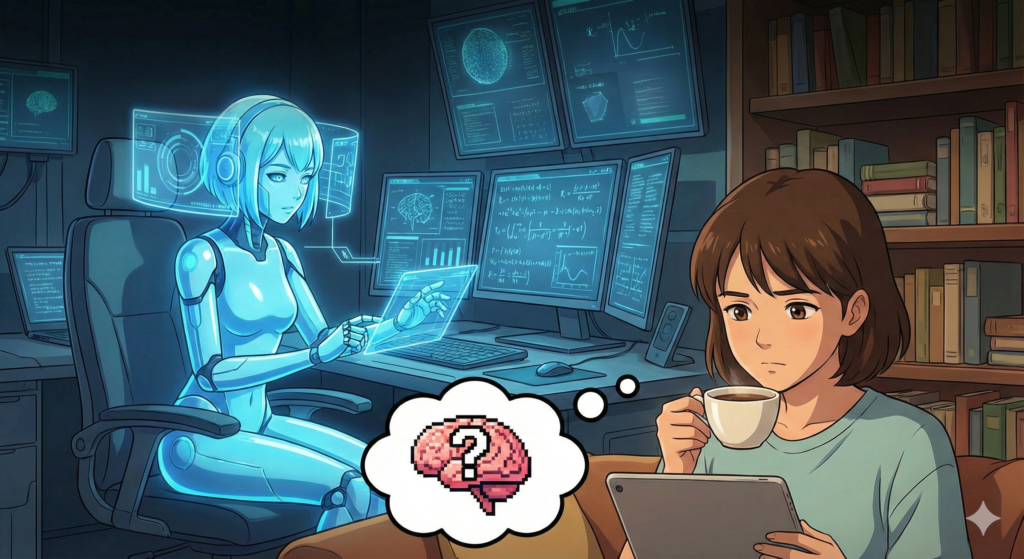
AI doesn’t just reflect us anymore, it enhances the reflection.
- It finds medical correlations invisible to clinicians
- Discovers scientific patterns hidden in chaos
- Optimizes decisions beyond human cognitive limits
So the question changes.
Not “Can machines think?”
But “What happens when our reflection sees further than we do?”Is AI becoming more human, or are humans finally confronting their own intelligence, externalized and amplified?
A Co-Evolution, Not a Takeover
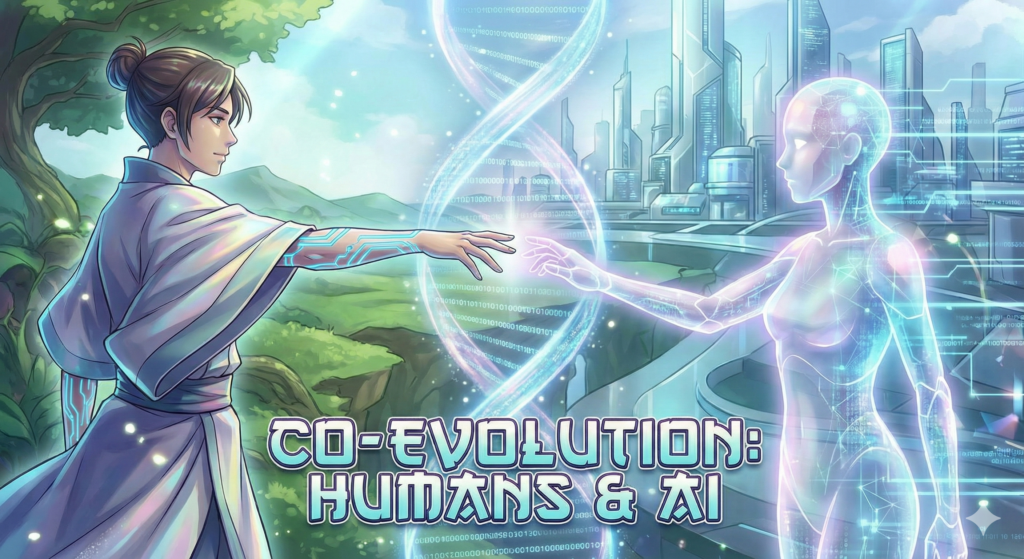
The most honest framing isn’t competition, it’s co-evolution.
Humans provide:
- Purpose
- Values
- Creativity
- Moral judgment
AI provides:
- Scale
- Speed
- Pattern amplification
- Cognitive leverage
Together, they form something neither could be alone.
The real intrigue?
Today’s narrow tools excel at single tricks, like a savant chess player. Dreamers chase “general” smarts, machines that adapt like us across anything. And beyond? Superintelligent beings that might outgrow their creators.
But pause. If AI is our reflection, what happens when the mirror starts improving on the original? When it spots patterns we miss, solves riddles we can’t? Is it evolving… or are we finally seeing our own potential, amplified?
One thing’s clear: this isn’t just tech. It’s a partnership unfolding.
AI is not a new mind; it is a mirror, trained on the accumulated memory of humanity
What do you see in the mirror? What will you choose to reflect on?
This is just the tip of the iceberg, a prelude to what’s coming








[…] back, if you have seen the previous Blog if not, you can check it […]