
Table of Contents
Genspark AI has rapidly become a trending topic in the world of artificial intelligence, promising to be more than just another chatbot. It positions itself as an autonomous “Super Agent,” a sophisticated system capable of planning and executing complex, multi-step tasks with minimal supervision.
This guide offers a clear, fact-based breakdown of Genspark AI, providing answers to these critical questions and helping you determine if it’s the right tool for your needs.
What Is Genspark AI and What Does It Do?
To properly evaluate Genspark AI, it’s essential to understand its core function, which differs significantly from standard AI assistants.
Its primary value lies not in generating simple text replies but in producing structured, actionable content that functions as a polished first draft for research, presentations, and data analysis.
Genspark’s approach represents a strategic shift away from the rigid, first-generation AI search paradigm.
As explained by its CTO, early tools like Perplexity followed a fixed, predefined workflow: search, retrieve, and summarize. While effective for simple queries, this model struggled with complex, multi-factor research.
Genspark was designed to break free from this static sequence, embracing a more fluid and adaptive problem-solving methodology.
At its core, Genspark AI is a tool that utilizes specialized AI agents to generate structured outputs, including reports (known as “Sparkpages”), presentations, and spreadsheets.
Instead of relying on a single large language model (LLM), it operates on a unique “Mixture of Agents” system. When a user enters a prompt, Genspark’s central “Super Agent” intelligently divides the task and delegates it to a team of 9 specialized large language models (LLMs), each optimized for a specific part of the job.
This multi-agent approach allows it to produce a final output that is more detailed, organized, and contextually rich than what a single model can typically achieve.
Key Use Cases
Based on its architecture, Genspark is particularly effective for the following applications:
- Automated Research: It can create comprehensive literature reviews and research reports, delivered as shareable “Sparkpages” that consolidate findings and include citations to the sources.
- Content Creation: Specialized agents can draft documents (AI Docs), generate organized data tables (AI Sheets), and build complete presentations from a simple prompt (AI Slides).
- Data-to-Presentation: One of its standout features is the ability to transform raw data files (e.g., experimental results) directly into a complete, structured presentation, including an introduction, methodology, data visualizations, and key findings.
- Real-World Tasks: Genspark extends beyond digital content with agents like “Call for Me,” which can make AI-powered phone calls to handle simple real-world tasks like making reservations or confirming business hours.
Understanding these powerful and diverse features is the first step in evaluating the platform’s value, which is directly tied to its pricing structure.
Is Genspark AI Free or Paid?
One of the most common questions about Genspark AI revolves around its cost. The pricing is credit-based and not immediately visible on the website without signing up, which can make it difficult for potential users to evaluate. A clear breakdown is essential for anyone considering the platform for professional or personal use.
Genspark operates on a freemium model, offering both a free and paid subscription tier. The plans are primarily differentiated by the number of monthly “credits” allocated, storage capacity in the “AI Drive,” and access to premium agents and models.
Comparative Pricing Table
| Plan | Price (Monthly) | Key Features & Limits |
| Free | $0 | 100 credits per day, 1 GB of AI Drive storage, Limited access to research agents and image tools. |
| Plus | $24.99/month | 10,000 credits per month, 50 GB of AI Drive storage, Priority agent access, Access to image and video models. Unlimited AI chat until Dec 31, 2025. |
| Pro | $249.99/month | 125,000 monthly credits, 1 TB of AI Drive storage, Full access to all agents and premium models. Unlimited AI chat until Dec 31, 2025. |
For users considering a long-term commitment, Genspark offers a discount for annual billing, allowing you to save $5/month on the Plus plan and $50/month on the Pro plan.
Who Should Use Each Plan?
- Free Plan: This tier is best for students, casual users, or anyone wanting to test the platform’s core functions—like generating a Sparkpage or a simple document—without a financial commitment. The daily credit limit is restrictive but sufficient for light, occasional use.
- Plus Plan: This is the ideal option for freelancers, content creators, academics, and researchers who require regular access to advanced agents for tasks like literature reviews or presentation drafting. Its credit and storage allowances are well-suited for consistent weekly use.
- Pro Plan: This plan is designed for agencies, research-heavy teams, and businesses that need to generate high volumes of AI content. The substantial credit and storage limits support enterprise-level workflows and intensive, daily use.
While the pricing model defines the cost, user-reported issues with service and billing raise critical questions about the platform’s value and trustworthiness, which we will now examine.
Is Genspark AI Safe, Legit, and Trustworthy?
Before integrating any AI tool into a professional workflow, evaluating its legitimacy and reliability is paramount, especially regarding data handling and service quality. Genspark presents a mixed but ultimately legitimate profile based on available information.
Assessing Legitimacy
Genspark is a legitimate technology platform. Evidence supporting this includes its public-facing Co-founder and CTO, Kay, who has authored articles explaining the company’s technical direction and its pivot toward a “Super Agent” paradigm.
The tool has also been covered in multiple independent reviews that analyze its features and performance. It is important to note that Genspark AI is a distinct entity and should not be confused with “GenSpark,” a coding bootcamp, as search results often mix the two.
Evaluating Trustworthiness
A balanced analysis reveals both a commitment to building trust and documented user concerns.
- Company’s Position: Genspark claims to build trust through several features designed for verification and transparency. These include a “Cross-Check Agent” to verify statements, sourcing data from trusted platforms, and providing inline screenshots to show the exact origin of data points within its reports.
- User-Reported Concerns: Despite these features, user reviews frequently highlight significant operational issues. Common complaints include inconsistent or delayed customer support, unexpected billing charges or confusing credit usage, and unreliable file exports that either fail or produce poorly formatted documents.
Data Privacy and Origin
While Genspark publicly discusses its methods for data verification, the provided source materials do not contain details about its formal data privacy policies, security compliance (such as SOC 2 or HIPAA), or its country of origin. This lack of information is a critical consideration for users in regulated industries or those handling sensitive data.
After weighing the platform’s legitimacy and user-reported issues, a practical understanding of how to operate the tool is the logical next step for any prospective user.
Guide to Start Using Genspark AI
Despite its advanced capabilities and multi-agent architecture, getting started with Genspark is a straightforward, browser-based process designed to be accessible even for non-technical users.
Step-by-Step Guide
- Sign Up: The first step is to visit the Genspark website and sign up for a free or paid plan. Access to the main dashboard and its features is only available after creating an account.
- Choose an Agent: Once on the dashboard, select an agent that aligns with your goal. For general research or complex queries, the “Super Agent” is the best starting point. For specific outputs, you can choose specialized agents like “AI Slides” for presentations or “AI Docs” for written content.
- Enter a Clear Prompt: The quality of the output depends heavily on the quality of the input. Provide a clear and detailed goal for the agent to execute. A strong prompt is direct and action-oriented, such as: “Create a well-researched business presentation on the benefits and need for using artificial intelligence, AI tools, and AI agents in the workplace.“
- Review and Share: Genspark will process the request and generate a structured output, often a “Sparkpage.” This page can be reviewed, edited directly within the interface and easily shared with colleagues via a link. Users can also download the output, though reliability may vary.
Platform Access
Genspark is a web-based tool accessible from any modern browser on operating systems like Windows or Linux. The source materials contain no mention of a dedicated downloadable application for desktop or mobile.
With a grasp of the basic workflow, we can now explore one of Genspark’s most powerful and praised features: automated presentation generation.
Powering Presentations and Content with Genspark AI
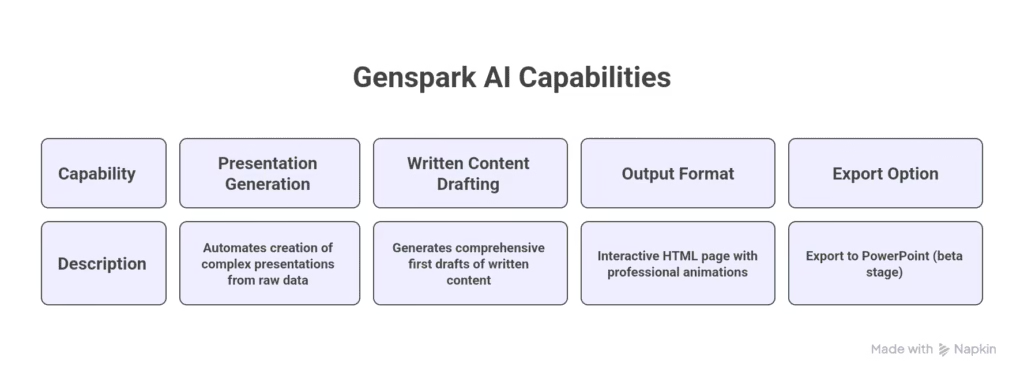
One of Genspark’s most lauded capabilities is its ability to automate the creation of complex content that typically requires hours of manual effort. Its functionality for generating presentations and research drafts, in particular, sets it apart from many other AI tools.
From Raw Data to Polished Slides
The AI Slides agent is a game-changer for anyone who needs to visualize data. A user can upload raw experimental data files—such as conductivity measurements from a lab instrument—and instruct the agent to create a presentation.
Genspark then autonomously analyzes the data and generates a complete slide deck, including:
- An introduction and methodology section.
- Data visualizations and graphs were plotted from the raw numbers.
- Key findings and summaries of the results.
This process transforms a tedious, multi-step task into a single prompt, making it incredibly efficient for researchers, analysts, and students.
Output and Exporting
The final presentation is generated as an interactive HTML page with professional animations and a clean design.
While the platform offers an option to export the presentation to PowerPoint, it’s important to note that this feature appears to be in a beta stage. User tests indicate that the formatting in the exported .pptx The file may be misaligned and require significant manual adjustments.
Drafting Written Content
Beyond presentations, other agents like AI Docs and the Super Agent can be used to generate comprehensive first drafts of written content.
By providing figures and their corresponding captions from a scientific study, users can prompt the agent to create a structured story and draft an entire peer-reviewed paper, complete with an abstract, introduction, and correctly placed figures.
The ability to create such sophisticated content is powered by Genspark’s advanced architecture and its library of specialized agents, which represent the core of its innovative approach.
Exploring Advanced Features: Super Agent, Specialized Agents, and More
Genspark’s true power and its primary differentiator in the crowded AI market come from its advanced “Super Agent” architecture and the diverse library of specialized agents it can orchestrate to solve complex problems.
The Super Agent Paradigm
The Super Agent is Genspark’s core innovation. Unlike first-generation AI tools that follow a rigid, predefined workflow, the Super Agent adaptively plans and executes tasks in real-time. This is guided by a core philosophy articulated by the company’s CTO: “less control, more tools.”
Instead of being locked into a static “search, summarize, present” sequence, the Super Agent is given the freedom to creatively combine its resources—sub-agents, APIs, and data—in novel ways.
It analyzes a user’s goal, formulates a strategy, selects the best tools, and adjusts its plan based on real-time results, mimicking a human’s flexible problem-solving process.
A Roster of Specialized Agents
The Super Agent directs a team of powerful sub-agents to carry out its plan. Notable agents mentioned include:
- Deep Research Agent: Designed for conducting in-depth, multi-step research on complex topics, going far beyond a simple web search.
- Data Search Autopilot Agent: An agent that automatically finds, verifies, and organizes structured data from the web into clean, comparative tables.
- Call for Me Agent: This unique agent bridges the digital and physical worlds by making automated, natural-sounding phone calls for tasks like booking a reservation or confirming information.
- Image and Video Generators: On its paid plans, Genspark provides access to multimedia models like FLUX (for images) and Kling (for video), integrating content creation into a single workspace.
A full understanding of these powerful features, balanced against the platform’s documented shortcomings, is essential to determine if Genspark is a worthwhile investment.
Is Genspark AI Worth It? Let’s Look at the Pros and Cons
Whether Genspark AI is “worth it” depends entirely on a user’s specific needs, budget, and tolerance for its current limitations. It offers unique, powerful features but also comes with significant trade-offs that are frequently reported by its user base.
| Pros: Where Genspark Shines | Cons: Where Genspark Falls Short |
| Highly Structured Outputs: Generates detailed “Sparkpages” and reports, which are more useful for research and professional drafts than standard chatbot responses. | Service and Billing Issues: Users frequently report problems with unresponsive customer support, confusing credit usage, and billing disputes. |
| Powerful Presentation Generation: The ability to create entire presentations from raw data files is a unique and significant time-saving feature for researchers and professionals. | Poor PowerPoint Export Formatting: While presentations can be exported, the formatting is often misaligned and requires significant manual correction, indicating the feature is in a beta stage. |
| Versatile All-in-One Workspace: It combines research, writing, data analysis, and multimedia generation, reducing the need to switch between multiple tools for first drafts. | Rapid Credit Consumption: The 100 free daily credits can often be exhausted with a single complex query, such as a literature review, strongly pushing users toward paid plans. |
| Flexible and Adaptive AI: The “Super Agent” architecture is more powerful and adaptable for complex, multi-step queries than rigid, first-generation AI search tools. | Inconsistent Quality: While it excels in some areas (like presentations from data), it performs poorly in others (like graphical abstract creation for scientific papers). |
This balance of pioneering strengths and operational weaknesses makes it crucial to consider how Genspark compares to other specialized tools on the market.
Genspark AI Alternatives: When to Look Elsewhere
No single AI tool is perfect for every job. While Genspark excels at creating structured research drafts, other platforms are superior for different primary use cases. If Genspark doesn’t align with your needs, one of the following alternatives might be a better fit.
- For General-Purpose AI Chat: For users who primarily need a flexible and reliable chatbot for a wide range of queries, brainstorming, and writing assistance, ChatGPT Plus is a more affordable ($20/month) and widely adopted option.
- For Business and Workflow Automation: For users who need to integrate AI directly into their business operations—automating tasks across email, CRM, and scheduling tools—a platform like Lindy is a better choice. It is designed to automate operational workflows rather than just generate content.
- For Brand-Aligned Marketing Content: For marketing teams that require strong control over brand voice, collaborative features, and tools specifically designed for creating go-to-market content, platforms like Jasper or Copy.ai are more specialized and effective.
Understanding where Genspark fits within this ecosystem is key to making a final, informed decision on whether to adopt it for your own work.
Conclusion
Genspark AI is a powerful and innovative tool, but it’s not for everyone. It is best suited for students, academics, researchers, and individual content creators who prioritize the rapid generation of structured first drafts—such as literature reviews, reports, and data-driven presentations—and who can tolerate potential issues with service reliability and file exports.
However, it is likely not the right fit for businesses needing deep workflow automation, guaranteed customer support, or a simple, flat-rate subscription model.
The best approach is to start with the free plan to thoroughly test its unique “Sparkpage” and “AI Slides” features. This will allow you to assess if the output quality and credit consumption rate fit your workflow before committing to a paid subscription.